
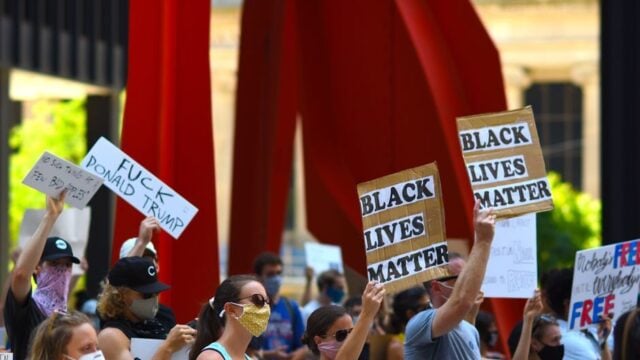
WASHINGTON — birthright citizenship in the United States remains in effect after the U.S. Supreme Court rejected Donald Trump’s effort to end it. Tuesday’s ruling leaves the law rooted in the 14th Amendment unchanged, even though the political and legal debate is far from over.
For Americans, the decision means the citizenship status of babies born on U.S. soil remains secure for now. But for immigrant families, the issue touches very practical matters: birth certificates, passports, Social Security numbers, and the certainty that their children will be fully recognized as citizens.
Trump’s move runs aground in court
Trump made ending birthright citizenship one of the opening moves of his second term. He ordered a new interpretation of the 14th Amendment, a provision long understood since 1868 to grant citizenship to anyone born in the U.S., with limited exceptions such as children of foreign diplomats or invading enemy forces.
But the U.S. Supreme Court sided with the government challenging the policy. With the ruling, the federal government cannot immediately change a legal status that has been established for more than a century. The American Civil Liberties Union, or ACLU, welcomed the decision and called it the clearest statement yet of who America is as a nation.
“No matter who your parents are, if you’re born here, you belong here,” the ACLU said in a statement.
Trump has long called the policy “a disgrace.” His vice president, JD Vance, once described it as “the dumbest immigration policy in the world.” The attack is not new. Birthright citizenship has long been used by hardline factions to push for a tougher immigration agenda.
Why the issue is so sensitive
On paper, the issue looks simple. The U.S. Constitution says all persons born or naturalized in the United States, and subject to its jurisdiction, are U.S. citizens. For years, courts and governments have interpreted that rule consistently as automatic citizenship for children born in the U.S., regardless of their parents’ status.
The problem is that if that interpretation is reopened, many things shift as well. According to the Migration Policy Institute, about 255,000 children are born in the U.S. each year to non-citizen parents. That means any change would immediately affect hundreds of thousands of new families each year, not a small number that can be easily ignored.
Kim Lane Scheppele, a professor of sociology and international affairs at Princeton, said the debate itself already has consequences. In her view, once the question of citizenship status is opened, legal certainty weakens.
“The fact that this question is now open, when it previously was not, makes citizenship more vulnerable, including for those who live their entire lives in the U.S.,” Scheppele told DW before the ruling was announced.
She also pointed to other Trump administration steps that have narrowed the space for citizenship, from creating a denaturalization office at the Justice Department to pushing for proof of citizenship requirements for voting.
The impact does not stop in the courtroom
Even though this ruling leaves the legal status unchanged, experts say the effects have already been felt. If Trump’s policy had gone forward, U.S. bureaucracy would have been forced to verify parents’ status every time a child was born. That would mean hospitals, civil registry offices, and document-issuing agencies would have to process data they were not always prepared to handle for such a scenario.
Scheppele said women who have just given birth, and especially the father of a newborn baby, may not have citizenship documents ready at that moment. “Imagine if every parent’s citizenship and immigration status had to be recorded at every birth in this country. You can begin to see the administrative chaos that would follow,” she said.
On the other hand, the policy could also leave some children stateless, with no citizenship at all. That could happen if their parents’ home country does not automatically grant citizenship to children born abroad. In a global context, such situations are not fictional. Many countries in Southeast Asia, for example, apply narrower and stricter citizenship rules.
Trump has often claimed the U.S. is the only country with birthright citizenship. Data from the Pew Research Center contradicts that claim. There are 32 other countries, mostly in North and Latin America, that still apply a similar model. Several other countries grant that status under certain conditions, such as the parents’ place of birth or the legal status of residents.
Political meaning for Trump’s immigration agenda
The setback still lands as a political blow. For Trump, the ability to drive tough immigration policy is at the heart of the “America First” promise. He wants to show that his new administration can increase deportations, restrict refugees, and strengthen immigration enforcement agencies such as ICE.
For that reason, birthright citizenship is not just a legal debate. It is also a symbol of who gets to be part of America. And as long as Trump keeps pushing a hardline immigration agenda, the fight over the definition of citizenship is almost certain to return, both in court and in Congress.
What is clear for now is that the legal line has not moved. But the political fight is only heating up.




📝 Leave a Comment
Comment as . Reviewed by an admin before it appears.