Fossil Skull Peru Reveals Whale With Record-Breaking Crooked Face
Paleontologists have described Scaphokogia huachafo, a pygmy sperm whale from Peru that lived about six million years ago. Its skull shows the most extreme facial asymmetry documented among cetaceans, and possibly among all mammals, according to a study in Communications Biology.
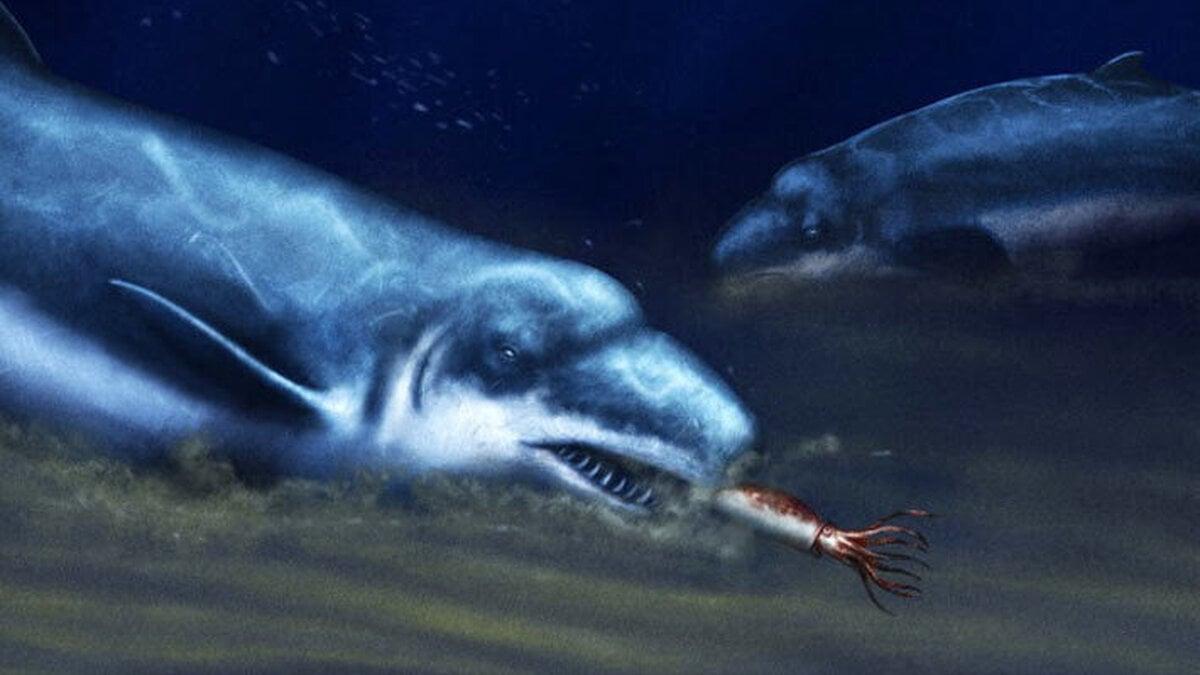
A fossil skull from Peru reveals a pygmy sperm whale with the most extreme facial asymmetry documented among cetaceans, according to a study published November 10, 2026 in the journal Communications Biology. The animal, named Scaphokogia huachafo, lived in the Late Miocene epoch some six million years ago.
Paleontologists say its lopsided face may be the most extreme among all mammals, not just whales.
A face that broke the rules
Scaphokogia huachafo was about 2.7 meters (9 feet) long. Its skull and neck were built to point the snout straight at the seafloor.
Lopsided skulls are common in toothed whales, where asymmetry is linked to making sound and echolocation. This species went further. Both external bony nostrils sit to the left of the skull's midline, and the left one is much larger than the right. The bones around the two eye sockets also differ markedly in shape.
"When we looked at the proportions of this whale — with its face strongly shifted to the left and its oversized, downward-curving snout — it broke every rule of symmetry and elegance seen in living cetaceans," said Dr. Aldo Benites-Palomino, a vertebrate paleontologist at the GeoZentrum Nordbayern.
Not a fossilization accident
The nearly complete skull was found in the mid-1990s at Aguada de Lomas in the Sacaco basin in Arequipa, Peru. It came from layers of the Pisco Formation deposited between 6.3 and 5.6 million years ago.
Distorted fossils often raise a doubt: sediment may have squashed or twisted the bone over millions of years. Benites-Palomino said that is the first suspicion. He ruled it out here.
"The sutures are fully closed, and there are no fractures, pathologies or deformations elsewhere on the skull," he said. "This was genuine biology, not a result of poor preservation."
Built for feeding on the bottom
The team built a new set of 3D measurements focused on the face and ran statistical analyses on 31 species. The genus Scaphokogia, which includes the new species and two relatives, came out as the most asymmetric group of cetaceans in the sample.
The snout is a massive, tube-shaped rostrum of dense bone reinforced by ossified cartilage. It angles steeply downward, at about 31 degrees from the skull's main axis. Heavy bone like this is also seen in manatees, walruses and some early bottom-feeding whales, where it helps control buoyancy. The researchers say the dense snout probably shifted the whale's center of gravity forward.
A second, related specimen preserved the first neck vertebra. That let the team estimate how far the head could tilt. The neck joint appears to have allowed substantial downward flexion, and the asymmetry suggests the head moved along a curved path rather than straight up and down.
The scientists propose that the whale was a specialized bottom feeder, foraging along the floor of shallow coastal waters. It appears to lack the facial structures many bottom-feeding mammals use to find food. It may instead have relied on unusual adaptations for echolocation to detect prey in soft sediment.
"The entire cranio-cervical complex is modified to point the snout directly toward the bottom," said Dr. Gabriel Aguirre-Fernández, a paleontologist at the University of Zurich.