Some Origin-of-Life Researchers Say a Fatty Bubble Preceded DNA and RNA
Some origin-of-life researchers argue that a simple bubble of fatty molecules, not DNA or RNA, may have been the first thing to evolve. The lipid-first hypothesis says self-feeding chemical loops inside bubbles could pass on a recipe, split, and compete.
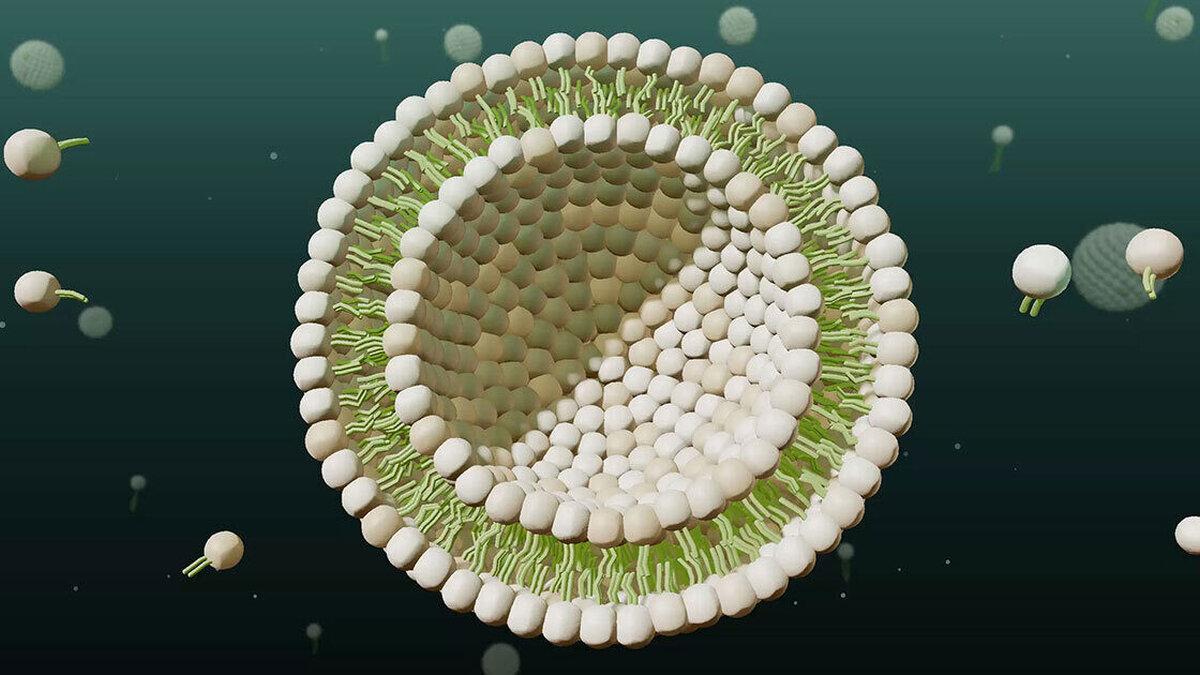
Some origin-of-life researchers say the case for a bubble at life’s start is stronger than it looks: a droplet of fatty molecules may have evolved before DNA or RNA existed. The idea is known as the “lipid first” hypothesis.
It starts from a plain fact. Every cell is a bubble of chemistry sealed inside a membrane. In modern cells that chemistry is extraordinarily complex, running some 1 billion reactions per second.
Why a container comes first
The first cells would have needed a boundary too. Without one, the molecules behind early life would have drifted too far apart to build the complex systems life requires.
“You need a container before you can get the chemistry,” said Bruce Damer, an astrobiologist at the University of California, Santa Cruz.
Some researchers treat the membrane as so essential that they propose it as the origin of life itself. Many supporters of the lipid world go further. They argue the bubbles did more than hold chemistry. The bubbles themselves began to evolve.
How a bubble could carry heredity
Evolution needs a way for parents to pass traits to offspring. Modern life uses DNA and RNA, which encode and copy information in their sequences. In the 1990s, researchers asked whether a chemical system, rather than a single molecule, could carry heritable information.
The scenario begins with a puddle of water on the early Earth. It holds small organic molecules, some homegrown and some delivered by dust and meteorites. Many have one end that is drawn to water and one end that repels it, the way oil does.
The water-repelling ends huddle together to hide, while the water-loving ends face outward. That behavior forms a tiny sphere.
Now picture two special molecules, A and B, inside one bubble. Each speeds up a chemical reaction that uses other ingredients in the puddle. A speeds up the reactions that make B. If B returns the favor and makes more A, each keeps the other topped up in an endless loop.
The bubble grows, but the ratio of molecules stays more or less steady. In time it splits, and its contents are dealt out among baby bubbles. Each may get some A and some B, so the loop keeps running and rebuilds the parent’s recipe more faithfully than chance alone would.
This differs from DNA, which is copied exactly, letter by letter. Here, only a proportion of molecules passes to the next generation.
Where change and selection come in
Evolution also needs change. In this chemical soup, that comes from a stray molecule C, which acts like a mutation and tips a bubble into a different molecular loop.
Faster-growing bubbles split more often and crowd out slower ones. Their descendants make up a bigger and bigger share of the crowd, and slow recipes get squeezed out.