Northern Taurid Fireballs Possible Wednesday Night Under Dark Skies
The Northern Taurid meteor shower peaks this week under a nearly new moon. Scientists say the dark skies should make fireballs easy to see. Here is when to look up, how to watch, and why planetary defense researchers are paying attention to this stream of debris.
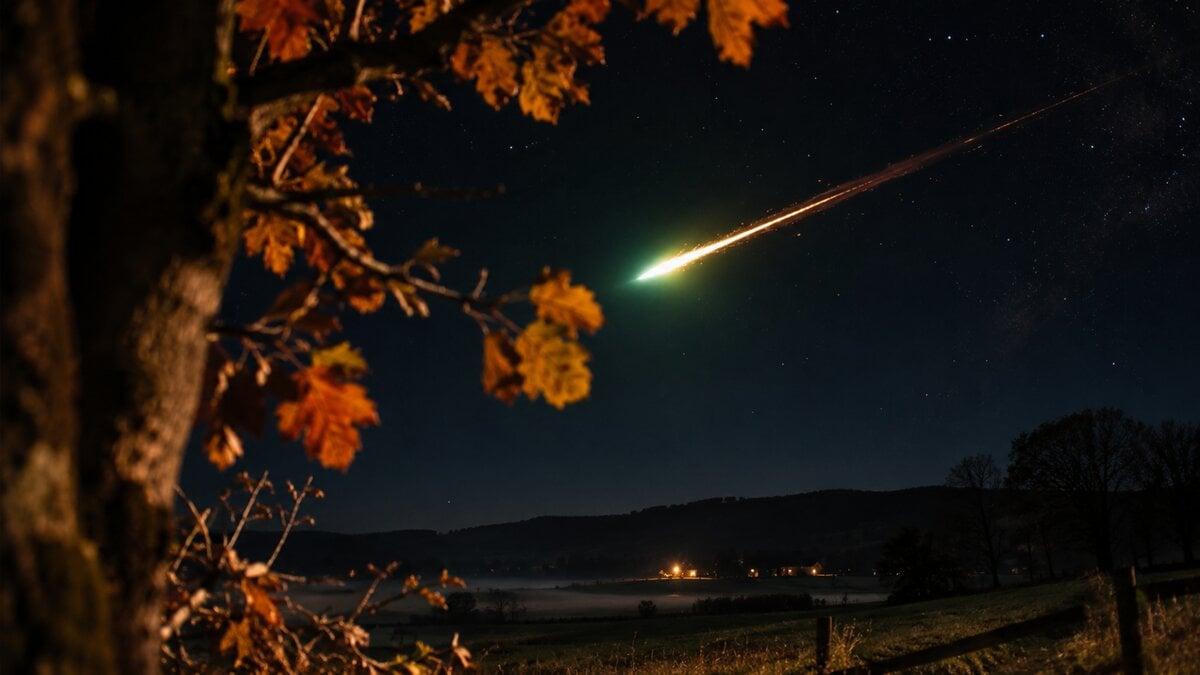
Skywatchers can spot a fireball during tonight’s Northern Taurid meteor shower, which reaches its peak this week under near-perfect dark skies. The best viewing runs from Wednesday night into early Thursday morning, according to NASA-based projections and scientists quoted.
Fireballs are meteors brighter than Venus. They show up as a few seconds of flashing light.
Why the sky is dark
Monday’s new moon leaves almost no moonlight to wash out the show. NASA projects a 4%-full, waxing crescent moon.
"The observing conditions should be very good," said Mark Boslough, a research professor in the department of Earth and planetary sciences at the University of New Mexico. "There’s no moonlight to really interfere with getting to see these."
Peak activity does not arrive until 1 p.m. ET Thursday, which is daytime in the United States. Wednesday night therefore offers the best view.
How to watch
Find a dark spot and give your eyes about half an hour to adjust. Stay away from bright screens during that time.
The streaks appear to radiate from the constellation Taurus. You do not need to stare at it, though. "You can see them anywhere in the sky," Boslough said.
The Northern Taurids are active from October 20 through December 10. They typically produce five meteors per hour. The Southern Taurids, which end November 12, overlap with them and double that rate.
What makes a fireball
Meteor showers happen when Earth passes through debris trails left by asteroids or comets. The bits of ice and rock burn up in the atmosphere and leave a streak of light.
Fireballs come from larger debris, ranging from the size of a marble to a small boulder. Some leave glowing lines of ionized air that vanish within seconds. Others leave cloudlike smoke trails that hang in the air for minutes.
A stream with open questions
The Northern Taurids come from debris left by an asteroid called 2004 TG10, discovered in 2004. Scientists think it was once part of a much larger object that broke up roughly 20,000 years ago and created the Encke Complex. Comet Encke, linked to the Southern Taurids, is another fragment.
A more recent study suggests 2004 TG10 is only one of 10 asteroids behind the Northern Taurids, according to EarthSky. "It’s not a simple meteor stream," Boslough said. "With the Taurids, there’s many different components to the complex."
Planetary defense interest
Boslough’s team watches meteor showers to measure the risk from objects that could hit Earth. In 2025, the team published a paper on the Taurid stream, which researchers suggest may carry more potentially dangerous objects.
The team is preparing for a particularly dense Taurid shower in 2032. It plans to use a telescope to detect small, dark objects through the heat they emit.
Boslough stressed that this monitoring is "due diligence," not a response to an imminent threat. "The idea that there is a dense swarm of dangerous objects, that’s completely hypothetical — there’s very little evidence for that," he said.