Is Owning a Hotel Profitable? We Ran the Numbers on a 100-Room Hotel
A new 100-room hotel costs about $16.8 million to build and sells roughly $3.65 million in room nights a year. Here is where that money goes, and what is left for the owner.
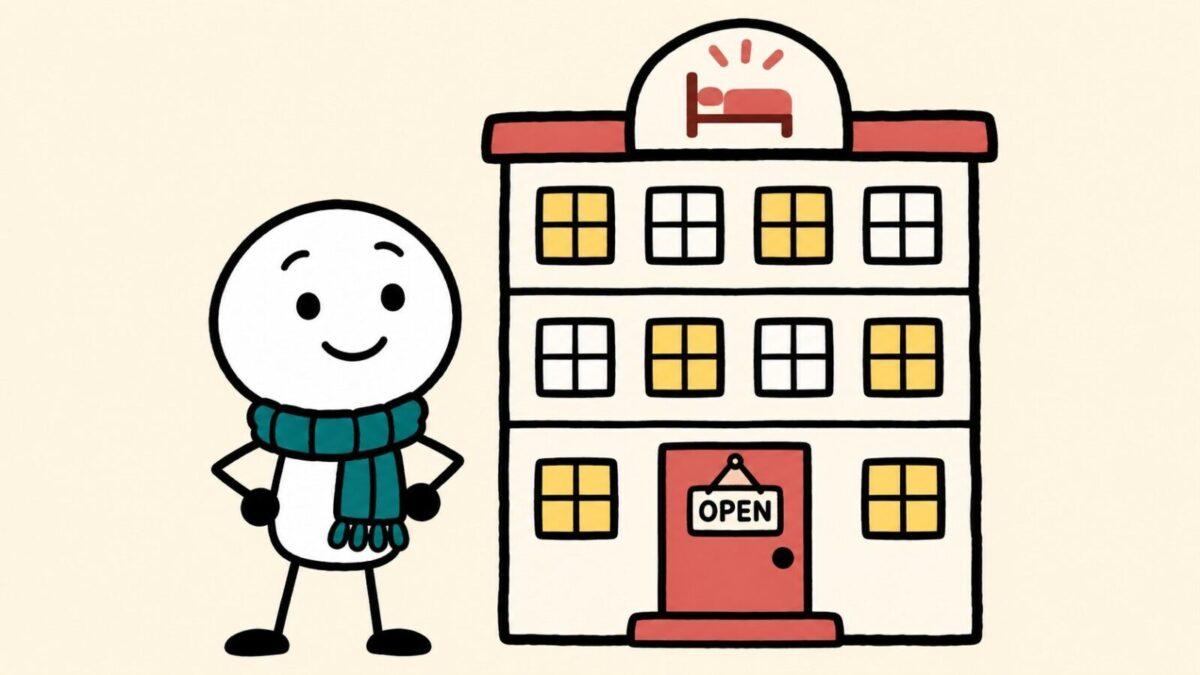
You do not sell rooms. You sell nights, and a night is the most perishable product in business.
A grocer who fails to sell a can of soup on Tuesday can sell it on Wednesday. A hotel owner who fails to sell room 214 on Tuesday has lost that sale for good. Hold that thought, because it explains almost every number that follows.
The short version
- Build cost: about $16.8 million for 100 limited-service rooms.
- Room revenue: about $3.65 million a year at the 2025 US average.
- Operating profit: about $1.28 million before taxes, insurance and debt.
- After a typical mortgage: close to zero in an average year.
- The swing: 20 points of occupancy moves operating profit by roughly $860,000.
Watch: the six-minute version
So picture it. Your name on the sign, a tidy lobby, a hundred keys, a breakfast bar that smells of waffles at 6:30 a.m. Guests sleep, money arrives. That is the daydream. Here is the spreadsheet.
The price of admission
Developers budgeted a median of roughly $167,000 to $169,000 per room for limited-service hotels in the most recent US development cost survey with a category breakdown. That is the no-restaurant, free-breakfast kind you see beside a highway exit. Step up to select-service and the median climbs to about $223,000. Full-service: $409,000. Luxury: more than $1 million a room.
Take the cheapest tier. One hundred rooms at $168,000 is $16.8 million before the first guest checks in, covering land, construction, furniture, fees and opening cash.
What a hundred rooms bring in
US hotels filled 62.3% of their rooms in 2025 at an average rate of $160.54 a night. Multiply the two and you get the industry's favourite figure, revenue per available room: $100.02.
Your hotel has 36,500 room-nights to sell each year. At the national average that is about $3.65 million in room revenue.
Read the same figure the other way. At 62.3% occupancy, 13,760 room-nights go unsold every year. At your average rate that is $2.2 million of product that expired on the shelf.
One caution: a roadside limited-service hotel usually charges less than the national average, which is pulled up by resorts and big-city towers. We are being generous to you.
Where the money goes
Across the US industry, hotels kept roughly 35 to 36 cents of each revenue dollar as gross operating profit in 2024. Labour alone took about 35 cents. The rest went to utilities, repairs, marketing, booking commissions and, if you fly a big brand's flag, franchise costs that have historically run at a median of about 11% to 12.5% of room revenue.
Apply 35% to our hotel and operating profit lands near $1.28 million.
That is not yet yours. Property tax, insurance and a reserve for replacing carpets and mattresses still come out. Allow 9% of revenue for those three, which is our assumption rather than an industry statistic, and about $950,000 remains.
Then the bank calls
Few people pay cash for a $16.8 million building. Borrow 65% of it, about $10.9 million, at 7.5% over 25 years, and the payments come to roughly $968,000 a year. Those loan terms are our illustration; yours will differ.
| Line | Per year |
|---|---|
| Room revenue (62.3% × $160.54 × 36,500) | $3.65 million |
| Gross operating profit (35%) | $1.28 million |
| After tax, insurance, reserve (assumed 9%) | about $950,000 |
| Loan payments (illustrative) | about $968,000 |
| Left for the owner | roughly zero |
An average hotel, at average prices, with an ordinary mortgage, earns its owner approximately nothing in an average year. You have $5.9 million of your own money in the building and a job that never closes.
The twenty-point swing
Costs barely move when rooms sit empty. The front desk is staffed at 3 a.m. whether ten guests are asleep upstairs or ninety. Assume 60% of operating costs are fixed, again our assumption, and watch what occupancy does:
| Occupancy | Room revenue | Operating profit |
|---|---|---|
| 50% | $2.93 million | about $750,000 |
| 62.3% (2025 average) | $3.65 million | about $1.28 million |
| 70% | $4.10 million | about $1.61 million |
Same building, same staff, same mortgage. At 70% you clear several hundred thousand dollars. At 50% you are writing cheques to the bank from your savings.
It can get worse than 50%. In April 2020, US hotel occupancy fell to 24.5% and revenue per available room dropped to $17.93, the lowest monthly levels on record. The mortgage payment that month did not change.
So why does anyone do it?
Because averages hide the winners. An owner who buys an existing hotel below replacement cost, in a market running at 75%, with guests who book direct instead of through a commission-charging app, is playing a different game from the one in our table. New York hotels ran at 84.1% occupancy and $333.71 a night in 2025.
Hotels also pay their owners twice: once in yearly cash, and again when a full, well-run property is sold.
But the daydream gets one thing wrong. A hotel is not a building that happens to produce income. It is a round-the-clock operating business that happens to come with a building, and the profit goes to the people willing to run it that way for a decade or more.
Figures are US industry averages for 2024–2025 and illustrative assumptions where stated. This article is general information, not investment advice.