US Airspace Reopened After Longest Ground Stop Since 9/11
The FAA lifted a nationwide ground stop on Friday evening after a communications failure at air traffic control centers. Transportation Secretary Sean Duffy said flights would resume slowly. More than 6,600 flights were canceled, and officials are still investigating the cause.
The Federal Aviation Administration (FAA) lifted a nationwide ground stop on Friday, November 13, after a communications failure at air traffic control centers shut down departures from US airports. US airspace reopened at 8:15 p.m. Eastern Time, Transportation Secretary Sean Duffy said, ending the longest such shutdown since the September 11, 2001, attacks.
The FAA had cited "extraordinary circumstances and reasons for safety" when it halted departing flights. Duffy warned that the restart would be gradual and that airlines would need time to restore normal operations.
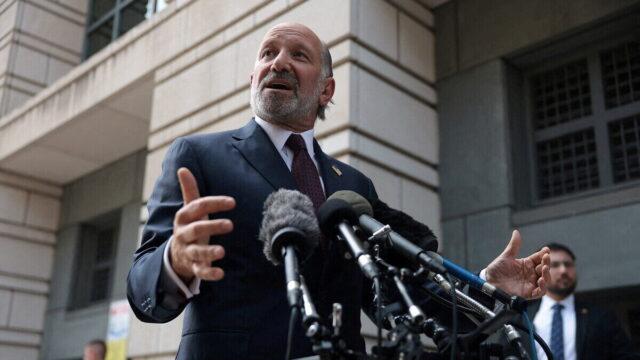
"It's going to be slow," he told reporters at the White House.
Flights canceled and delayed
More than 6,600 flights were canceled and 8,600 delayed, according to FlightRadar24. Another 1,500 flights were already canceled for Sunday. Aviation analysts said schedules could stay disrupted for days.
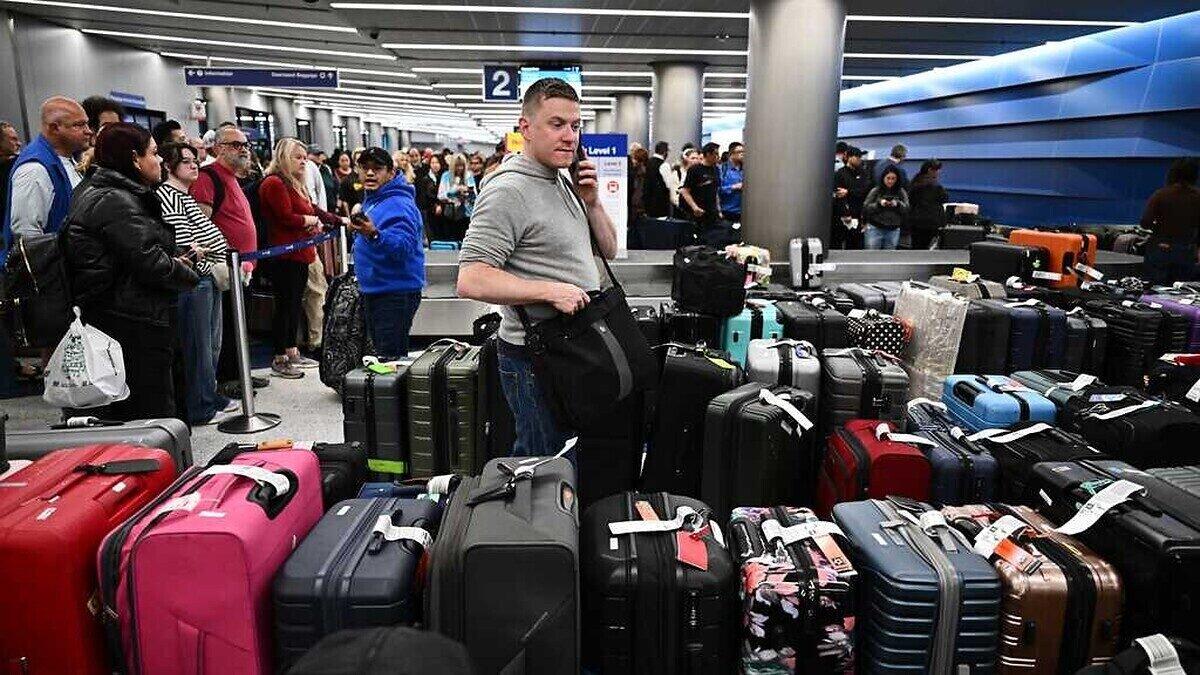
Duffy said tens of thousands of passengers were stranded at airports around the country. Aviation analytics firm Cirium said at least 827 flights were diverted by 7:05 p.m. ET. Of those, 670 returned to their departure airports and 157 landed elsewhere.
Aircraft already airborne were allowed to continue and land during the stop. International flights were handled case by case.
What officials say went wrong
Duffy said the trouble began at 3:36 p.m., when air traffic control centers saw instability in radar and communications systems. The FAA issued the ground stop at 3:54 p.m. ET.
"Our switches, our routers actually got overloaded with data and they started to give us inconsistencies in the data from those routers," Duffy said. He said controllers never fully lost radar or communications and landed thousands of planes safely.
Two airline officials said the outage appeared to affect a telecommunications network overseen by L3Harris Technologies. That network carries radio frequencies controllers use to talk to pilots. L3Harris did not respond to a request for comment.
Homeland Security Secretary Markwayne Mullin said there was "zero evidence" so far of a cyberattack or a rogue AI system, though investigators had not ruled either out. "It appears this was mechanically driven, however, we're still looking," he said. The National Security Agency is helping the Department of Homeland Security investigate.
Stranded passengers and a funding call
Passengers crowded departure halls from Boston to Seattle and New York to Los Angeles. Nicholas Erdodi, who had traveled from New Zealand and was trying to reach Chicago for a conference, said the lack of information frustrated him most. "Someone needs to tell us," he said at Los Angeles International Airport.
Duffy said the immediate problem was fixed and flying was safe. He blamed Congress for failing to fund a replacement for the aging system and called for $50 billion to modernize it. "Give us the money to fix it," he said.
Earlier on Friday, before the outage, the White House and the Department of Transportation had urged Congress to approve $30.1 billion for airport and air traffic control upgrades.