Europe Ukraine Peace Talks Team Set With Five Countries and EU
European Council President António Costa said EU institutions and five countries will coordinate Europe's role in Ukraine diplomacy, after an informal summit in Dublin on November 13. The team aims to end uncoordinated channels while leaving territorial decisions to Kyiv.
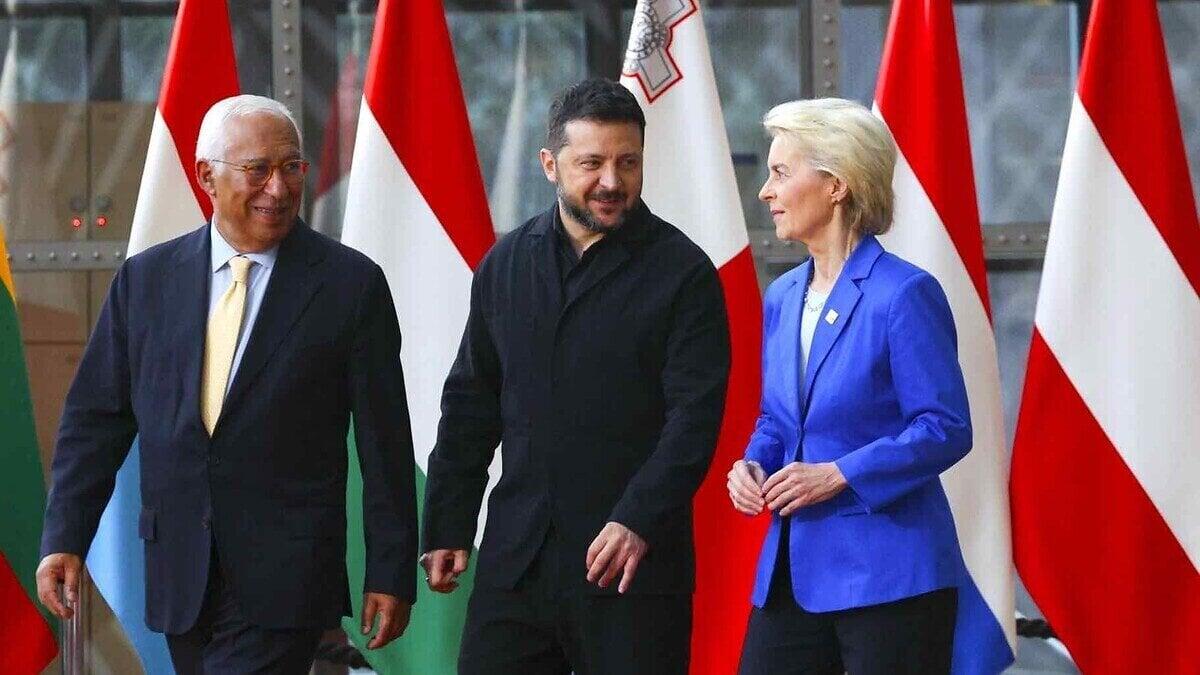
European Council President António Costa announced on November 13 that Europe Ukraine peace talks will be handled by EU institutions together with France, Germany, Italy, Poland and the United Kingdom. He made the announcement after an informal summit in Dublin.
The five-country team will work with all 27 EU member states, the European Council said. It will coordinate Europe's contribution to negotiations alongside Ukraine, the United States and NATO.
The arrangement answers a European demand for a place in a U.S.-backed process that has produced direct contacts among American, Ukrainian and Russian officials. It has not yet produced a ceasefire or a settlement on territory.
"Europe must speak with one clear and united voice," Costa said in remarks published by the European Council.
Limits of the mandate
The team will not negotiate Ukraine's territory for Kyiv, the European Council said. Costa said only Ukraine has the legitimacy to decide matters of its territory and sovereignty.
He said the EU has a central role in Ukraine's European future, reconstruction and economic prosperity. Security guarantees, he said, belong within the Coalition of the Willing, the group of countries backing Ukraine, in close coordination with NATO.
The United Kingdom is not an EU member but belongs to that coalition. Poland has become a main logistics and military-support hub for Ukraine.
Weeks of division
The summit of 47 European leaders opened amid open disagreement over who should speak for the continent. US envoy Steve Witkoff had told reporters that Europeans will be present at the next meetings.
Italian Prime Minister Giorgia Meloni wrote to Costa last week complaining of disunity. "By projecting the image of a Europe that is in disarray, we are merely serving the interests of those who want this war to continue," she wrote.
German Chancellor Friedrich Merz said Ukraine, the Europeans, the Americans and Russia must all sit at the table. Like many leaders, he played down the idea of a single special envoy.
Ukrainian President Volodymyr Zelenskyy told the leaders Europe is not yet directly involved when Russians are at the table. "We need to make sure that Europe becomes a regular part of these negotiations," he said.
Ceasefire first
EU foreign policy chief Kaja Kallas said in a November 13 post on X that Europeans must be present "not just to attend, but to influence the outcome." The EU wants a ceasefire first, then a peace agreement, and only afterward wider talks on European security, she said.
Russian President Vladimir Putin has told US envoys Jared Kushner and Witkoff in Moscow that European troops deployed in Ukraine would be a legitimate target. Estonian Prime Minister Kristen Michal warned that discussing European defense with Russia would put Europe "in the trap."
US President Donald Trump has said he hopes for a "very big, beautiful agreement" that "might involve all of Europe." The date of the next round of talks has not been announced.