Bush Draws Warm Welcome at University of Denver, Reviving Debate Over Legacy
Former President George W. Bush spoke at the launch of the Miller National Academy for Free Expression and Pluralism at the University of Denver. An attendee says his ease as elder statesman raises a question about long-term accountability for his presidency.
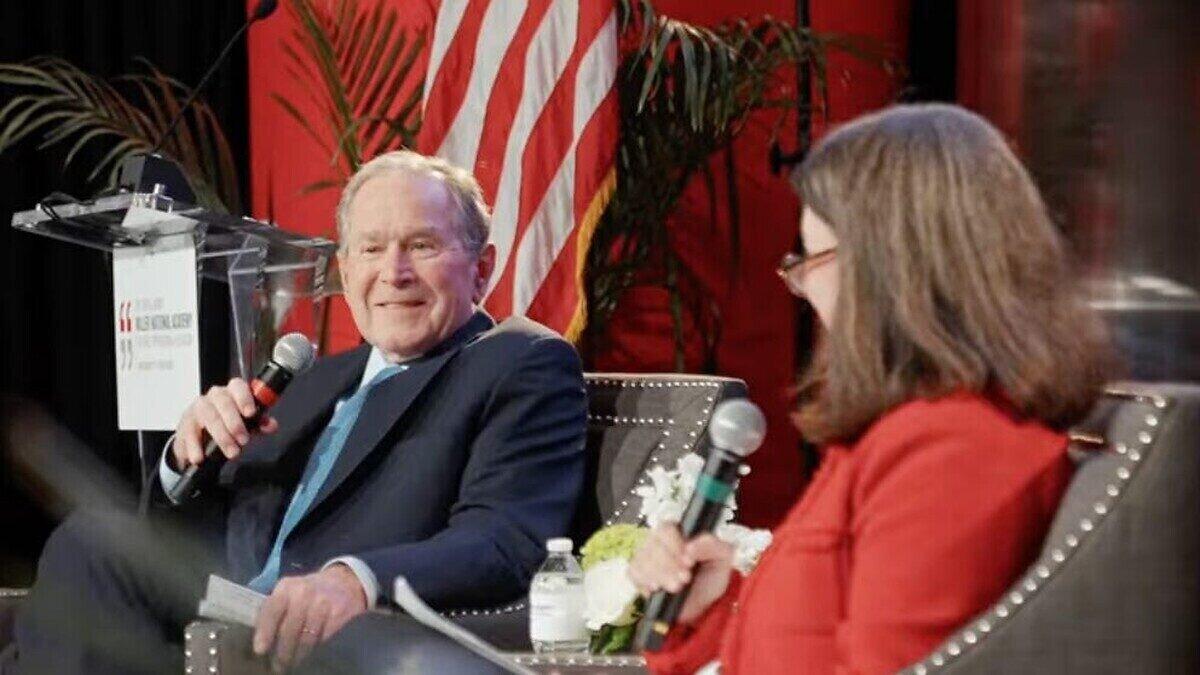
Former President George W. Bush appeared at the University of Denver this week for the inaugural event of the new Miller National Academy for Free Expression and Pluralism, and an attendee says his warm reception has revived a debate over how presidents answer for their decisions.
Seth Masket, who was in the room, wrote that Bush was "impressively charming, witty, and funny." He said he and his colleagues were surprised by how often Bush made them laugh.
Bush also told what Masket called poignant stories. They covered his presidency, his parents, his art and his obligations, especially to those in the military.
He had "pretty clear differences" with the direction his party has taken over the past two decades, according to Masket. Bush never criticized anyone by name.
Friends surprised by the welcome
Masket said some friends and colleagues who were not there were surprised to hear Bush came across so well. Others were bothered that he seemed at ease and accepted as an elder statesman.
Their objection rests on Bush's record. Masket pointed to a prolonged war in Iraq, sold to Congress and the public on false claims about Iraqi weapons. He said that war continued for more than a decade after Bush left office.
He also cited the management of Hurricane Katrina disaster relief. Those decisions, he wrote, were highly unpopular by the time Bush left the White House.
Bush departed as the Great Recession began, Masket noted, with the economy shedding about 700,000 jobs a month. His final approval ratings were in the 20s.
Masket asked: "Is there any sort of long term accountability for this?"
A wider pattern
He argued that accountability for politicians, and especially presidents, is spotty. It is weaker than what people face in more typical jobs and social positions.
As evidence, he pointed to the current president, who was convicted of 34 felonies in 2024. He was then nominated and elected president a few months later, while the Supreme Court granted him broad immunity for actions in office.
Masket wrote that Bush's case is different, and he set out to examine the ways Bush has and has not paid a price for his presidential decisions.
 Take the quizWhat Kind of Holiday Spender Are You? Take the Black Friday QuizStart →
- 1Column: 4 Reasons to Eat Dark Chocolate, Dietitians Say

- 2Aspyn Ovard Reveals Daughter Has Terminal Cancer on Mormon Wives

- 3Chrissie Swan, 52, Tears Up Over Secret Surprise While Recovering

- 4Box Office: Johnny Depp’s Ebenezer Rings Up $7.1M on Friday

- 5Microsoft Outage Not a Cyber Attack, Company Says, as Fixes Roll Out

 Lifestyle7 Quiet Habits of Emotionally Intelligent People, According to Psychologists
 LifestylePeople Who Don’t Like Celebrating Their Birthday Often Share These 7 Traits
 Lifestyle · Food & HealthVitamin D in Winter: Do You Need a Supplement, and How Much?
 Lifestyle · Food & HealthWhat Is Seasonal Affective Disorder? Signs, Causes and What Helps