Scientists Create First Detailed Map of Brain’s Action Hub
Scientists have built the most extensive map yet of the basal ganglia, the brain region that turns thoughts into actions. The atlas draws on 27 studies in five journals and already hints at changes in autism and Parkinson's disease, with open-source tools for other researchers.
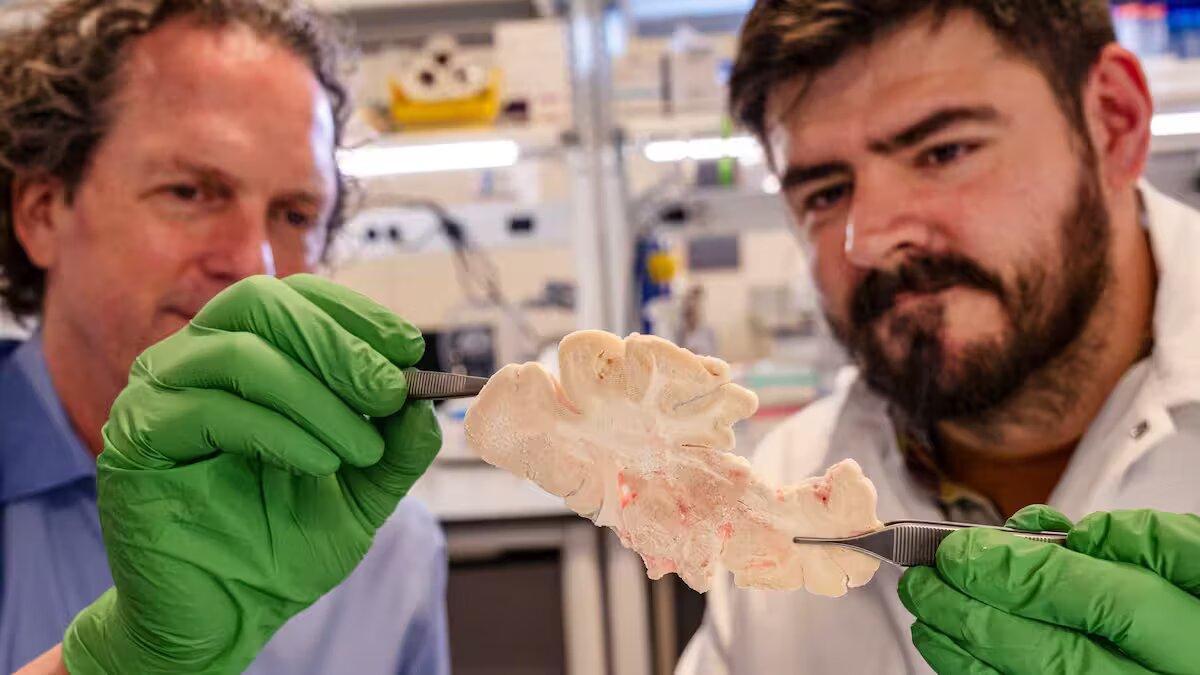
Scientists create first detailed maps of the basal ganglia, a deep brain region that helps people turn thoughts into actions, in a package of 27 studies published across five journals. The work was supported by the US National Institutes of Health (NIH) BRAIN Initiative.
The journals are Cell, Cell Reports Medicine, Cell Systems, Cell Genomics and Neuron. The researchers say the atlas could give new insight into Parkinson's disease, Huntington's disease and autism.
The atlas identifies millions of individual brain cells. It maps their activity, characteristics and precise locations, and it tracks how the cells develop.
That gives researchers a way to study how the basal ganglia work in both healthy and diseased brains.
What the basal ganglia do
The basal ganglia are a group of interconnected structures deep in the brain. They play an important role in controlling voluntary movement, learning, decision-making and attention.
How the map was built
Researchers analyzed donated human brain tissue using single-cell sequencing, which reads the genetic activity of individual cells. They combined that data with advanced imaging to place different cell types in a three-dimensional map.
The work covers adult brains and early developmental stages, to show how the basal ganglia form. The teams also created similar atlases from mice, marmosets and non-human primates, so findings can be compared across species.
Early clues on autism and Parkinson's
The map has already pointed to possible changes in the brains of people with autism. Scientists compared genetic data with the reference map and identified possible disruptions in specific cell populations in the striatum, a major part of the basal ganglia.
The finding suggests autism-related brain differences may reach beyond the cerebral cortex, which has traditionally drawn much of the attention in autism research.
In a separate study, researchers used a targeted genetic technique in mouse models of Parkinson's disease. It raised dopamine precursor levels in specific striatal cells. The approach eased symptoms while reducing the severity of common side effects.
Open tools for other labs
Alongside the atlas, the scientists released open-source tools for analyzing and exploring brain data. They include software for preparing sequencing information and an online platform that lets users examine the atlas without specialist computing equipment.
The resource could help scientists pinpoint the brain cells involved in neurological disorders and support more precise treatments.
 Take the quizWhat Kind of Holiday Spender Are You? Take the Black Friday QuizStart →
- 1Column: 4 Reasons to Eat Dark Chocolate, Dietitians Say

- 2Aspyn Ovard Reveals Daughter Has Terminal Cancer on Mormon Wives

- 3Chrissie Swan, 52, Tears Up Over Secret Surprise While Recovering

- 4Box Office: Johnny Depp’s Ebenezer Rings Up $7.1M on Friday

- 5Microsoft Outage Not a Cyber Attack, Company Says, as Fixes Roll Out

 Lifestyle7 Quiet Habits of Emotionally Intelligent People, According to Psychologists
 LifestylePeople Who Don’t Like Celebrating Their Birthday Often Share These 7 Traits
 Lifestyle · Food & HealthVitamin D in Winter: Do You Need a Supplement, and How Much?
 Lifestyle · Food & HealthWhat Is Seasonal Affective Disorder? Signs, Causes and What Helps