Kakadu Artist Ivan Namarnyilk’s Rock Art Sells Before It Dries
Blaldja artist Ivan Namarnyilk paints on paper with a sedge-grass brush at the Marrawuddi Arts and Culture Centre in Kakadu National Park, and tourists ask to buy his pieces before he finishes them. His first solo show in August sold thousands of dollars of work.
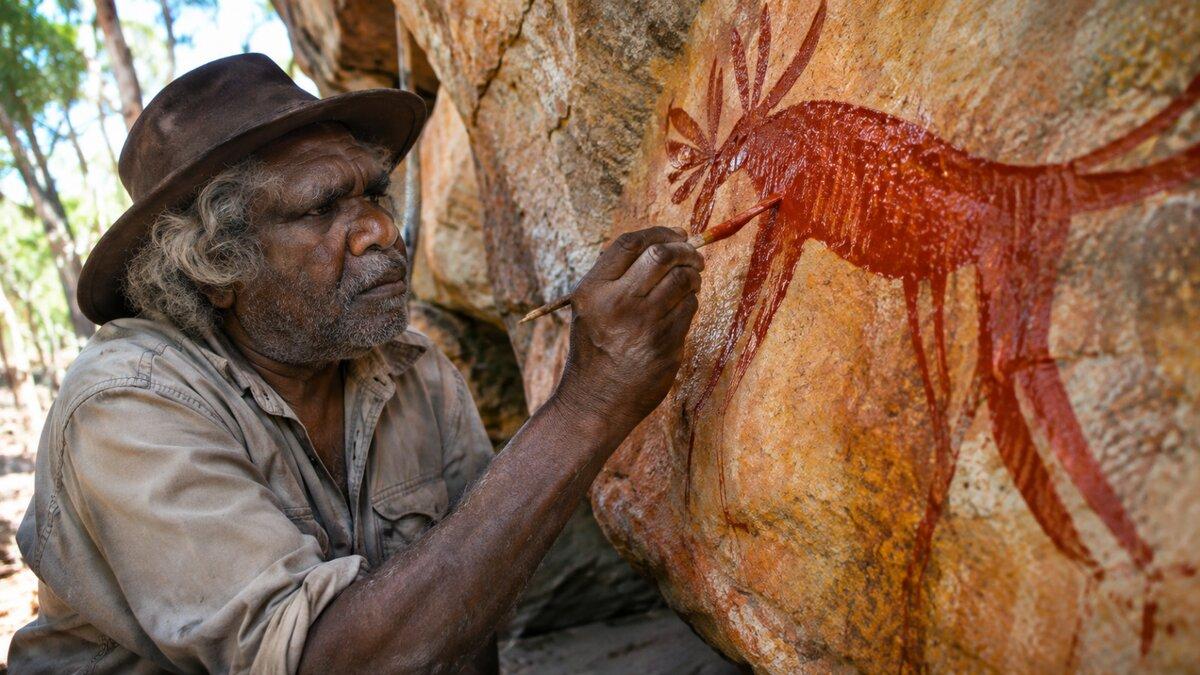
Kakadu artist's rock art is selling faster than Ivan Namarnyilk can paint it, with tourists at the Marrawuddi Arts and Culture Centre in Jabiru, inside Kakadu National Park, asking to buy pieces before he has finished them.
Namarnyilk, a Blaldja artist, sits at a table in the tiny gallery and draws thin, precise strokes with a manyilk, a traditional brush made of sedge grass. "I'm not a machine," he jokes. "You gotta be patient, no rushing. We gotta be steady."
Taught by his father
His father, a fellow prominent artist at Mudginberri Station, taught him. Namarnyilk has painted "rock art" on paper since he was a teenager, and that is now more than three decades ago.
He is known for detailed, x-ray style works. He mainly uses ochre to paint or scratch-draw local animals and cultural totems, then adds his signature: a mouth-blown clay handprint.
"We use natural colour like red ochre, white clay, yellow ochre," he says. His subjects include spirit man, kangaroo, echidna, turtle, and fish such as barramundi or black bream.
Totems carry weight in the work. "My father's totem is irritja [wedge-tailed eagle] and my mother's is duwa [mud crab]," he says.
First solo exhibition
In August, Namarnyilk sold thousands of dollars worth of his art at his first solo exhibition, held during the Mahbilil Festival in Jabiru. He says showing the pieces was vital for helping to financially support his family.
He also sees the work as a way to pass culture on to the next generation. "Today we [are] using all this new, modern style but the original was like the rock art," he says.
How the gallery works
Over the past 25 years, more than 500 West Arnhem Indigenous artists have sold pieces at the centre. Business manager Caron Farrell says the gallery buys artwork up-front from about 30 regular makers. Forty per cent of sales proceeds goes towards keeping the centre open.
Some artists live a long way away, she says, so work arrives by plane or with family members. Those based in Jabiru or Mudginberri come in and paint on site.
Farrell says holiday-makers enjoy watching artists paint, scratch, draw and weave before taking the pieces home around the world. Many are surprised by the range of styles.
West Arnhem art is the kind "you see on all the rock formations," she says, in contrast to the dot painting of the central desert. "You find visitors are quite taken aback to the different styles that are here."
 Take the quizWhat Kind of Holiday Spender Are You? Take the Black Friday QuizStart →
- 1I’m A Celebrity 2026 Line-Up: Rooney Leads 11 Stars Into Jungle

- 2Mavericks Surfers Race to California for Waves Near 50 Feet
- 3NYC Medical Examiner Has Not Determined Cause of Death of Beau Rose Jessup

- 4Mountaineer Finds Ice Age Cave Bear Graveyard in the Dolomites
- 5Rugby League World Cup Final 2026: Kick-Off Times and How to Watch Kangaroos v New Zealand

 Lifestyle7 Signs Your Social Battery Is Running Low (and Why You Keep Cancelling Plans)
 Lifestyle · Food & HealthThanksgiving Food Safety: How Long Leftovers Last and the Safe Turkey Temperature
 Lifestyle7 Quiet Habits of Emotionally Intelligent People, According to Psychologists
 LifestylePeople Who Don’t Like Celebrating Their Birthday Often Share These 7 Traits