Mary Cassatt Exhibition Reclaims Her Place in Impressionism
A new exhibition at Paris’s Musée d’Orsay brings together 80 paintings, pastels and prints, including works previously unseen, to restore Mary Cassatt’s place in the Impressionist movement. The exhibition will travel to London early next year and includes a digital representation of her lost mural for the 1893 World’s Fair in Chicago.
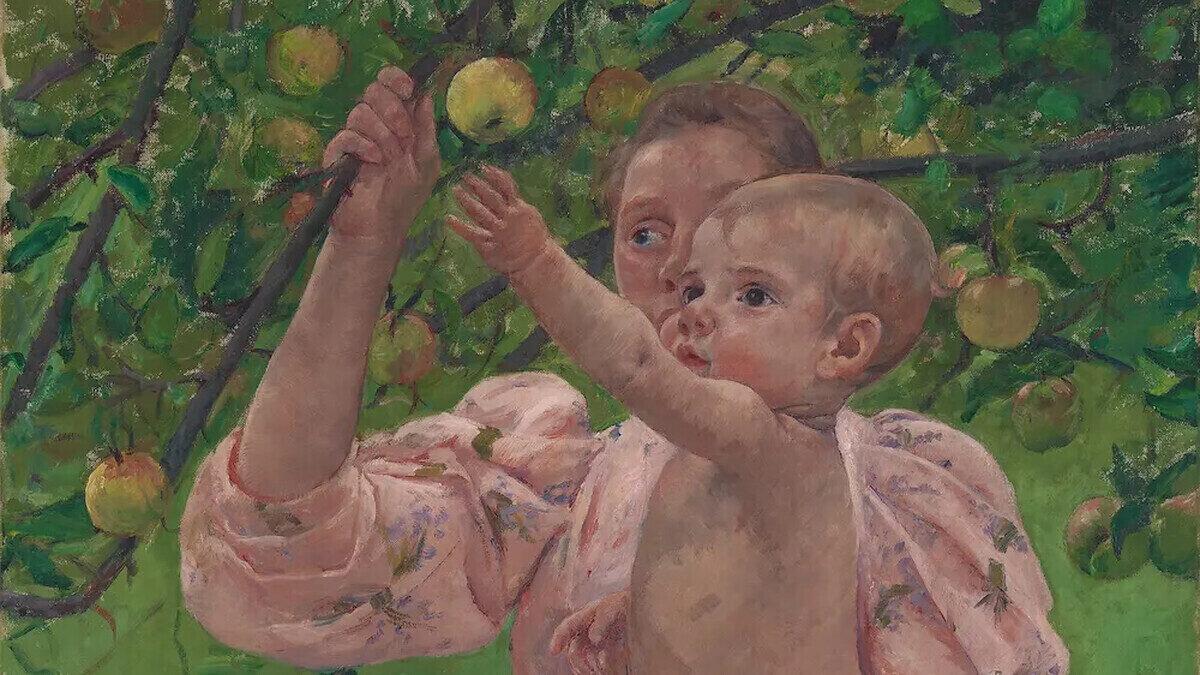
The Musée d’Orsay in Paris has opened an exhibition reclaiming Mary Cassatt’s place in Impressionism, with 80 paintings, pastels and prints spanning her career. The show includes works previously unseen and will travel to London early next year.
Many pieces come from private collections in Europe and the United States. The exhibition also features unpublished private letters and a digital representation of Modern Woman, Cassatt’s long-lost mural for the 1893 World’s Fair in Chicago.
“She was overlooked because she was a woman and a foreigner,” said Caroline Corbeau-Parsons, an exhibition curator. Cassatt described herself as “American, American through and through.”
A painter at the center of the movement
Cassatt worked as a painter, friend and collaborator of Edgar Degas. He invited her to exhibit with the group of artists later nicknamed the Impressionists by the press.
The circle included Claude Monet, Berthe Morisot, Pierre-Auguste Renoir, Édouard Manet, Alfred Sisley and Camille Pissarro. Cassatt and Degas collaborated on several works, including her painting Little Girl in a Blue Armchair.
“We hope this exhibition will put Mary Cassatt back in her rightful place in the history of impressionism,” Corbeau-Parsons said.
Cassatt often painted women and children, showing their social and private lives at a time when convention restricted women’s choices. She was also a lifelong advocate for women’s rights.
Her focus on those subjects helped reduce her work to a stereotype, Corbeau-Parsons said. The exhibition presents Cassatt as an active member and pillar of the French Impressionist group.
From Pennsylvania to Paris
Born into a wealthy Pennsylvania banking family with French Huguenot roots, Cassatt first visited France with her family in 1854, when she was 10. She later studied at the Pennsylvania Academy of the Fine Arts.
Women faced restrictions in the art world. Cassatt was allowed to paint reproductions based on statues and was barred from painting nudes.
Her father opposed her becoming a painter, but she moved to Paris in 1866, aged 21, with her mother and female relatives as chaperones. Women could not attend the École Nationale Supérieure des Beaux-Arts, so Cassatt took private lessons and copied works at the Louvre.
After her death in June 1926, France held only one retrospective of her work in the following century, despite her having lived there for 32 years. “We hope this exhibition will put Mary Cassatt back in her rightful place in the history of impressionism,” Corbeau-Parsons said.
 Take the quizWhat Kind of Holiday Spender Are You? Take the Black Friday QuizStart →
- 1I’m A Celebrity 2026 Line-Up: Rooney Leads 11 Stars Into Jungle

- 2Mavericks Surfers Race to California for Waves Near 50 Feet

- 3NYC Medical Examiner Has Not Determined Cause of Death of Beau Rose Jessup
- 4Mountaineer Finds Ice Age Cave Bear Graveyard in the Dolomites
- 5Rugby League World Cup Final 2026: Kick-Off Times and How to Watch Kangaroos v New Zealand

 Lifestyle7 Signs Your Social Battery Is Running Low (and Why You Keep Cancelling Plans)
 Lifestyle · Food & HealthThanksgiving Food Safety: How Long Leftovers Last and the Safe Turkey Temperature
 Lifestyle7 Quiet Habits of Emotionally Intelligent People, According to Psychologists
 LifestylePeople Who Don’t Like Celebrating Their Birthday Often Share These 7 Traits