Singapore LNG Supply: Gas Routes, Capacity and Buyer Risks
Singapore has LNG import capacity, pipeline gas and emergency buffers; regional buyers still need to price route, access and contract risks separately.
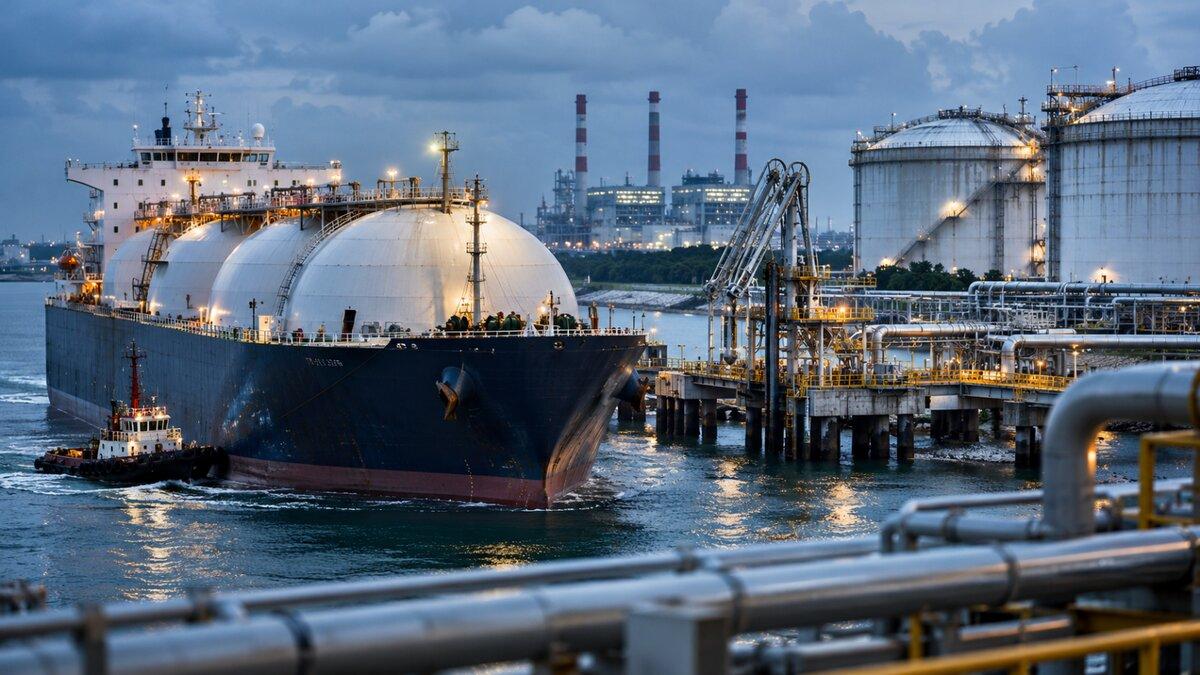
Singapore’s LNG terminal and emergency gas stocks provide physical supply options, but buyers should not treat either as a guarantee against higher fuel bills. For businesses assessing Singapore LNG supply and ASEAN gas security, LNG procurement decisions must distinguish terminal capacity, access to replacement cargoes and the contractual allocation of costs.
- SLNG reports annualised average gas supply capacity of 10 million tonnes per annum (mtpa); the ministry reports peak send-out capacity of around 11 mtpa.
- SLNG says LNG supplies about half of Singapore’s gas demand for power generation, with pipelines supplying the remainder.
- Singapore’s Standby LNG Facility supports electricity generation during gas disruptions; it does not establish a guaranteed purchase price.
- The IEA projects ASEAN will become a net gas importer by the decade’s end; this is an outlook, not an observed outcome.
Singapore’s terminal capacity and pipeline balance
Singapore’s Ministry of Energy, Trade and Industry says imported natural gas supplies around 95% of electricity generation. That makes fuel procurement relevant to electricity-dependent businesses as well as direct gas users. Its natural-gas page, updated on 22 September 2026, describes an existing LNG terminal with two jetties and four tanks, plus a second terminal under development. Ministry source.
SLNG’s operational overview gives annualised average supply capacity of 10 mtpa, while the ministry gives peak send-out capacity of around 11 mtpa. These measures describe different operating capabilities and should remain separate in procurement models. SLNG lists three 180,000-cubic-metre tanks and one 260,000-cubic-metre tank: combined nominal tank volume is therefore 800,000 cubic metres. That arithmetic does not establish usable emergency inventory or days of cover. Terminal overview.
The ministry describes a planned offshore terminal at Jurong Port using a floating storage and regasification unit with 5 mtpa capacity. Buyers should exclude that planned capacity from assumptions about infrastructure already available.
The following comparison separates infrastructure and services. User profiles are procurement analysis; transaction-specific USD prices are not disclosed in the cited overview pages.
| Infrastructure or service | Technical scope | USD price | Main benefit | Relevant buyer profile |
|---|---|---|---|---|
| Existing SLNG terminal | 10 mtpa annualised average supply capacity | Not disclosed | LNG receiving and regasification | Domestic gas suppliers and generators |
| Planned second terminal | 5 mtpa FSRU regasification capacity | Not disclosed | Additional planned import capability | Buyers assessing future supply options |
| Standby LNG Facility | Gas available to generators during disruptions | Not disclosed | Emergency physical supply | Power generation companies |
| SLNG Storage & Reload | Unload, store and reload cargoes for re-export | Not disclosed | Cargo handling flexibility | Traders and regional LNG suppliers |
For electricity consumers, JournalArta’s coverage of Singapore power demand provides related context. The procurement question remains which supplier must deliver energy, through which facilities, and under what interruption terms.
ASEAN route exposure makes replacement access valuable
The IEA’s ASEAN Energy Security Review, published on 6 October 2026, estimates regional gas consumption at close to 180 billion cubic metres in 2025. It projects demand growth of 18% between 2025 and 2030 alongside a roughly 4% production decline. These projections explain its expectation of a regional shift towards net imports.
The route exposure is already measurable. In 2025, about one-fifth of ASEAN LNG imports passed through the Strait of Hormuz, while more than half transited through or within the Strait of Malacca. Around 45% of imports used spot markets or short-term contracts. The IEA also reports just over 3 billion cubic metres of regional LNG storage, mostly serving operational purposes. These are regional figures, not Singapore-specific import shares or reserve levels. IEA gas-security review.
For a buyer reviewing the natural gas supply chain, the practical inference is to map routes alongside counterparties. Request the proposed loading terminal, expected shipping route, receiving terminal and replacement-delivery arrangements. Ask whether alternative supplies would depend on the same infrastructure or passage. A longer supplier list alone does not answer those questions.
SLNG offers Storage & Reload Services that allow customers to unload cargoes, store LNG and reload it into ships for re-export. The operator also describes smaller-scale deliveries and transhipment among possible commercial arrangements. These services provide handling options; buyers should separately establish available capacity, booking terms and onward delivery access. SLNG service description.
Keep this gas analysis distinct from regional fuel supply coverage. A procurement team should require evidence of its own plant’s fuel-switching capability before counting another commodity as a practical substitute.
Match physical buffers and contract protection to the business
EMA says generators must maintain sufficient gas based on their generating capacity and hold diesel reserves as an alternative fuel. Generators can also draw gas from the Standby LNG Facility during disruptions. Its FAQ describes Singapore GasCo procuring replacement cargoes for disrupted Middle East supplies. The page does not disclose reserve volumes, days of cover or a guaranteed replacement price. EMA fuel-supply safeguards.
Fuel buffers do not guarantee a fixed electricity price
The commercial distinction follows: physical availability and budget protection require separate checks. The ministry says GasCo was established in April 2025 to centralise power-sector gas procurement and pursue diversified sources and longer-term contracts. That policy objective does not specify the price or risk allocation in an individual customer’s agreement.
For a generator with continuous fuel requirements, request evidence of contracted supply, terminal access and replacement arrangements. Have the contract identify responsibility for additional procurement and delivery costs during interruption.
For an industrial electricity customer, assess the retail agreement’s fuel-cost adjustment, interruption and renewal provisions. Do not assume national emergency stocks define the supplier’s billing obligations.
For a regional trader, consider Storage & Reload where the business needs cargo staging or redistribution. Obtain a complete quotation covering storage, handling and onward movement before comparing delivered costs.
SLNG defines domestic spot LNG supply as having a term no longer than 12 months. Its published page specifies an additional storage charge of SGD 0.20 per MMBtu for each additional day beyond 30 days; a USD equivalent is not disclosed there. This is a storage charge, not a commodity price. Spot throughput terms.
Singapore energy security gives buyers several physical safeguards. A defensible procurement decision still needs a deliverable route, documented access and explicit cost allocation: capacity figures alone cannot establish what an interruption will cost the business.
All sources accessed 16 November 2026. Page dates below are those displayed by the sources; undated pages are identified explicitly.
- Ministry: Natural Gas — content updated 22 September 2026.
- EMA: Singapore Energy Statistics, Chapter 4 — publication data accurate as of September 2026; natural-gas balance covers 2020–2025.
- SLNG: Terminal Overview — publication date not disclosed.
- IEA: ASEAN Energy Security Review — published 6 October 2026.
- IEA: Natural Gas Security Review — chapter of the report published 6 October 2026.
- EMA: Fuel-Supply Safeguards — page displays last updated 7 April 2026.
- SLNG: Storage & Reload Services — publication date not disclosed.
- SLNG: Spot Throughput Services — publication date not disclosed.
 Take the quizWhat Kind of Holiday Spender Are You? Take the Black Friday QuizStart →
- 1I’m A Celebrity 2026 Line-Up: Rooney Leads 11 Stars Into Jungle

- 2Mavericks Surfers Race to California for Waves Near 50 Feet

- 3NYC Medical Examiner Has Not Determined Cause of Death of Beau Rose Jessup

- 4Mountaineer Finds Ice Age Cave Bear Graveyard in the Dolomites

- 5Rugby League World Cup Final 2026: Kick-Off Times and How to Watch Kangaroos v New Zealand

 Lifestyle7 Signs Your Social Battery Is Running Low (and Why You Keep Cancelling Plans)
 Lifestyle · Food & HealthThanksgiving Food Safety: How Long Leftovers Last and the Safe Turkey Temperature
 Lifestyle7 Quiet Habits of Emotionally Intelligent People, According to Psychologists
 LifestylePeople Who Don’t Like Celebrating Their Birthday Often Share These 7 Traits