Myanmar Faces Historic Genocide Ruling in Rohingya Case
The International Court of Justice is due to rule on The Gambia’s accusation that Myanmar committed genocide against the Rohingya. A ruling against Myanmar would be the first finding by an international court that a state committed genocide. Myanmar has denied the accusation.
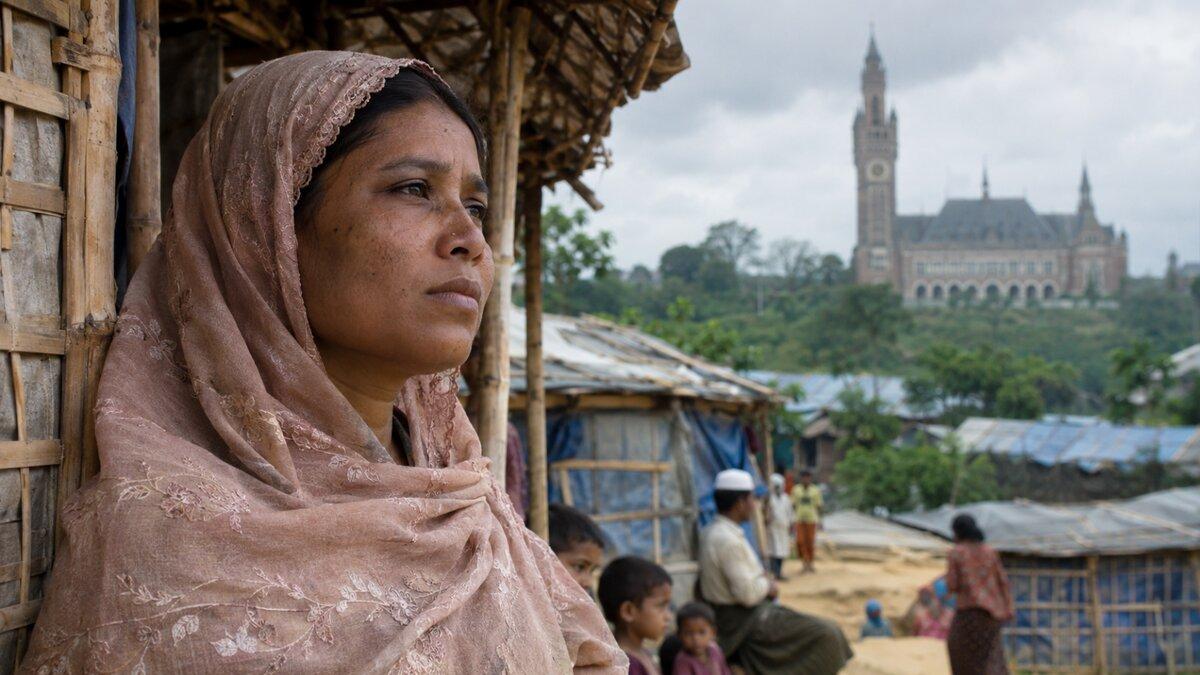
Myanmar faces a ruling from the International Court of Justice in a genocide case brought by The Gambia over attacks on the Rohingya in 2017.
The decision could set a legal precedent. No international court has ever found a state responsible for committing genocide.
The Gambia accused the Myanmar state of genocide after a military operation drove hundreds of thousands of Rohingya from Rakhine State into neighboring Bangladesh in August and September 2017.
Myanmar has denied accusations of genocide and ethnic cleansing. Its authorities say the military was responding to attacks by Rohingya militants.
The case against Myanmar
Human rights groups and a United Nations fact-finding mission documented accounts of killings, torture and mass rape by Myanmar soldiers. Rohingya villages were burned during the operation.
A UN report in 2018 said the army’s tactics were “grossly disproportionate to actual security threats.” It called for senior military figures to be investigated for genocide in Rakhine State and crimes against humanity elsewhere.
Myanmar rejected the report.
The Gambia filed its case in November 2019, backed by the Organisation of Islamic Co-operation. It argued that all states have an interest in upholding the 1948 Genocide Convention.
Myanmar challenged The Gambia’s right to bring the case. The court ruled that The Gambia was eligible to do so.
The International Court of Justice settles disputes between states rather than trying individuals. There is no appeal against its verdict, but no penalty automatically follows a ruling.
Arsalan Suleman, the lawyer leading The Gambia’s case, said a victory would be “a judgment of landmark importance.”
Dispute over genocidal intent
Judges apply a high bar to proving genocidal intent. The Gambia’s legal team presented evidence of discrimination against Rohingya, including restrictions on education, healthcare, work and travel.
Former Myanmar government leader Aung San Suu Kyi led the initial defense at The Hague. She argued that possible war crimes against Rohingya did not prove genocidal intent.
A military-appointed team took over the defense after a coup deposed her in 2021.
Mohammed Nowkim, a Rohingya who fled Buthidaung in 2017 and now lives in Canada, said the trial was a chance to acknowledge suffering after years of denial.
More than a million Rohingya live in camps in Bangladesh, where they are barred from employment. International funding for them has declined.
In Rakhine State, the insurgent Arakan Army controls most of the territory after fighting Myanmar’s military. Many Rohingya villages have been completely destroyed.
 Take the quizWhat Kind of Holiday Spender Are You? Take the Black Friday QuizStart →
- 1Gold Silver Price November: Futures Rise Near Yearly Lows

- 2U.S. Emergency Alert Test Nov. 17 Is Not a Power Outage

- 32027 NFL Mock Draft Puts Ohio State’s Jeremiah Smith at No. 1

- 4Michael Clarke Says Sandpapergate Scars Drew Steve Smith to New York

- 5GTA 6 New Zealand Time Trick Is Not Guaranteed to Work

 Lifestyle · Food & Health4 Reasons to Eat Oatmeal, According to Nutrition Experts
 Lifestyle7 Signs Your Social Battery Is Running Low (and Why You Keep Cancelling Plans)
 Lifestyle · Food & HealthThanksgiving Food Safety: How Long Leftovers Last and the Safe Turkey Temperature
 Lifestyle7 Quiet Habits of Emotionally Intelligent People, According to Psychologists