NASA’s SkyFall Mars Helicopters Face Nuclear Rocket Test
NASA plans to send three small helicopters to Mars aboard a nuclear-powered spacecraft, with a conventional rocket as a backup. A former NASA Mars program director has questioned the pairing, while the mission’s project scientist says the aircraft could help bridge a gap between orbital and surface observations.
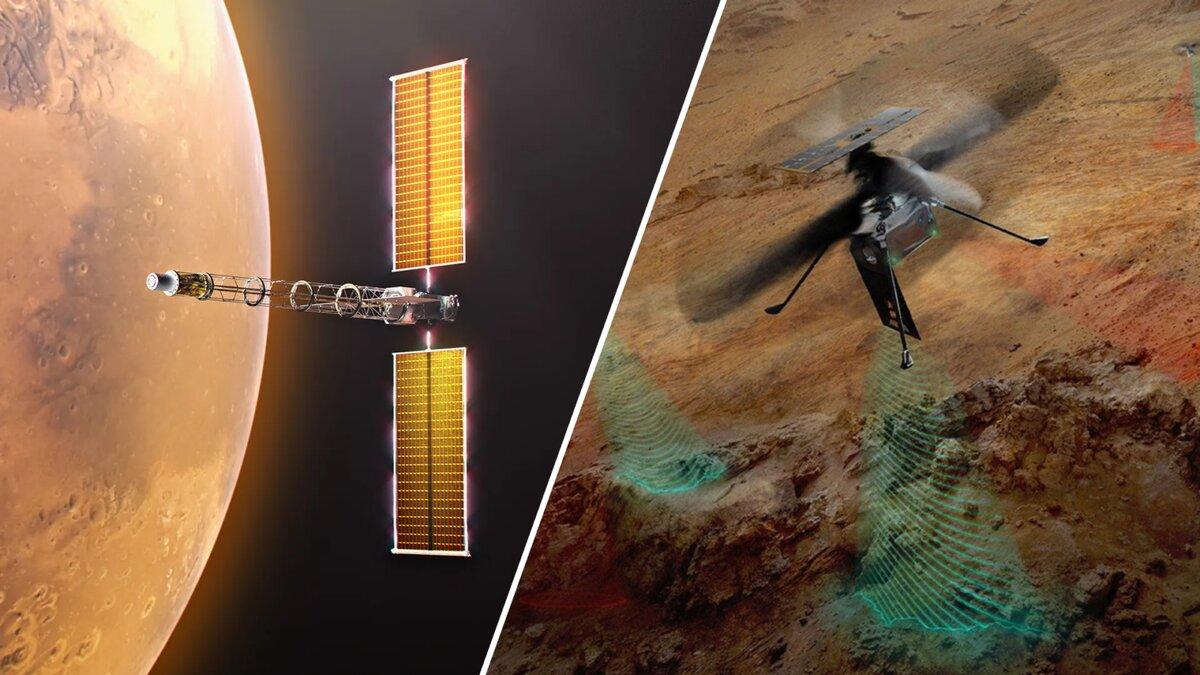
NASA plans to send its SkyFall helicopters to Mars aboard a nuclear-powered spacecraft, with a launch slated for late 2028. A former NASA Mars program director has questioned the pairing, calling it a “shotgun marriage.”
The mission would deploy three small helicopters to investigate the Martian surface. NASA’s Space Reactor-1 Freedom spacecraft, known as SR-1, is scheduled to make an initial Mars flyby in 2029.
On a second approach in the fall of 2030, the carrier would release a capsule containing the helicopters. NASA also has a conventional launch option if SR-1 is not ready.
Former Mars Director Questions Pairing
Scott Hubbard, a former director of NASA’s Ames Research Center and its first Mars Program Director, said SkyFall was approved for programmatic or political reasons.
Hubbard said the usual sequence for a science mission had been reversed. Scientists are having to develop objectives that match the helicopters’ capabilities, he said.
He also questioned whether SR-1 would be ready for the 2028 Mars launch window. Hubbard said nuclear electric propulsion would not shorten the trip to Mars.
Its value, he said, lies in reducing risks and supporting potential missions to the moon, outer planets and beyond.
Helicopters Would Scout Martian Terrain
SkyFall Project Scientist Matthew Golombek, of NASA’s Jet Propulsion Laboratory, said the mission aims to fill a gap between images from orbit and observations on the surface.
NASA started SkyFall in March 2026. The team has grown from roughly six people to more than 200, Golombek said.
The helicopters would start their rotors about a kilometer above Mars and land separately. Each would be ready to fly every other Martian day, or sol.
The prime mission would last six months, with a one-year goal. NASA intends the aircraft to arrive during northern spring on Mars, when dust storms are less likely.
Each helicopter would carry five scientific instruments and engineering navigation cameras. Their equipment could examine terrain, atmospheric conditions, radiation and structures beneath the surface.
Golombek highlighted a small ground-penetrating radar with a flexible antenna. It could look for buried rocks, layers of terrain and subsurface ice.
SkyFall could also scout routes for a rover and identify locations for more detailed studies by later missions, he said.
NASA Considers Landing Sites
The helicopters need a landing area with virtually no rocks, low slopes, no large craters and limited dust, Golombek said. Detailed scientific routes have yet to be planned.
One possible target is Arcadia Planitia in Mars’s northern lowlands. Studies have indicated substantial volumes of ice near the surface there, and Golombek said the area appears to meet engineering constraints.
Scientists have also considered visiting craters that discarded descent equipment could create. If ice lies close enough to the surface, those impacts could expose it for the helicopters to examine.
NASA plans two workshops for scientific input on SkyFall and potential landing sites before decisions at NASA Headquarters.
Golombek said a conventional rocket could carry SkyFall if SR-1 is not ready. “Something like a Falcon 9 would be more than sufficient, but others are possible as well,” he said.
 Take the quizWhat Kind of Holiday Spender Are You? Take the Black Friday QuizStart →
- 1Gold Silver Price November: Futures Rise Near Yearly Lows

- 2U.S. Emergency Alert Test Nov. 17 Is Not a Power Outage

- 32027 NFL Mock Draft Puts Ohio State’s Jeremiah Smith at No. 1

- 4Michael Clarke Says Sandpapergate Scars Drew Steve Smith to New York

- 5GTA 6 New Zealand Time Trick Is Not Guaranteed to Work

 Lifestyle · Food & Health4 Reasons to Eat Oatmeal, According to Nutrition Experts
 Lifestyle7 Signs Your Social Battery Is Running Low (and Why You Keep Cancelling Plans)
 Lifestyle · Food & HealthThanksgiving Food Safety: How Long Leftovers Last and the Safe Turkey Temperature
 Lifestyle7 Quiet Habits of Emotionally Intelligent People, According to Psychologists