Mars and Jupiter Appear 1.2 Degrees Apart in Pre-Dawn Sky Monday
Mars and Jupiter will sit just 1.2 degrees apart in the pre-dawn sky on Monday, November 16, according to the Royal Observatory Greenwich. Here is where to look, when to go outside and which other planets are visible this month.
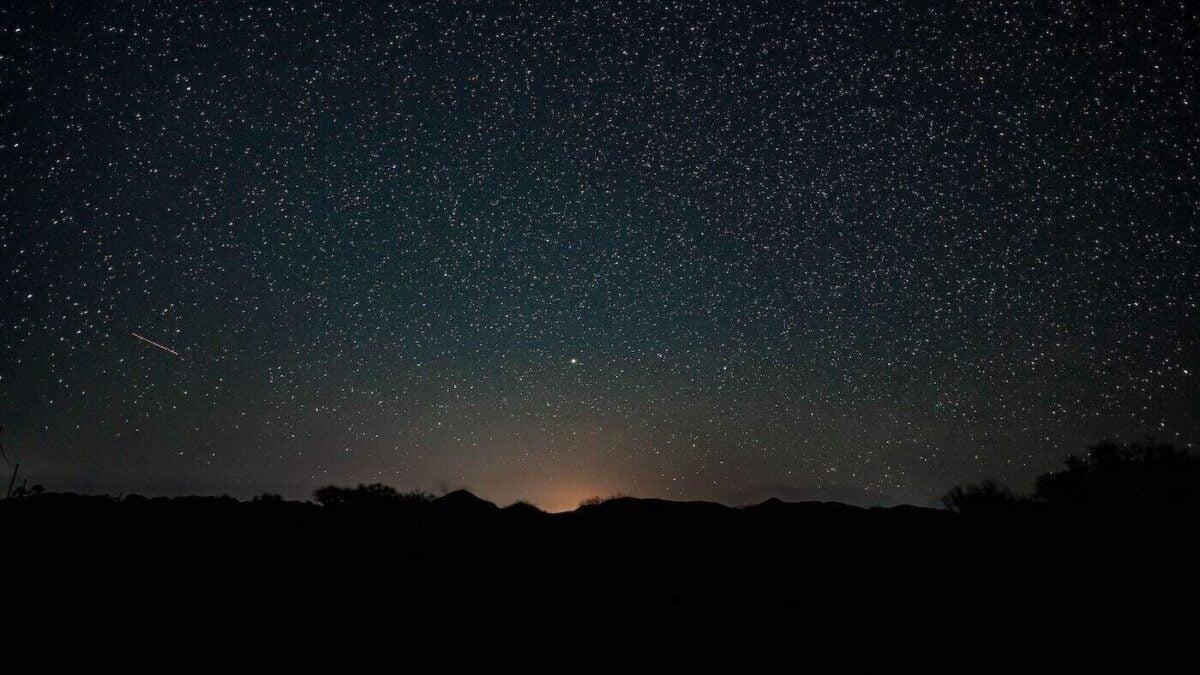
Mars and Jupiter will appear just 1.2 degrees apart in the pre-dawn sky on Monday, November 16, 2026, so early risers can see Mars and Jupiter almost touch. The Royal Museums Greenwich says that is roughly the width of a finger held at arm's length.
It is the highlight of a diagonal line of four planets. Mercury, Venus, Mars and Jupiter are all visible to the naked eye in the south-eastern to eastern sky through November.
Where and when to look
The best time is about 45 to 60 minutes before sunrise. Find a spot away from light pollution with a clear view of the eastern horizon, and give your eyes around 20 minutes to adjust to the dark.
Mars is high in the eastern sky, with Jupiter below it but looking brighter. The pair will also sit close to the bright star Regulus and may look like a triple star. Mars and Jupiter will look very close on both November 15 and 16.
"They will be separated by just 1.2 degrees, or roughly the width of a finger held at arm's length," said Gideon Bendavid-Walker, an astronomer at the Royal Observatory Greenwich.
The rest of the parade
Venus is the easy one. It is the brightest object in the night sky after the Moon, and it sits above and to the right of Mercury. It rises higher than Mercury and appears earlier in the hours before sunrise.
Do not confuse Venus with the nearby bright star Spica. Stars twinkle, while planets glow steadily.
Mercury is the hardest to spot. It is the closest planet to the Sun and the smallest in the solar system, so it is only visible in twilight, dim and low on the horizon. Look to the south-east with a wide, flat horizon.
With binoculars or a telescope, a few more planets come into view. Uranus will be setting in the west at a similar time before sunrise, while Saturn and Neptune are visible for a time in the evening sky rather than the morning.
Weather and what comes next
For the UK, Sunday night was forecast to be drier as the day's rain and hill snow cleared. Wintry showers were expected to bother northern Scotland with plenty of cloud, and the odd shower could pop up around north-west facing coasts. Elsewhere the night looked mostly clear and dry, apart from some mist or fog patches.
From November 24, a full Moon will join the planets in the morning sky. It is the first of a run of four supermoons.
 Take the quizWhat Kind of Holiday Spender Are You? Take the Black Friday QuizStart →
- 1Mavericks Surfers Race to California for Waves Near 50 Feet

- 2I’m A Celebrity 2026 Line-Up: Rooney Leads 11 Stars Into Jungle

- 3NYC Medical Examiner Has Not Determined Cause of Death of Beau Rose Jessup

- 4Mountaineer Finds Ice Age Cave Bear Graveyard in the Dolomites

- 5Rugby League World Cup Final 2026: Kick-Off Times and How to Watch Kangaroos v New Zealand

 Lifestyle7 Signs Your Social Battery Is Running Low (and Why You Keep Cancelling Plans)
 Lifestyle · Food & HealthThanksgiving Food Safety: How Long Leftovers Last and the Safe Turkey Temperature
 Lifestyle7 Quiet Habits of Emotionally Intelligent People, According to Psychologists
 LifestylePeople Who Don’t Like Celebrating Their Birthday Often Share These 7 Traits