Australian AI Safety Standard: Enterprise LLM Playbook
Australian enterprises deploying large language models must align governance controls with the Voluntary AI Safety Standard, OAIC Privacy Principles, and Sydney or Melbourne cloud residency.

Australian enterprises deploying production large language models (LLMs) achieve regulatory compliance and predictable latency by pinning inference to Sydney or Melbourne cloud regions under the Australian AI Safety Standard. Combining regional endpoints on Amazon Bedrock or Microsoft Azure OpenAI Service with OAIC Privacy Act controls prevents unauthorised offshore data transfers while capping per-token spend.
- Governance Baseline: The Department of Industry, Science and Resources (DISR) Voluntary AI Safety Standard defines 10 guardrails covering accountability, risk management, data governance, testing, and human oversight.
- OAIC Privacy Rules: Organisations must avoid entering personal information into public consumer chatbots and must disclose automated decision-making in privacy policies under APP 1.
- Regional Residency: Amazon Bedrock (ap-southeast-2) and Azure OpenAI (Australia East) keep inference payloads within Australian borders.
- Cost Optimisation: Batch inference reduces asynchronous LLM processing costs by roughly 50% compared with on-demand token rates.
For the teams that are responsible for the review of these options, the details in the sections below set out the main points to consider in practice.
Mapping the 10 Guardrails and OAIC Privacy Rules to Production
The Voluntary AI Safety Standard issued by Australia's Department of Industry, Science and Resources establishes ten practical guardrails aligned with ISO/IEC 42001. Key technical requirements include maintaining an AI inventory, testing models before deployment and after updates, logging inputs and outputs for traceability, and establishing human-in-the-loop escalation for high-impact decisions.
Complementing DISR's framework, OAIC guidance on generative AI reminds Australian entities that Australian Privacy Principle (APP) 11 requires reasonable steps to protect personal information from misuse or unauthorised disclosure. Regulated financial institutions must also treat model APIs as critical technology dependencies within APRA CPS 230 operational resilience rules.
Engineering teams should enforce automated PII redaction proxies before prompts reach foundation model endpoints. Storing prompt-completion audit logs in immutable local object storage with strict 90-day or 365-day retention policies satisfies both forensic traceability and data minimisation obligations.
Regional Cloud LLM Architecture and Pricing in Australia
Selecting an enterprise LLM hosting tier in Australia requires balancing strict regional data residency against token throughput pricing and batch discounting. Below is an operational comparison of primary hyperscaler deployment options supporting Australian data residency.
| Platform and Region | Pricing Model (USD Reference) | Governance and Residency Controls | Ideal Australian Enterprise Workload |
|---|---|---|---|
| Amazon Bedrock (Sydney ap-southeast-2) | On-demand per input/output token; ~50% discount via Batch Inference; Provisioned Throughput | VPC PrivateLink, IAM, CloudTrail logs, Bedrock Guardrails content filters | AWS-hosted RAG pipelines, document classification, regulated financial workflows |
| Azure OpenAI Service (Australia East) | Standard pay-as-you-go per token; Provisioned Throughput Units (PTUs) billed hourly; Batch API | Entra ID RBAC, private endpoints, customer-managed encryption keys (CMK) | Microsoft 365 Copilot extensions, internal enterprise search, GPT-4o apps |
| Google Cloud Vertex AI (Sydney) | Pay-as-you-go per character/token; Provisioned Throughput subscriptions | VPC Service Controls, IAM, Cloud Audit Logs, grounding with enterprise data | BigQuery-backed analytics, multimodal processing, Gemini enterprise workflows |
| Self-Hosted GPU Clusters (Local DC) | Fixed hardware CapEx / colocation power + cooling (no per-token fee) | Full air-gapped control, zero external API calls, custom open-weights models | Defence, classified government, and high-volume predictable inference |
According to Amazon Bedrock pricing, asynchronous Batch Inference cuts token spend by roughly half compared with real-time on-demand calls, making it well suited for overnight contract analysis or compliance reviews. Meanwhile, Azure OpenAI Service pricing offers Provisioned Throughput Units (PTUs) that guarantee dedicated latency and predictable hourly costs for customer-facing applications.
Infrastructure Constraints: Latency, Guardrail Overhead, and Power
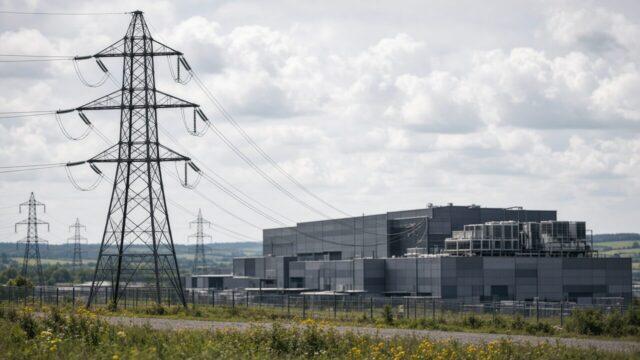
While Sydney and Melbourne regions provide low-latency inference for east coast users, enterprises planning dedicated GPU deployments must factor in physical colocation bottlenecks. Recent Australian data center capacity and grid constraints in Victoria illustrate how substation delays and high power density affect private AI cluster timelines.
Adding inline content-safety filters, prompt-injection detectors, and PII scrubbing layers typically introduces 50 ms to 200 ms of round-trip latency per request. Architects should benchmark end-to-end response times under realistic concurrency rather than relying on raw model token-per-second figures alone, particularly when chaining retrieval-augmented generation (RAG) vector queries.
Auditability, Red-Teaming, and Model Lifecycle Controls
Australian regulators increasingly scrutinise how enterprises test generative AI systems before production cutover and after vendor model weights change. Under the Voluntary AI Safety Standard, engineering teams must document pre-deployment red-teaming results covering prompt injection, hallucination rates on domain-specific corpora, and bias metrics across protected demographic attributes. Storing versioned evaluation datasets in immutable S3 or Azure Blob containers provides auditable proof that model updates did not degrade safety thresholds.
Cost governance is equally critical once RAG pipelines scale across thousands of internal employees. Implementing semantic caching layers with Redis or OpenSearch Serverless avoids redundant foundation model invocations for repetitive policy or HR queries, cutting monthly token consumption by 20% to 35% in typical internal knowledge assistants. Pairing token-budget quotas per business unit with CloudWatch or Azure Monitor alerting prevents runaway agentic loops from exhausting monthly cloud budgets.
For regulated entities subject to APP 1 transparency amendments, product teams must also embed clear user-facing disclosures whenever AI outputs influence credit scoring, insurance underwriting, or customer service eligibility decisions, ensuring human reviewers retain override authority with logged rationale.
Implementation Playbook for Australian Engineering Teams
Adopt Amazon Bedrock in Sydney if your data lake and microservices already run on AWS and you need native VPC PrivateLink isolation alongside Batch Inference discounts for back-office document automation. Enforce Bedrock Guardrails at the gateway layer to block PII leakage and enforce topic boundaries consistently across teams.
Choose Azure OpenAI Service in Australia East if your enterprise relies on Entra ID, Azure AI Search, and Microsoft Fabric, and reserve PTUs once daily token volume stabilises above break-even thresholds. Reserve self-hosted open-weights inference on local GPU hardware only for workloads with strict air-gap mandates or sustained 24/7 utilisation that justifies colocation power and MLOps staffing.
In the context of the requirements that apply to the organisation, it is important to look at the trade-offs that are described in the comparison above.
 Take the quizWhat Kind of Holiday Spender Are You? Take the Black Friday QuizStart →





 LifestyleWhy Do Long Lines Make People Curious? 5 Reasons We Join the Crowd
 Technology · Apps & SoftwareHow to Secure a Home Wi-Fi Network: 7 Steps Cybersecurity Agencies Recommend
 Lifestyle · Food & HealthHigh Blood Pressure: Symptoms, Readings and 5 Ways to Lower It, Experts Say
 Lifestyle5 Subtle Signs You Still Feel Lonely Even in a Crowded Room