UK NESO Grid Reform: Data Centre & Industrial Power Costs
NESO TMO4+ Gate 2 reforms and Ofgem's proposed £237,500–£712,500/MW data centre commitment fees reshape UK industrial power and colocation economics.
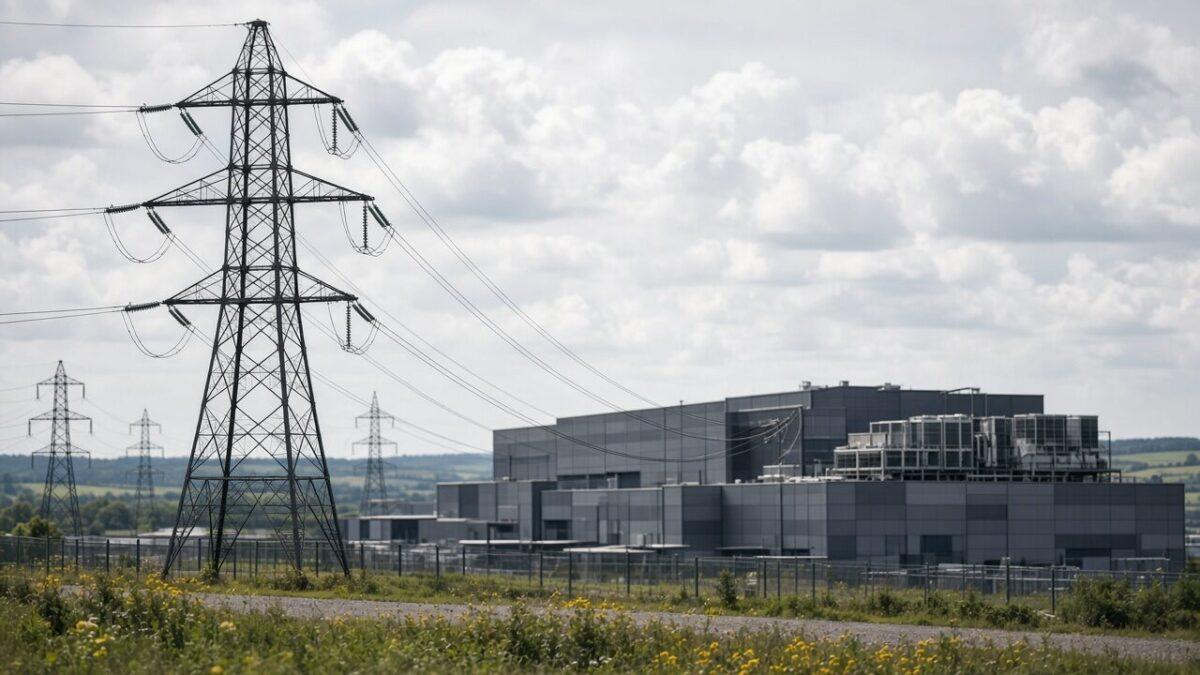
Under Great Britain's National Energy System Operator (NESO) TMO4+ connections reform and Ofgem's 2026 demand-queue interventions, speculative land-banking of transmission capacity is ending for UK data centres and heavy industry. Projects over 40 MW face proposed commitment fees of £237,500 to £712,500 per MW, reshaping industrial energy procurement UK and data center colocation power budgets.
- Queue Scale: Great Britain's total grid connection queue swelled past 730 GW against 200–225 GW of clean generation needed for 2030, while contracted demand offers surged from 41 GW in November 2024 to 125 GW by mid-2025.
- Data Centre Share: Ofgem and NESO data show data centre projects alone represent roughly 73 GW across approximately 315 individual schemes, some scaling up to 1,500 MW.
- Financial Commitment Barriers: Ofgem's July 2026 consultation proposed security deposits of £237,500 to £712,500 per MW for data centres above 40 MW, forfeited if developers drop out or alter site use.
- Milestone Policing: Facilities at or above 10 MW rated IT load must evidence credible end-user computing demand and long-lead electrical switchgear orders to hold Gate 2 queue positions.
For the teams that are responsible for the review of these options, the details in the sections below set out the main points to consider in practice.
How NESO TMO4+ and Gate 2 Overhaul Great Britain's Grid Queue
Approved by Ofgem and executed by the National Energy System Operator (NESO), the TMO4+ framework replaces the legacy first-come, first-served model with a first-ready, first-connected Gate 2 gating process. Generation and storage developers must prove both land-rights readiness and strategic alignment with the Department for Energy Security and Net Zero (DESNZ) Clean Power 2030 capacity pathways.
For commercial energy buyers and cloud infrastructure planners, transmission bottlenecks around West London, Slough, and the M4 corridor directly determine colocation lead times. Comparing regional grid constraints alongside cloud hosting tariffs in our AWS London vs Azure UK South infrastructure overview shows why hyperscalers increasingly evaluate northern and coastal UK zones with surplus offshore wind capacity.
Industrial manufacturers, chemical processors, and steelmakers face parallel competition for high-voltage substation capacity. Rising network reinforcement charges also compound statutory carbon compliance pressures analysed in our UK CBAM 2027 industrial supply chain costs report.
Grid Access Rules and Cost Impact Across UK Power Buyers
The table below summarises how NESO Gate 2 milestones and Ofgem's demand-connection proposals affect capital allocation across data centres, grid-scale battery storage (BESS), and industrial facilities.
| Project Category | TMO4+ / Ofgem Screening Mechanism | Capital and Milestone Exposure | Supply Chain and Procurement Implication |
|---|---|---|---|
| Hyperscale Data Centres (>40 MW) | Ofgem Curate, Plan and Connect commitment fees | £237,500–£712,500/MW security deposit (proposed) | Eliminates speculative land-banking; raises upfront project CapEx |
| Mid-Scale Data Centres (≥10 MW IT) | Queue management milestone verification | Proof of anchor tenant + switchgear procurement orders | Long-lead transformer lead times dictate energisation dates |
| Grid-Scale BESS and Clean Generation | NESO Gate 2 Readiness and Strategic Alignment | Secured land rights and Clean Power 2030 quota fit | Removes zombie projects, accelerating viable BESS connection offers |
| Industrial Electrification and Refining | Transmission/distribution reinforcement allocation | Higher network use-of-system charges and substation waits | Drives behind-the-meter solar, BESS, and corporate PPAs |
Procurement Strategy: Corporate PPAs and Behind-the-Meter BESS
With speculative grid holds being purged across late 2026 and early 2027 Gate 2 offer windows, large UK power consumers can no longer treat grid capacity as a low-cost option. Data centre operators signing 10-to-15-year corporate power purchase agreements (PPAs) with UK offshore wind and solar developers gain price stability while demonstrating strategic alignment to grid planners.
Co-locating grid-scale battery storage BESS or behind-the-meter flexible load assets also improves connection viability in constrained distribution areas. Facilities capable of shedding non-critical batch compute or thermal loads during peak winter triad periods can negotiate non-firm or flexible connection agreements years ahead of full firm transmission reinforcement.
Regional Capacity Bottlenecks and Electrical Lead-Time Risks
Geography dictates UK energisation timelines as heavily as regulatory queue rules. The M4 corridor, Slough, and Greater London account for the densest concentration of existing financial and cloud campuses, leaving local transmission substations heavily constrained until major National Grid reinforcement projects complete later in the decade. Consequently, developers seeking 50 MW to 200 MW blocks in southern England face multi-year waits even after clearing Gate 2 readiness checks.
Physical equipment supply chains compound these grid delays. High-voltage step-down transformers, gas-insulated switchgear, and backup generator sets carry global manufacturing lead times stretching 18 to 36 months. Under Ofgem's proposed milestone regime, mid-scale and hyperscale data centres above 10 MW rated IT load must prove active procurement of long-lead electrical kit, forcing capital commitments far earlier in the development lifecycle than under historic UK grid rules.
For industrial buyers in steel, chemicals, and food processing, competing against well-capitalised hyperscalers for finite distribution network headroom increases the value of existing industrial sites with grandfathered grid connections. Repurposing brownfield manufacturing substations with co-located battery storage often unlocks faster energisation than greenfield transmission applications.
Decision Framework for UK Energy and Colocation Directors
Prioritise UK data centre sites that already hold confirmed Gate 2 connection offers, ordered high-voltage switchgear, and anchor customer commitments, rather than unbacked speculative land parcels facing £237,500–£712,500/MW security hurdles. For AI training clusters insensitive to sub-5ms London financial latency, target northern England or Scottish corridors near clean generation hubs to cut both queue wait times and wholesale transmission losses.
Industrial buyers decarbonising heat or process lines should pair early DNO/NESO milestone audits with long-term renewable PPAs and on-site BESS peak shaving to insulate operating margins against UK grid reinforcement pass-through costs.
 Take the quizWhat Kind of Holiday Spender Are You? Take the Black Friday QuizStart →





 LifestyleWhy Do Long Lines Make People Curious? 5 Reasons We Join the Crowd
 Technology · Apps & SoftwareHow to Secure a Home Wi-Fi Network: 7 Steps Cybersecurity Agencies Recommend
 Lifestyle · Food & HealthHigh Blood Pressure: Symptoms, Readings and 5 Ways to Lower It, Experts Say
 Lifestyle5 Subtle Signs You Still Feel Lonely Even in a Crowded Room