
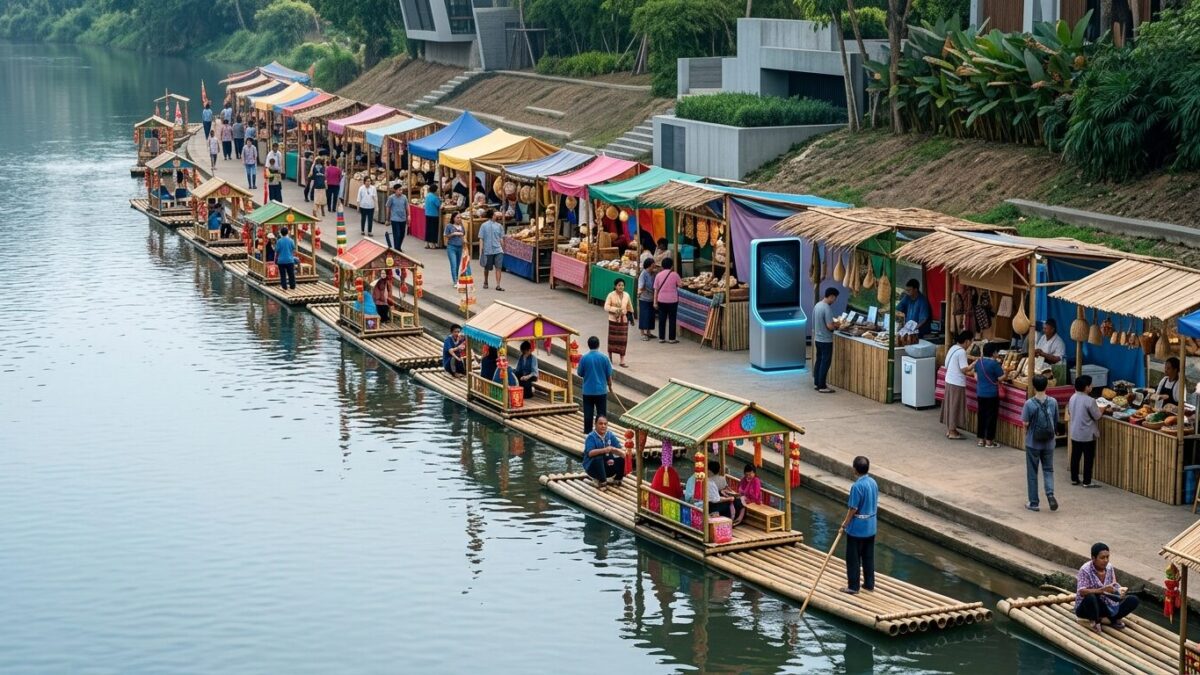
TANJUNG — Kalsel yesterday was marked on Saturday, June 27, by a string of economy and public welfare updates, from an UMKM bazaar opened at the Bamboo Rafting Festival by the head of the Hulu Sungai Selatan regional craft council to a joint move by the Banjarmasin city government and Bank Kalsel to widen access to capital for small businesses.
The roundup matters because it shows two tracks moving at once in South Kalimantan: local economic promotion through tourism events and stronger support for small businesses through financing, education, and human capital development. The items may look brief on paper, but the effects reach residents, business owners, and young job seekers across the region.
Kalsel yesterday: Bamboo Rafting Festival becomes a UMKM showcase
In Hulu Sungai Selatan, the head of the local regional craft council opened the UMKM bazaar during the Bamboo Rafting Festival. The event placed local products in front of the public, right in the middle of a tourism and cultural activity that usually draws strong attention from residents.
For small businesses, that setup means more than one day of sales. It gives them a chance to meet new buyers, test market interest, and build networks that often matter more than a single transaction. From crafts and processed food to household goods, a bazaar like this gives local sellers a stage they rarely get in ordinary days.
The Bamboo Rafting Festival itself has long been known as a space where river tourism, local culture, and community business activity meet. That is why the UMKM bazaar was not just an add-on. It helped direct some of the spending around the festival back to local entrepreneurs.
For readers outside South Kalimantan, the model is familiar. Many regions in Indonesia now rely on local festivals to move microeconomies. Visitors arrive. Local products sell. Small businesses get a wider audience. Simple. Effective.
Tabalong Smart scholarships and the message behind them
Another item in Kalsel yesterday involved Tabalong Smart scholarship recipients, who were encouraged to contribute to regional development in the future. The message underlines that education aid does not end with tuition support or study grants.
Local leaders want recipients to return later with stronger skills. They are expected to fill development roles, whether in government, business, education, or public services. That mindset matters, especially for regions trying to keep young talent from leaving after graduation.
For recipient families, the scholarship clearly eases the burden. For the local government, it is a long-term investment. The results may not show up today, but they can surface years later when graduates enter the workforce and bring classroom experience into real-world jobs.
Tabalong has repeatedly placed education within its human development agenda. That is why programs like Tabalong Smart do not stand alone. They are tied directly to the need for a workforce that is ready, capable, and connected to its home region.
SMKN 1 Paringin electrical team and a message for students
From Balangan, the electrical team from SMKN 1 Paringin earned an international award. The news sends a clear signal that vocational students from the regions can compete when they are given room to show what they can do.
Achievements like this usually come from practice, guidance, and discipline. Vocational schools are built to prepare students for work faster, and an international result is proof that effort in the workshop can earn wider recognition.
For the public, the takeaway is practical. Schools outside the big cities can produce strong talent if they are backed by facilities, teachers, and competition opportunities. That matters, because demand for skilled technical workers remains high in many sectors. Trained graduates are always needed.
At this point, the SMKN 1 Paringin story is a reminder that economic development does not depend on money alone. Skills matter too. Sometimes more.
YABN prepares IBFL students to manage anxiety
Kalsel yesterday also included a YABN activity that equipped IBFL students to manage anxiety and prepare for the future. The topic feels close to many students, especially those dealing with academic pressure, family expectations, and worries about work after graduation.
That kind of training shows that student welfare is not only about tuition or campus facilities. There is also a mental side that needs care. Without psychological readiness, students can struggle to use opportunities that are already in front of them.
For young readers, the message is straightforward: technical ability must go hand in hand with mental resilience. The job market now asks for both. Skill alone is not enough. Courage alone is not enough either.
Programs like this also help campuses and support groups prepare graduates who are more ready to enter the workplace. From a human development angle, the value is big even if it does not show up in daily economic numbers.
Bank Kalsel and Banjarmasin widen access to UMKM capital
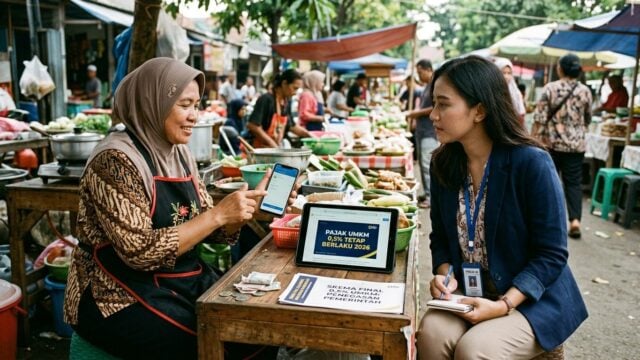
In Banjarmasin, the city government and Bank Kalsel moved to expand access to capital for UMKM. This may be the update felt most directly by small business owners, because financing remains one of the biggest barriers for many microenterprises trying to grow faster.
More open financing access means business owners can buy raw materials, add stock, improve equipment, or expand marketing. Without enough capital, small businesses often stay at the same scale for years. Stuck in place.
Cooperation between local government and a regional bank matters because both sides bring different strengths. The government understands residents’ needs, while the bank provides a more structured financing channel. If the system runs smoothly, UMKM can level up without depending on expensive funding sources.
For Banjarmasin residents, the move could mean more local businesses surviving and growing. For the region, the wider impact is clear: a healthy small-business economy strengthens domestic spending, creates jobs, and helps the economy stay resilient when growth slows.
That is the common thread in Kalsel yesterday. From tourism festivals and scholarships to vocational achievement, student preparation, and stronger UMKM capital, each update points in the same direction: a regional economy that keeps moving, supported by people who are better prepared for what comes next.

📝 Leave a Comment
Comment as . Reviewed by an admin before it appears.