
JAKARTA — The audit of 10 palm oil companies suspected of under-invoicing is back in the spotlight after Finance Minister Purbaya Yudhi Sadewa publicly pressed for updates. During a meeting with the Head of the Financial and Development Supervisory Agency (BPKP), Muhammad Yusuf Ateh, Purbaya questioned the progress and final timeline of the investigation.
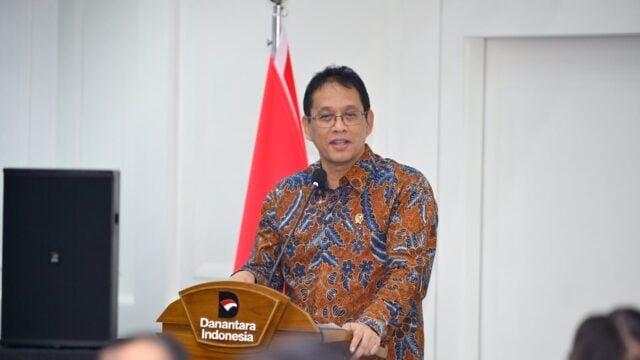
The inquiry took place during a land grant ceremony from PT Lippo Cikarang Tbk to the state at Wisma Danantara, Jakarta, Monday (6/29/2026). His tone was light, but his message was sharp. The state risks significant revenue losses if crude palm oil (CPO) export values are intentionally reported lower than their true market worth.
“Can you still handle this, Mr. Ateh? The one regarding the 10 companies (under-invoicing) hasn’t been finished, right?” Purbaya asked, as quoted on Tuesday (6/30/2026).
The BPKP responded by citing missing data as the main hurdle. Purbaya immediately pledged to visit the BPKP office to ensure the investigation does not stall. For the public and industry observers, this issue is critical: it sits at the intersection of tax compliance and the potential leakage of state revenue. When exports are under-reported, the tax base shrinks, directly affecting state coffers.
Audit of 10 Palm Oil Firms and Under-Invoicing Allegations
Purbaya explained that the initial findings emerged from his team’s verification of CPO export shipments. His team spotted a pattern where 10 major companies allegedly reported tax invoices at values far below the market prices in export destinations, particularly the United States.
He pointed to glaring discrepancies. In Indonesia, one shipment was valued at approximately IDR 2.4 million, while the exact same cargo was recorded in the U.S. at the equivalent of IDR 4.2 million. That is a 57% gap. “So, the export value here is lower. The state loses quite a lot,” Purbaya noted.
In another instance, Purbaya cited goods sent from Indonesia valued at IDR 1.44 million, whereas the recorded value abroad hit IDR 4.4 million. The gap here reached 200%. These numbers represent more than just clerical errors. They suggest a systemic practice.
Purbaya stressed that this behavior is detectable per vessel. Examiners are not just looking at aggregated paperwork; they are tracing individual shipment logs. This approach makes identifying potential manipulation easier, especially when comparing domestic documentation with import data from destination countries.
Missing Data and Incomplete Audits
For the BPKP, the primary bottleneck remains data completeness. Yusuf Ateh admitted that certain documents have yet to be received, stalling the final audit phase. Purbaya claimed he was unaware of these missing documents until he spoke with Ateh directly.
“Data is missing? Oh, you never told me. I will come to your office tomorrow, so this doesn’t get stalled and left hanging. It’s safe, right?” Purbaya said.
His statement signals a clear government push for urgency, yet one that demands procedural rigor. Rushed audits risk creating legal loopholes. Conversely, a prolonged delay invites further scrutiny over potential lost revenue. Given that BPKP was recently tasked with overseeing new land grant processes, Purbaya clearly wants to ensure that the agency’s workload does not impede the resolution of this critical tax investigation.
Why This Audit Matters to the Nation
Palm oil remains one of Indonesia’s most vital foreign exchange contributors. When export values are manipulated, the impact extends far beyond simple income tax. It hits export duties and skews national trade statistics, which in turn misleads policymakers.
At the policy level, biased data makes it nearly impossible for the government to gauge the industry’s real health. Prices might look stable on paper, while the actual capital flowing into the country is suppressed. Over time, this erodes the fiscal framework and complicates commodity oversight.
This is precisely why Purbaya is fixated on the results. The government is attempting to determine whether these massive price gaps are legitimate accounting differences or deliberate manipulation. Purbaya hinted that the scope could be vast, noting, “If I pull the data back a few years, I could harvest a lot more.”
The audit remains open, the data remains incomplete, and the government is waiting for answers. With discrepancies as high as 200%, the pressure on both the BPKP and the targeted companies will only intensify in the coming weeks.
Quick Summary
- The Issue: 10 palm oil companies are suspected of under-invoicing their CPO exports, potentially causing significant tax losses.
- The Evidence: Finance Minister Purbaya claims price gaps between domestic records and U.S. market values reach as high as 200%.
- Next Steps: Purbaya plans to visit the BPKP office to resolve data shortages and expedite the final audit report.



📝 Leave a Comment
Comment as . Reviewed by an admin before it appears.