
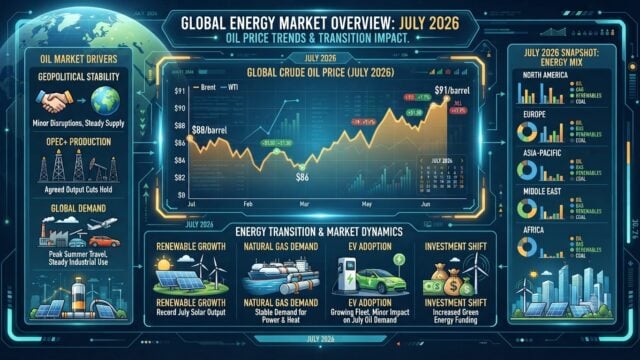
JAKARTA, JOURNALARTA.COM – The global energy market is showing renewed volatility in early July 2026. World crude oil prices have recorded a significant increase over the past two weeks, reaching their highest level in three months.
This movement is not only drawing attention from oil-producing countries, but is also having a major impact on Indonesia as an importer of fuel. Here is a full review of the latest conditions, the factors behind the rise, and the impact communities may feel.
Latest World Oil Price Conditions
Based on market data released on July 3, 2026:
- Brent Crude: In the range of US$ 98.20 – US$ 101.50 per barrel
- WTI Crude: In the range of US$ 94.80 – US$ 97.30 per barrel
- The increase was recorded at around 7-9% compared with the end of June 2026
The rise came after the Organization of the Petroleum Exporting Countries and its allies (OPEC+) confirmed it would maintain its production-limiting policy through the end of the third quarter this year.
Factors Behind the Price Increase
Several main reasons are driving oil prices higher:
1. OPEC+ supply policy: Voluntary production limits to keep market prices balanced
2. Geopolitical tensions: Conflict in the Middle East and temporary disruptions on major distribution routes
3. Rising global demand: As the holiday season begins in the Northern Hemisphere, fuel needs for transportation rise sharply
4. U.S. dollar exchange rate: A stronger dollar makes dollar-denominated commodities more expensive for other countries
Impact on Indonesia’s Economy and Society
As a country that still imports around 35% of its oil needs, changes in world prices have a ripple effect:
Impact on State Finances
- Raises the budget burden for energy subsidies if prices continue to climb
- Affects the country’s foreign exchange reserves as spending on imported oil increases
Impact on Fuel and Goods Prices
- The government, through Pertamina, is closely monitoring the movement. Subsidized fuel prices remain controlled, but non-subsidized fuel such as Pertamax and Pertamax Turbo may gradually be adjusted
- If it lasts long, distribution costs for goods could rise, risking a slight increase in inflation
Government Efforts to Respond
- Accelerating nationwide implementation of the B50 program to reduce dependence on imported oil
- Keeping fuel supplies secure and available at all gas stations
- Negotiating long-term supply contracts to stabilize prices
Outlook
Energy market analysts project oil prices could remain in the US$ 95 – US$ 103 per barrel range through mid-July 2026. A significant decline is not expected unless OPEC+ decides to increase production or global demand slows.
Conclusion
The rise in world oil prices in early July 2026 is a new challenge for the global and national economy. Even so, the preventive measures prepared by the government are expected to help limit the negative impact so it is not felt too heavily by the public.
This information is important as a reference for financial planning and for monitoring future trends in staple goods prices.
FAQ
Q: Why can world oil prices rise and fall so quickly?
A: They are influenced by the balance between production and demand, as well as geopolitical factors and policies from oil-producing countries.
Q: Will this increase immediately push fuel prices up in Indonesia?
A: Not necessarily for subsidized fuel. The government is still maintaining stability, but non-subsidized fuel types may follow market movements gradually.
Q: How can I track the latest price developments?
A: You can monitor them through the official websites of the Energy and Mineral Resources Ministry, Pertamina, or international financial institutions such as Bloomberg and Reuters.
Q: What is the benefit of the B50 program in this situation?
A: It reduces crude oil import needs, thereby lowering dependence on volatility in the international market.
📝 Leave a Comment
Comment as . Reviewed by an admin before it appears.