Armed Troops Have Quietly Become Part of Washington’s Daily Landscape
A sunny afternoon in a Washington neighborhood park looked ordinary enough: children running across the grass, dogs tumbling in the field, friends spread out on
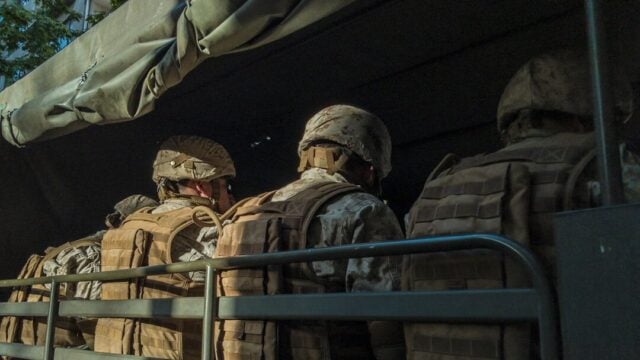
A sunny afternoon in a Washington neighborhood park looked ordinary enough: children running across the grass, dogs tumbling in the field, friends spread out on blankets. Then four National Guard members, in full uniform and carrying handguns, moved through the scene in a line.
They stopped at a corner, turned outward in a tight circle and watched the crowd for a minute or two before walking on. In the capital, that sight is no longer unusual.
A year of armed patrols
Thousands of National Guard members have now been patrolling the streets of Washington, D.C., for a year in an anti-crime deployment that was quietly extended until Inauguration Day in 2029. The troops, armed and uniformed, have become a familiar and controversial part of city life.
They show up on busy streets, at farmers’ markets, in metro stations and around the national monuments. The presence has been hard to miss. Activists have posted signs across the city with blunt messages: “National Guard Go Home” and “Troops Out.”
Yet for many residents, daily routines have settled around them. Parks stay busy. Commuters keep moving. The city, for now, is living alongside the deployment.
Visible, contested, normalized
The deployment is the longest and largest of its kind under this administration. That scale matters well beyond Washington. Capitals often serve as test cases for how governments project force in public space, and D.C. is now offering its own example: armed troops folded into the background of everyday urban life.
The contrast is striking. A city built around monuments, federal buildings and civic symbolism now has soldiers moving through ordinary scenes as if they belong there. For supporters, the patrols signal order. For critics, they blur the line between public safety and militarized presence.
And so the city adapts. Picnics continue. Market lines form. The troops pass through, survey the crowd, and move on.
One scene lingered from that park visit: four guardsmen standing still, each facing a different direction, scanning the people around them. Quiet. Armed. Routine now.