Anak Krakatau Eruption Costs Indonesia Aviation $2.4M in Two Days
Indonesia's state airport operator Angkasa Pura reports a $2.4 million loss following the unprecedented closure of major airports due to volcanic ash.
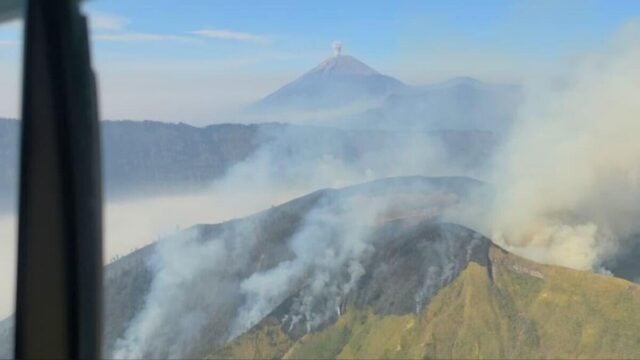
BANDUNG — A massive volcanic eruption from the Anak Krakatau volcano forced the unprecedented closure of Indonesia’s major aviation hubs, resulting in estimated financial losses of 40 billion IDR (approximately 2.45 million USD) over two days. The shutdown, which occurred between Sept. 5 and Sept. 8, 2026, marked the first time in its 35-year history that the country's main gateway, Soekarno-Hatta International Airport, was forced to cease all operations.
Agus Haryadi, Director of Operations at PT Angkasa Pura Indonesia, the state-owned airport operator, disclosed the figures during a policy discussion in Bandung, West Java, on Friday (Oct. 2). Despite the significant financial blow, Haryadi emphasized that the decision was dictated by strict aviation safety protocols rather than economic considerations.
"If we are talking about losses, yes, it was significant—around 40 billion IDR within those two days. But we did not prioritize the financial aspect," Haryadi stated. "The closure was not an option; it was a mandatory measure. The primary reason was safety, as we are handling people’s lives."
An Unprecedented Aviation Crisis
The volcanic ash cloud blanketed a wide region, forcing the suspension of services at Soekarno-Hatta in Jakarta, Husein Sastranegara in Bandung, Halim Perdanakusuma in East Jakarta, and the airport in Tanjung Karang, Lampung. Soekarno-Hatta, which usually handles around 1,000 aircraft movements and 130,000 passengers daily, remained shuttered even as officials worked to assess the density of the volcanic silica.
Haryadi noted the historical significance of the event, explaining that the airport remained fully operational even throughout the height of the COVID-19 pandemic. "I have worked at Soekarno-Hatta since 1992, spanning 35 years, and we have never experienced a total closure like this. Even during the pandemic, the airport remained open," he added.
Humanitarian Impact and Emergency Response
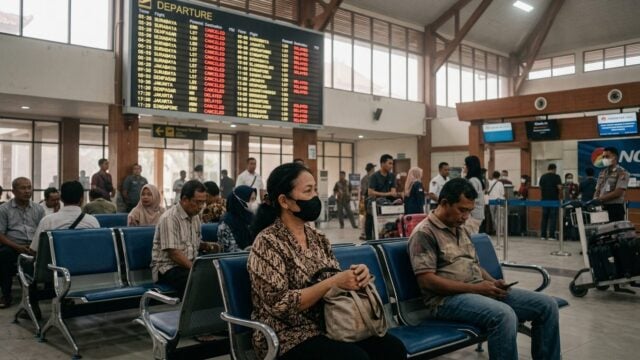
The disruption left more than 200,000 passengers stranded, creating a massive logistical challenge across the Indonesian archipelago. Passengers scrambled for information as airport terminals became packed with travelers attempting to secure alternative routes or ground transport.
In response to the crisis, Angkasa Pura activated emergency protocols, providing buses to ferry stranded passengers to alternative airports in Central and East Java, including Solo, Yogyakarta, and Surabaya. The operator repurposed employee lounges to house thousands of travelers, including a group of 200 Umrah pilgrims from Palangkaraya who were left unable to reach their departure gates.
"We provided snacks, water, and other essentials to those stuck in the terminals. Thankfully, the passengers responded with understanding," Haryadi said. The operator only moved to resume normal operations after Indonesia's Meteorology, Climatology, and Geophysical Agency (BMKG) cleared the airspace following rigorous atmospheric testing of the volcanic ash composition.