Nvidia Rises 2.78% as Global Stocks Steady After AI Rout
Nvidia and AMD bounced on Friday after a rout that spread from Wall Street to Asia, though South Korea's KOSPI still fell 6%. Investors are asking whether the slide is an overdue correction or the start of an AI bubble bursting.

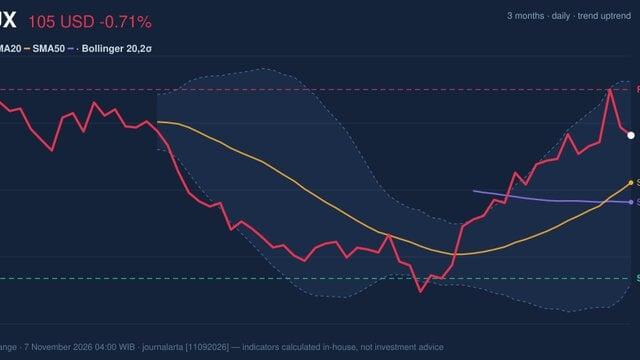
Global stocks steadied on Friday after an AI-driven rout, with Nvidia rising 2.78% to $186.64 a day after it plunged 9.3%. The bounce left investors with a bigger question heading into the weekend: is this an overdue correction or the start of a bubble bursting?
AMD also recovered, to $449.04, following a 17.3% collapse the previous day. Both stocks remain well below their October peaks, so the relief rally repaired little of the damage.
Asia took the heavier hit
South Korea's KOSPI index lost 6% on Friday. Taiwan's benchmark dropped more than 8% over the week, its worst week in months, and TSMC hit its daily limit-down threshold, the lowest price its shares are allowed to trade at in a single session.
Taiwanese officials asked state-owned banks to help support prices.
The US Tech 100, a cash-market proxy for the Nasdaq-100 tech index, gained 1.85% to 27,007.3. It is still down more than 5.5% for the week.
Midterms and data centers
The US midterm elections intensified fears that Democratic gains would bring tougher scrutiny of data centers. In 40 of 41 local ballot contests on November 3, voters favored limiting development, Ballotpedia found. Some votes were advisory.
That matters because data centers drive chipmakers' growth. Each project requires large spending on processors, servers, power and cooling, and restrictions could delay orders or push construction elsewhere.
Doubts predated the vote. AI companies and their customers are spending heavily to build capacity, often before returns are clear, and costlier borrowing makes that harder to sustain. Market strategist Steve Sosnick warned that heavily owned stocks were already "priced to perfection."
Correction or bubble
A correction means a market has fallen at least 10% from a recent peak. It does not necessarily mean the underlying business is shrinking. If investors pay 40 times earnings instead of 60, a stock can lose a third of its value even with profits unchanged.
A bubble bursting is more serious. It happens when expectations prove unrealistic and the money behind the boom begins to disappear.
The dot-com crash is the usual warning. The Nasdaq lost roughly 77% between March 2000 and October 2002. Global Crossing, which built an international fiber-optic network, filed for bankruptcy in 2002. The technology survived, but many companies and shareholders did not.
The risk with AI is a similar gap between long-term promise and near-term returns. If a data center operator borrows billions and customers spend less than expected, the debt still has to be repaid. Chip orders could be canceled, contractors could lose work, and lenders could take losses.