Caltech Robot Builds Part of Truss in Orbit Without Astronauts
A robot developed at Caltech with DARPA funding has assembled part of a structure in orbit without astronaut help. The six-month ASTRA demonstration built an initial truss section of a planned 1.4-meter reflector antenna, though technical and scheduling problems stopped it short of finishing.
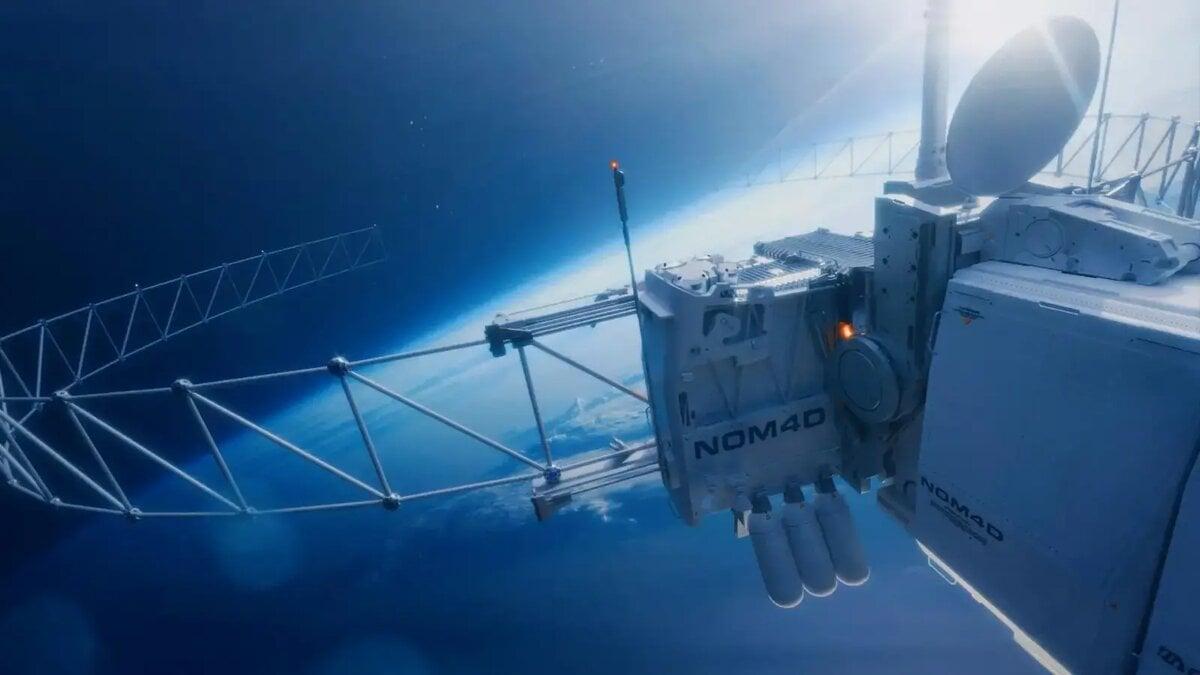
A robot built by California Institute of Technology (Caltech) researchers has assembled part of a structure in orbit without astronauts, in what the team calls a first. The Caltech robot makes history as a test of how future large spacecraft and instruments might be built in space.
It did not finish the job. Technical difficulties and scheduling constraints stopped the system short of completing its target, a reflector antenna 1.4 meters across.
What the robot built
The system spent six months in orbit. It uses an automated arm to pull structural tubes and connecting joints from nearby storage dispensers, then joins them into repeating sections called bays. Those bays form a larger supporting framework known as a truss.
The design combines composite fiber tubes, aluminum connectors and a lightweight reflective surface made from Kapton, a durable polymer film used in spacecraft. The robot completed an initial section, which the team says is evidence the method works in orbit.
"This is the first time that a structure has been autonomously constructed in space," said Sergio Pellegrino, a Caltech professor of aerospace and civil engineering and a senior research scientist at JPL, which Caltech manages for NASA.
A DARPA program
The Defense Advanced Research Projects Agency (DARPA) funded the work. It belongs to the agency's Novel Orbital and Moon Manufacturing, Materials, and Mass-efficient Design program, known as NOM4D, which explores making and assembling very large structures directly in space.
Pellegrino leads Caltech's Autonomous In-Space Tensioned Reflector Assembly demonstration, or ASTRA. The orbital test was the third stage of the program. In the first two, the team developed the concept, worked out the engineering and verified it in laboratory experiments on Earth.
Then the clock got tight. The team had less than 12 months to build, test and deliver the flight hardware to Momentus Inc., the company hosting the payload.
DARPA likens the process to building with sophisticated versions of K'Nex or Tinkertoy construction toys. Getting a robot to do that reliably in space is a much harder engineering problem.
Why it matters
Rockets limit what can be launched. Whatever a spacecraft carries must fit inside the fairing, the protective shell around the payload during launch.
Assembling structures in orbit could get around that limit. Future telescopes could carry larger reflective surfaces to collect more light and observe extremely distant objects. Radio antennas and space-based energy systems could also grow beyond what can currently be launched.
Researchers believe the same basic approach could eventually support much larger frameworks carrying enormous reflective surfaces.
Pellegrino also co-directs the Space Solar Power Project, which aims to harvest solar power in space and wirelessly transmit it to Earth's surface. "Developing a payload of this complexity on such a short timeline was an enormous undertaking for our small team," he said. "As we wrap up the mission, we are finally able to start thinking about the new avenues of research opened by this demonstration."