Scientists Stumped Mysterious Object 1998 KY26 Is Accelerating
Asteroid 1998 KY26, the target of Japan's Hayabusa2 spacecraft, is speeding up for reasons unknown. New research in the journal Icarus says it is too warm to be a dark comet, leaving solar radiation and other forces as candidates until the probe arrives in July 2031.
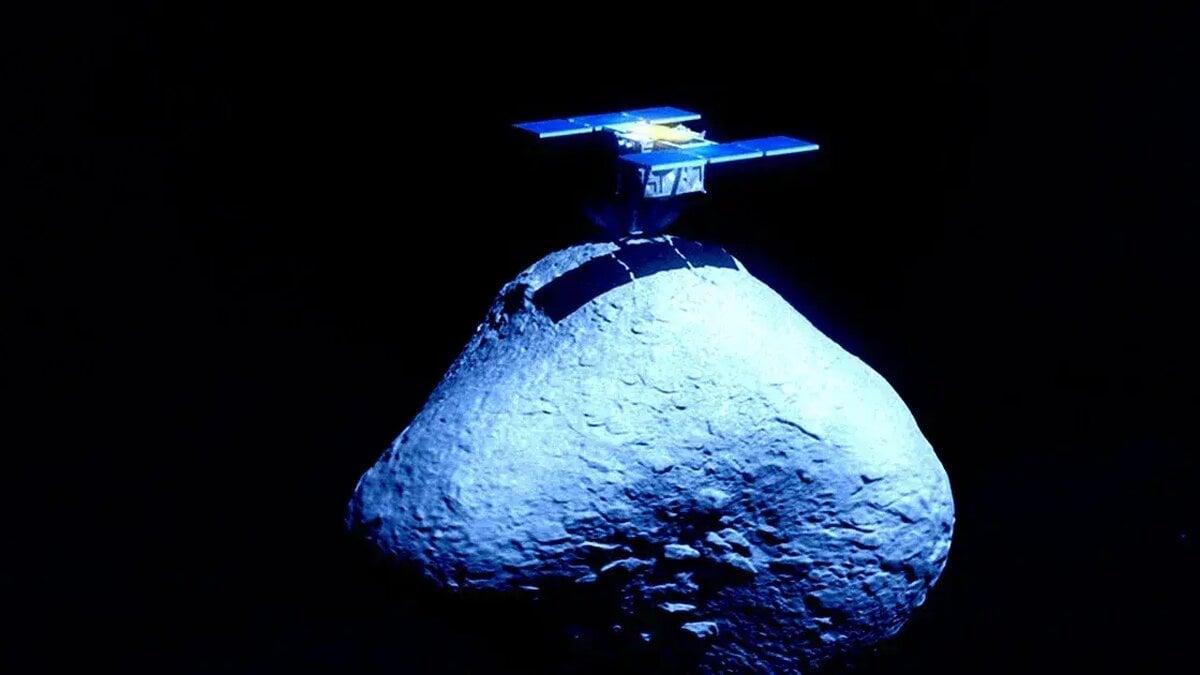
Scientists are stumped by a mysterious object, the 36-foot space rock 1998 KY26, which is accelerating for reasons nobody has pinned down while Japan's Hayabusa2 spacecraft travels toward it. New research in the journal Icarus rules out one leading explanation.
Acceleration alone is not unusual for asteroids and comets. What puzzles researchers is that 1998 KY26 appears to be pushed by a source of propulsion they do not yet understand.
Why a dark comet does not fit
One conventional idea is that the object is a "dark comet." That is a body that looks like a rocky asteroid but speeds up in ways gravity cannot explain. Dark comets can do this by releasing ice that turns to gas and acts like a thruster.
The Icarus paper argues the numbers do not work. Georgia Institute of Technology aerospace engineers Korbin Hansen and Masatoshi Hirabayashi modeled the object's temperature using existing data. Even its coldest regions came out at upwards of -77 degrees Fahrenheit.
That sounds cold, but it is too warm to hold buried ice. At those temperatures, the object would have used up its fuel in just 62 years. That is a blink of an eye for a body suspected to be billions of years old.
"Our temperature model results indicate that the water outgassing rate on 1998 KY26 would be too high to maintain buried ice, refining the understanding of the asteroid's composition," Hansen and Hirabayashi wrote.
What remains on the table
The pair concluded that 1998 KY26 is likely a dehydrated asteroid, one that lost its water long ago. They suggested other explanations for the acceleration, including solar radiation or "thermal emission forces" pushing on the object.
Harvard astronomer Avi Loeb has offered a far more unusual idea. He suggests 1998 KY26 could be a derelict Soviet spacecraft launched almost 40 years ago. The Icarus paper does not address that claim.
The object rotates once every five and a half minutes. It is currently about 186 million miles from Earth.
When answers could arrive
Hayabusa2, the spacecraft of the Japanese space agency, is expected to rendezvous with 1998 KY26 in July 2031. That visit should give scientists their first close look at whatever is driving the object.