House House Says AI Chatbots Used in Big Walk, Under 0.1% of Code
House House, the studio behind Big Walk, confirmed it used AI chatbots sparingly in the final stretch of development. It says well under 0.1% of the code was involved. The admission followed an Independent Games Festival juror statement opposing generative AI in games.
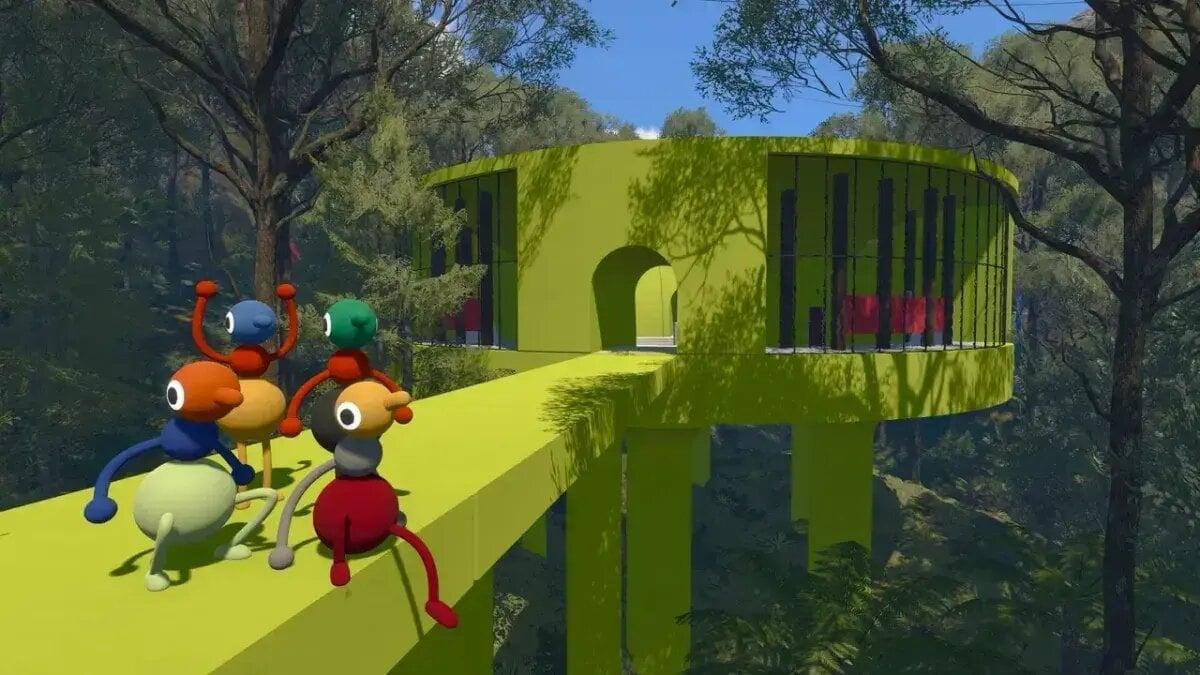
House House, the studio behind the video game Big Walk, confirmed on November 10, 2026 that it used AI chatbots during the "final stretch" of development, a disclosure that has stirred debate over big walk game ai usage and indie game awards. The studio says it estimates "well under 0.1%" of the game's code had anything to do with that use.
The admission followed a statement from 19 jurors of the Independent Games Festival (IGF). They said they will decline to vote for "any game that uses generative AI in any capacity" at the 2027 awards.
What House House says it did
The studio said large language models (LLMs), the technology behind chatbots, were used "sparingly" to work through difficult technical problems and bugs. In some cases, snippets from chatbot replies were copied as a starting point and then modified into game code. House House said generative AI was not used in any other context.
It gave one example. The team needed to cull shadow casters, objects that cast shadows, by distance from the camera. Unity's Universal Render Pipeline (URP) only allows that culling in the camera's forward direction, so shadows behind the player rendered at infinite distance. That made the game run 50% slower for around 20 seconds at sunrise and sunset.
The developers researched the problem and read the URP code themselves. They also spoke to a Unity engineer, who concluded the goal was not possible. A chatbot then suggested a fix after a few dead ends. House House said it modified the suggestion extensively, and that the fix amounted to about 10 lines of code inside URP.
Why it came out now
The IGF jurors did not name any game in their statement. Within hours, though, word spread on social media that Big Walk's AI use was a major source of what the jury pools described as "fairly intense discussion and disagreement".
House House said it made no disclosure on Steam, because the platform does not ask for disclosure of code or chatbot usage. "We are posting this disclosure as it has become a matter of public interest," the studio said. It has also updated its FAQs page.
Steam does require disclosure when a game contains AI-generated assets, while disclosing AI-generated code is voluntary.
Studio response
House House said it understands the opposition. "We have some concern that voluntary disclosures like this might contribute to the normalisation of this technology, or its treatment as 'inevitable'," it said. It added that it supports people trying to limit the harm generative AI does to video games, and apologised that Big Walk's LLM use "may not meet their standards".
The studio also called the lack of an internal AI policy a failure. "Big Walk was developed without an internal AI usage policy in place, and we consider that lack of policy a failure," it said, promising a more comprehensive policy for future games.
The jurors' statement said they do not speak for the whole IGF organization or all jurors, though IGF leadership supports it. It reads: "Programming is a creative discipline whose labor deserves the same respect we extend to any part of making a game."
Reaction is split. Some argue using AI to fix hard coding bugs is no big deal, while critics say the disclosure should have come from the start. Aftermath described the game as one likely to appear on many game-of-the-year shortlists.