Fossils Reveal Asia’s Biggest Known Rodent, Estimated at 30 Kilograms
Fossil teeth reveal biggest known rodent identified from Asia: Yakamys sirindhornae, an animal estimated to have weighed about 30 kilograms. Two teeth found at a mine in southern Thailand date to approximately 34 million years ago, though researchers say the body-mass estimate carries substantial uncertainty.
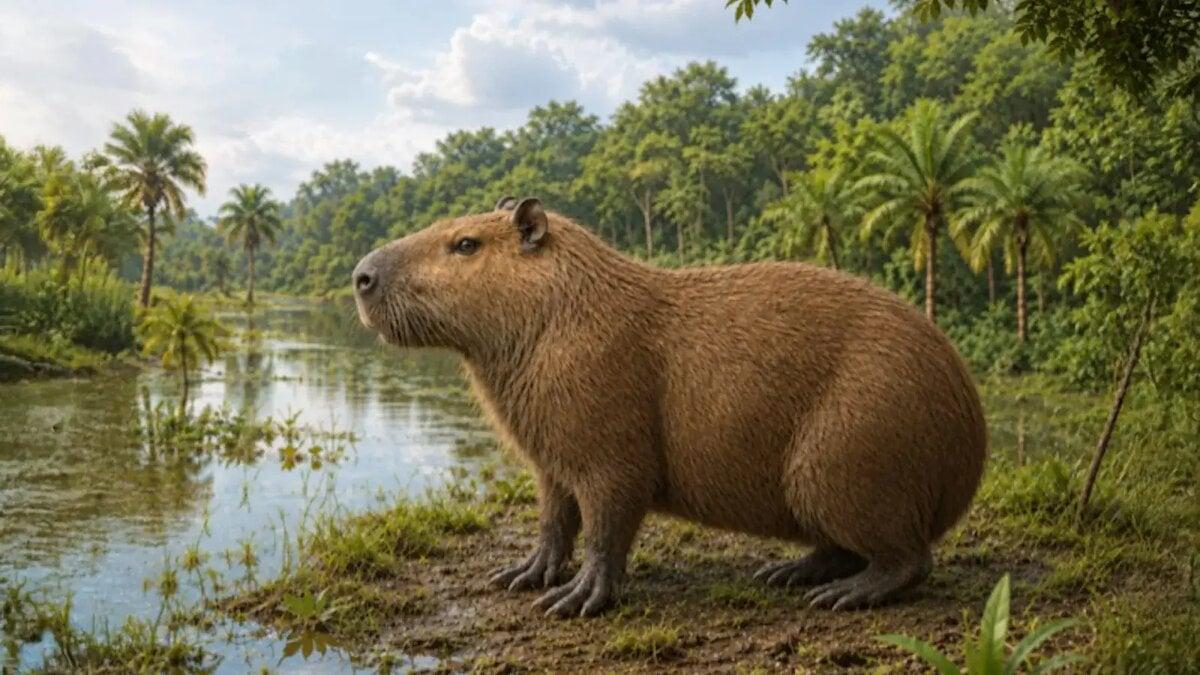
Fossil teeth reveal biggest known Asian rodent: an international team identified Yakamys sirindhornae from two fossils found in southern Thailand, dating to approximately 34 million years ago. The animal may have weighed about 30 kilograms.
That estimate is uncertain. The fossils are a lower second molar and a lower incisor recovered from the Bang Mark Pit at the Krabi lignite mine in Krabi Province.
Two teeth, seven estimates
Researchers used seven established methods based on tooth measurements to estimate the rodent’s body mass. Their results put Yakamys sirindhornae at about twice the weight of other known rodents from the same period, including Hulgana.
Virginie Millien, a biology professor at McGill University and a co-author of the study, cautioned that the weight is only a rough estimate. “This is only a ballpark figure, as there is substantial uncertainty associated with fossil body-mass estimation,” she said.
Only two teeth have been identified, limiting what researchers can determine about the animal’s appearance, lifestyle and evolutionary relationships. More fossils will be needed to build a fuller picture.
Evidence of early rodent gigantism
The find adds evidence that unusually large rodents evolved in Southeast Asia earlier than scientists had recognized. The discovery also broadens the known geography of rodent gigantism, a process in which rodents develop unusually large bodies.
“Today, the largest living rodent is the capybara, but very large rodents are not restricted to recent ecosystems,” Millien said. She said giant rodents evolved repeatedly later in the group’s history, mostly in South America, and that the Thailand find points to Southeast Asia’s role in their earlier evolution.
The species name reflects its size and its connection to Thailand. Yakamys combines “yak,” the Thai word for giant, with “mys,” the Greek word for mouse or rat.
The second part of the name honors Princess Maha Chakri Sirindhorn for her support of science and paleontological research in Thailand, Millien said.
International research in Thailand
The fossils emerged from an ongoing collaboration investigating ancient mammals in Thailand’s Krabi Basin. The project includes scientists from McGill University, Thailand’s Department of Mineral Resources, and French research organizations CNRS and Université de Poitiers.
The research received support from CNRS, Université de Poitiers, Université de Montpellier, McGill University and Thailand’s Department of Mineral Resources. Further fossil discoveries could help researchers clarify how Yakamys sirindhornae lived and how it relates to large rodents that evolved elsewhere.