Giant Pre-Historic Insect Found: Fossils Reveal Two Rare Species
Miners in Derbyshire uncovered two fossilized griffinflies 500 meters underground in 1979. The specimens, now held by London’s Natural History Museum, are the only known examples of their species. A sculpture created by local students is being unveiled in Bolsover to mark the discovery.
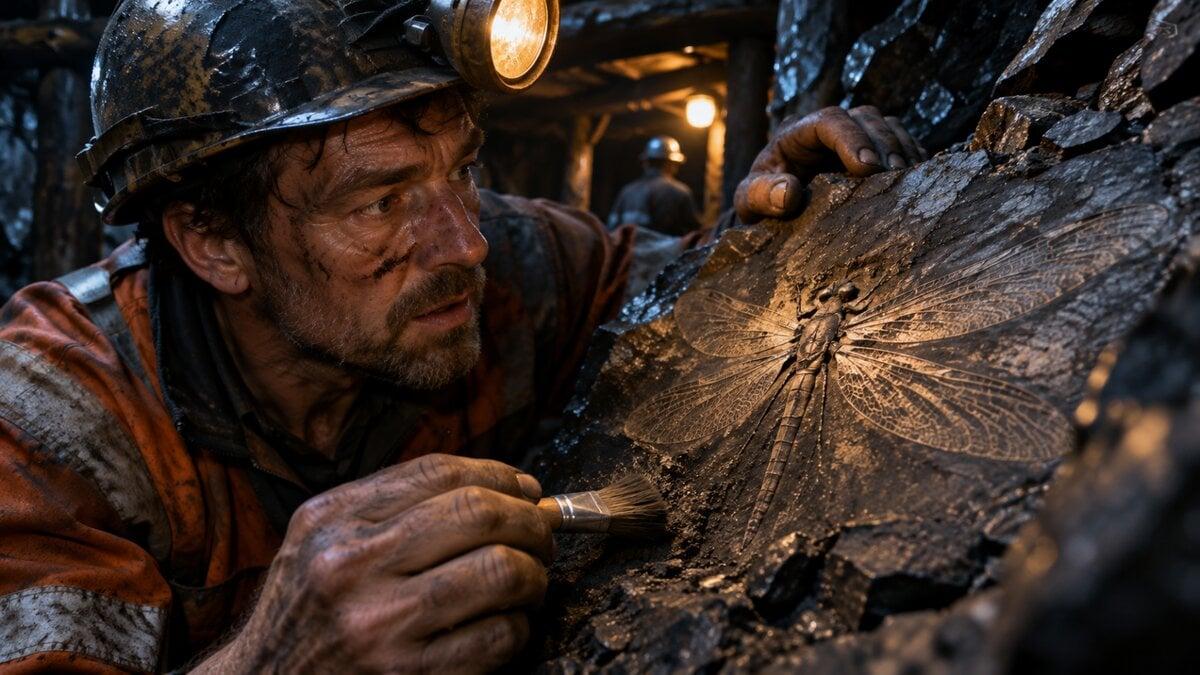
Two fossilized griffinflies found by miners in Derbyshire in 1979 are the only known specimens of their species, and one is believed to have had a wingspan of about 50cm.
The remains were uncovered 500m below the surface at Bolsover Colliery and are now held by the Natural History Museum in London. The giant pre-historic insect found there belongs to a group of extinct, dragonfly-like insects that lived before dinosaurs roamed the Earth.
Two rare fossils from Bolsover
The fossils represent Whalleyala bolsoveri, with a 17.4cm wingspan, and Arctotypus diluculum, believed to have had a wingspan of about 50cm. They are the only known examples of either species.
Natural History Museum curator Richie Howard said the fossils were not currently on display in the museum’s public galleries. “Specimens of this nature are not usually exhibited because they would be irreplaceable if damaged or stolen,” he said.
Miner Malcolm Spencer found Whalleyala bolsoveri, Howard said. Graham Ball discovered Arctotypus diluculum, which was formerly named Tupus diluculum. The larger specimen is incomplete and in several fragments.
How the fossils formed
Local historian and archaeologist Simon Elliott said the insects lived during the Carboniferous period, between 359 and 299 million years ago. “The key thing is the environment in Bolsover was wet and swampy,” he said.
The landscape’s forests later formed coal deposits. Elliott said the insects died and fell into wet ground, which helped their remains become fossils.
Miners reached the fossils by digging through Permian magnesium limestone that covered the older coal seams, Elliott said. The Permian period ran from 298.9 to 251.9 million years ago.
The Natural History Museum describes griffinflies as large, extinct relatives of dragonflies and damselflies, and as “ferocious hunters.” The museum said vast forests removed large amounts of carbon dioxide from the atmosphere, helping oxygen levels reach about 35%, compared with 21% today.
Other insects in the period were larger still. The account describes dragonflies with wingspans up to 71cm, centipedes 2m long, and cockroaches and scorpions 1m long.
Bolsover sculpture marks the discovery
A sculpture of the Bolsover Dragonfly is being unveiled on a roundabout in the town. Local school students made it through a 20-week program covering metal cutting, design and welding.
The museum said the fossils are unlikely to be found again because the colliery is no longer active. Howard said, “No more have ever been found of either of them and, as the colliery is no longer active, probably no more ever will be.”