Frances Crawford Trial: Expert Says Mower Rollover ‘Very Unlikely’
A biomechanical expert told the Brisbane Supreme Court that Frances Crawford could not have been seated on a mower when it tipped over a retaining wall. The prosecution alleges her husband staged the scene as an accident; Robert Crawford has pleaded not guilty to murder.
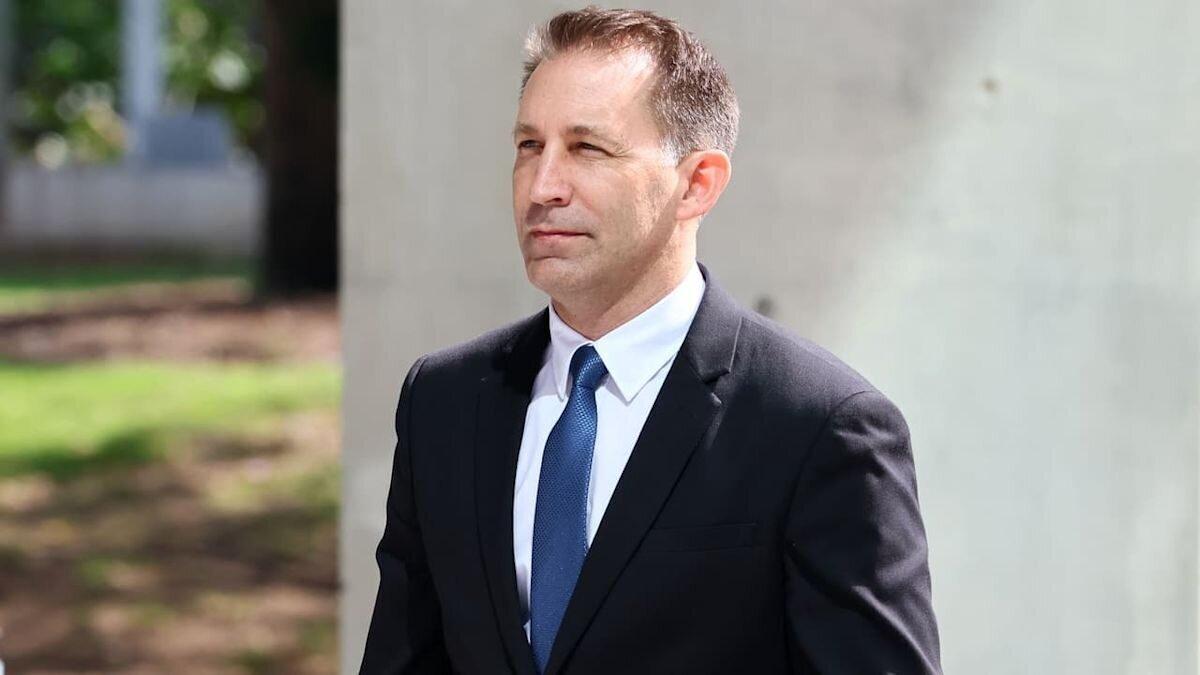
Biomechanical expert David Ackland told the Brisbane Supreme Court on Wednesday that a lawnmower accident was “very unlikely” to have left Frances Crawford beneath the machine, challenging the account at the center of her husband’s murder trial. The case turns on whether her death followed a rollover or whether the scene was staged.
Former Air Force pilot Robert Crawford has pleaded not guilty. Prosecutors allege he strangled his wife and arranged the scene to look like a lawnmower accident at the bottom of a retaining wall.
Crawford told police he found his wife cold to the touch and trapped under the mower on the morning of July 30, 2024, the court was told.
Ackland said his analysis of police data and evidence led him to conclude Frances Crawford could not have been sitting on the mower when it tipped over the wall. Her body was found 1.8m from the wall, he said.
“I was asked to determine whether it was plausible that the body could end up where it did,” Ackland told the court. “The deceased could not have been seated in the mower at the time she struck the rock.”
He based his opinion in part on a 1.68m distance between a blood mark he believed showed where she hit her head and the farthest scrape mark he attributed to the mower.
Even under what he described as the worst-case scenario, Ackland said, Crawford would have been off the mower seat when her head hit the rock. He said the body could have reached 1.8m from the wall only if it missed the spot marked by the blood and moved at a significant speed, roughly the mower’s maximum forward speed.
“It seems very unlikely to me that the mower could end up directly on top of the deceased at the bottom of the retaining wall,” he said.
Ackland told the jury his simulations put the body 0.79 metres from the wall if it moved backward at maximum speed, and said the actual distance would likely be shorter because of limits in the modelling. To reach beyond 1.8m, he said, the body would need to travel without hitting the rock.
“To get the body past 1.8 metres, we needed to actually have a projectile motion without any impact to the rock, almost like being thrown off with that velocity,” he said.
During cross-examination, Ackland acknowledged police supplied the 1.8m measurement; he did not calculate it from scene data. He also said a large pool of blood was used to mark where Crawford’s body rested, while images shown to the court included another possible blood stain closer to the wall.
Police evidence heard on Tuesday indicated investigators believed the mower had fallen backward, but they conceded they had not accounted for it moving in a circle as it turned while slipping down the wall. The court had also seen photographs suggesting the mower was set at mid-throttle.
Ackland said a sideways roll would not change his opinion. “I actually think that a sideways roll is even less plausible,” he told the court.
The court had previously heard that the couple’s marriage was under strain after Frances Crawford discovered her husband’s history of infidelity, including relationships with multiple Royal Australian Air Force colleagues and other women. Ackland’s evidence continues.