China Slams Chinese Spy Claims as Congress Eyes Nvidia Chip Curbs
China's Foreign Ministry rejected US claims that Nvidia's former CEO had an affair with a suspected Chinese spy, as lawmakers from both parties weighed tighter export limits on AI chips and Nvidia said its China data-center sales are near zero.
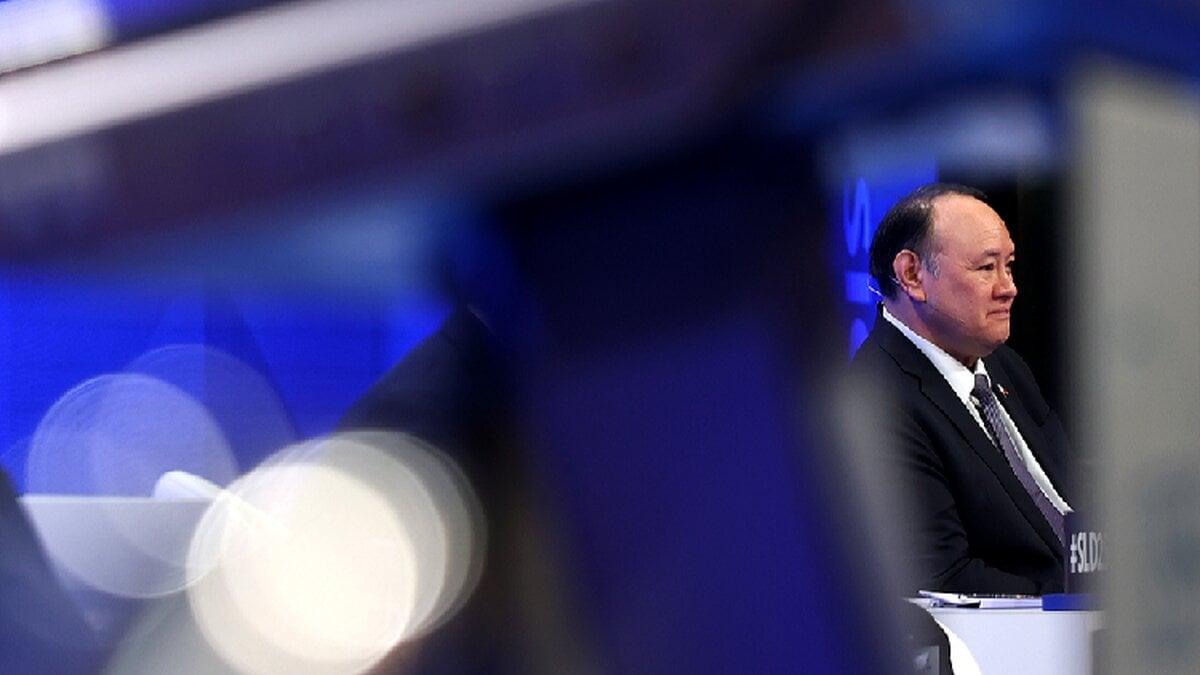
China's Foreign Ministry slammed US claims of a Chinese spy link to former Nvidia chief executive Jensen Huang on Thursday, November 12, 2026, as US lawmakers pushed for tougher limits on AI chip sales to China.
Ministry spokesperson Mao Ning told a press briefing that Washington should stop "fabricating so-called spy narratives and using them as a pretext for imposing a technological blockade." She said China's scientific progress rests on independent innovation and open cooperation.
Huang steps down
Huang resigned the same day. The move followed reports of an affair with an executive at a Singapore-based tech company whom US authorities suspect of spying for Beijing. Huang has admitted to an extramarital affair without naming the woman.
The woman was reported to be Alice Huang, a former executive at Singapore-based Megaspeed. US officials believe she worked for Chinese intelligence. Megaspeed said it takes its obligations under US export control laws "extremely seriously" and wants to work "constructively and transparently" with the US government.
China's Ministry of Foreign Affairs has called the claims "entirely groundless, speculative and intended to smear and malign China." Nvidia launched an investigation into Huang on Sunday. Its statement on his exit did not address his actions.
What Congress is weighing
House Speaker Mike Johnson said Thursday that a growing consensus in Congress favors new restrictions on chip exports to China. Some lawmakers want to attach the measures to the annual defense authorization bill, which funds the military and usually draws bipartisan support. A Senate version already includes the AI Overwatch Act, the Chip Security Act and the Match Act.
The AI Overwatch Act, from Senator Elizabeth Warren, a Massachusetts Democrat, and Senator Jim Banks, an Indiana Republican, would give Congress a larger role in reviewing export rule changes. That could make it harder for future administrations to loosen limits on Nvidia's advanced chips.
The Chip Security Act would require chipmakers to track where advanced AI processors end up and tell the government if they suspect chips reached prohibited users. The Semiconductor Industry Association, whose members include Nvidia, has said mandatory tracking could be costly.
The Match Act would pressure US allies to restrict sales and maintenance of advanced chipmaking equipment bound for China. The Netherlands and Japan, home to ASML and Tokyo Electron, would be affected. It would not directly limit Nvidia's chip sales.
Another bill, the Remote Access Security Act, targets Chinese firms that rent computing power from overseas data centers equipped with Nvidia chips. It passed the House in January and awaits Senate action.
Business exposure and diplomacy
Nvidia's revenue from chip sales to Chinese data centers is near zero for now, according to an August company statement. The company did not expect that to change in the third quarter. Huang had supported allowing more exports to China.
The row lands ahead of a meeting next week between US President Donald Trump and Chinese President Xi Jinping at the APEC gathering in Shenzhen. Mao said Beijing is willing to work with Washington to carry out the consensus the two leaders reached in Busan, South Korea, which eased tariffs and tech restrictions.