EU Leaders Split Over Who Speaks for Europe at Ukraine Talks
EU leaders meeting in Dublin on November 13, 2026, agreed Europe must join Ukraine peace talks but could not agree who should represent it. Kaja Kallas and Antonio Costa are the main contenders, while Moscow says no decision on European participation has been made.
European leaders meeting in Dublin on Friday, November 13, 2026, agreed that Europe must join the Ukraine peace talks, but they failed to settle who should speak for the continent. The dispute leaves Europe without a named representative as Washington, Kyiv and Moscow push ahead with their own negotiations, and Europe's security cannot be negotiated without it, leaders argue.
The question is whether one person or a team should represent Europe. Senior EU officials have been suggested, but there is no consensus, and the job's remit is also contested.
Washington says Europe will attend; Moscow hedges
US envoys said after talks with Russian President Vladimir Putin in Moscow on Thursday that Europeans would join future negotiations. Ukrainian President Volodymyr Zelenskyy and US envoy Jared Kushner said the same. The Kremlin appeared to slow that plan, saying no decision had been made.
Russia argues that European countries finance and supply Ukraine's military effort, so it does not want them in direct talks. Putin told Kushner and US envoy Steve Witkoff that European plans to deploy troops in Ukraine after a deal were "a legitimate target for us, so the war will resume immediately."
Kallas and Costa in the frame
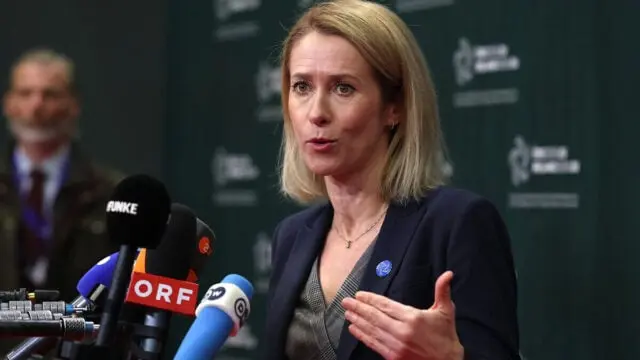
EU foreign policy chief Kaja Kallas put herself forward on Friday. "I'm the one who is representing Europe in the foreign and security policy," she said. She added that Europe cannot send "any person that has no institutional role like the Americans are sending."
European Council President Antonio Costa is also seen as a top contender. Many officials regard Kallas as uncompromising toward Russia, so she lacks unanimous backing.
Italian Prime Minister Giorgia Meloni backs a single envoy. "There are too many different groupings discussing the issue," she said. She has also written a letter to Costa warning that a Europe in disarray serves those who want the war to continue.
Others are less keen on an envoy. German Chancellor Friedrich Merz said Ukraine, Europeans, Americans and Russia must all sit at the table, but he played down the idea of a special envoy.
Kushner said that if Europe could name one person to speak for it, "that would be a bigger achievement than getting the Russians to include them in the negotiation."
Fear of a US-Russia deal
Leaders worry that Washington and Moscow could settle the war's fate between them. Putin has said his demands could include a promise that Ukraine never joins NATO.
Estonian Prime Minister Kristen Michal said: "Right now, we are in the [Russian] trap." He asked whether anyone would discuss their defense with the threat itself.
Merz asked US President Donald Trump for no surprises ahead of expected talks with Putin in China next week. "Some here in Dublin fear this could turn into a 'second Anchorage moment'," he said, referring to the Alaska summit held without Ukrainian or European envoys.