Fingerprint Vanished 2.5 Billion Years Ago, Curtin Team Says
Curtin University researchers say a chemical fingerprint in ancient rocks vanishes around 2.5 billion years ago, giving the clearest timing yet for when Earth's crust began behaving as it does under modern plate tectonics. The study appears in Proceedings of the Royal Society A.
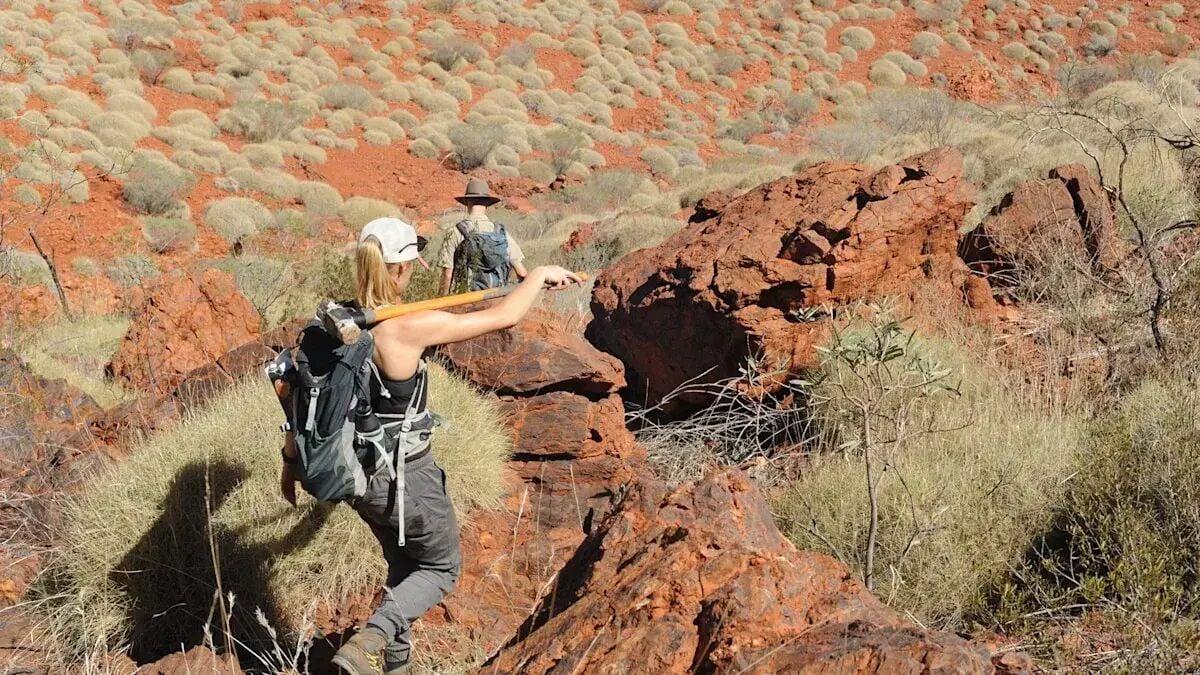
A chemical fingerprint that vanished 2.5 billion years ago marks the point when Earth's crust began to form and recycle in a modern way, researchers at Curtin University said in a study published in Proceedings of the Royal Society A.
The team says it is the clearest geological timing yet for when the processes shaping Earth's surface began to resemble today's plate tectonics.
What the researchers found
Plate tectonics shapes the continents and oceans. Over deep time, it also helps regulate Earth's climate and magnetic field.
Pinning down its start is hard. The process destroys much of its own evidence by recycling crust deep inside the planet.
The team looked for a signature left behind when new crust forms by melting older rock. They searched thousands of rocks from around the world, spanning almost four billion years of Earth's history, said lead author Janne Liebmann, a research fellow at Curtin's Timescales of Mineral Systems Group.
"We found it consistently in rocks older than 2.5 billion years," she said. Those rocks came from a pool of ancient crust that formed about four billion years ago.
After that point, the signal disappears. "Despite examining thousands of rocks, we never see it again," Liebmann said. She said this points to a basic change in how Earth's crust was formed and transformed.
From reworking to recycling
Co-author Chris Kirkland, a professor in Curtin's School of Earth and Planetary Sciences, described the shift in plain terms. Early Earth could melt and rework ancient crust over and over in place. Later, the planet could move and recycle crust on a much larger scale.
Seeing the old fingerprint disappear at such a specific time is what makes the result remarkable, he said.
Kirkland said the finding helps explain when Earth gained a feature that sets it apart from tectonically inactive planets such as Venus and Mars. Plate tectonics, he said, is fundamental to how Earth has evolved. He called the result the clearest geological evidence yet for when the "tectonic engine" of the modern Earth "switched on."
Still a debated question
The start date of plate tectonics remains contested. Other studies of ancient mineral crystals have proposed earlier beginnings for some form of tectonic motion.
The release does not name the chemical signature the team used. It also gives no dataset size beyond "thousands" of rocks.
The paper is titled "Loss of ancient crustal reservoirs marks a shift in Earth's geodynamic regime." Liebmann said the fingerprint offers a rare glimpse into how Earth's earliest crust evolved.