Alito Warns Congress Can ‘Turn Off the Lights’ on Supreme Court
Justice Samuel Alito told a Federalist Society dinner that Congress could shut down the Supreme Court by withholding funds. His remarks came days after Democrats won both the House and the Senate. He also criticized lower-court judges for "unjustified" orders.
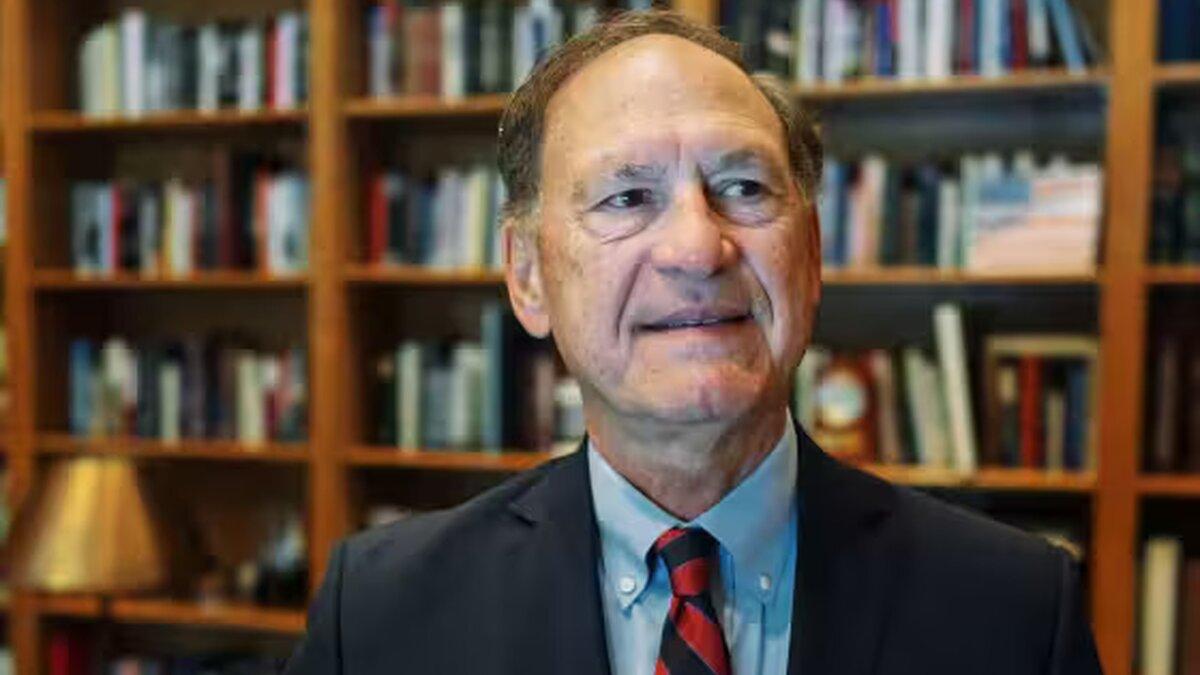
Supreme Court Justice Samuel Alito said at a Federalist Society dinner in Washington, D.C., that Congress can effectively "turn off the lights" at the court by cutting off its funding. He described a judiciary squeezed between a powerful president and a powerful legislature.
The remarks came shortly after Democrats won control of both the House and the Senate in larger than expected numbers in the midterm elections.
Alito did not mention the elections directly.
Speaking with conservative author Mollie Hemingway at the group's annual National Lawyers Convention, he called the judiciary the "least dangerous" branch. It is, he said, "vulnerable to the executive and to Congress because they are more powerful."
"Congress can turn off the lights of the Supreme Court and stop everything from happening if they will not fund their activities," Alito said. "And there are many, many, many other things that they can do, or at least try to do. So it is important to preserve the independence of the judiciary."
He added a caveat. The federal judiciary, he said, can still be dangerous when it strikes. He compared the court not to a "nuclear weapon" or a "500-pound bomb" but to a "hand grenade."
Criticism of lower courts
Alito also turned on lower-court judges. They are "dedicated and they are skillful, but they're not perfect and they make mistakes," he said. In some instances, he added, "I think they have gone far astray in abuse of their powers."
He linked that to the growth of the emergency docket, the fast-track route sometimes called the "shadow docket." It has expanded over the past 10 or 15 years, he said.
The Trump administration has won often there. Interim rulings have let it advance immigration enforcement, restructuring of the federal government and construction of a White House ballroom while underlying lawsuits continue.
"Presidents have become very frustrated with their inability to get Congress to enact their legislative agenda," Alito said. They look for ways to act on their own, he said, and opponents rush to court to block them.
"The litigators, understandably, choose the districts where they think they are most likely to get the result they want. Their expectations are very often met," he said.
Alito is 76. He and Justice Clarence Thomas, 78, have both said they do not plan to retire even if Democrats take the Senate, which has raised concern among Republicans that their seats would not be filled under a Republican president and Senate.
The Federalist Society says it takes no official positions, but it has long served as a pipeline for Republican judicial nominees, including several sitting justices.