Supreme Court Mandates Designated Prayer Area at Bhojshala Site
The Supreme Court of India has intervened in the long-standing Bhojshala dispute, ordering the establishment of a separate space for Friday prayers near the ...
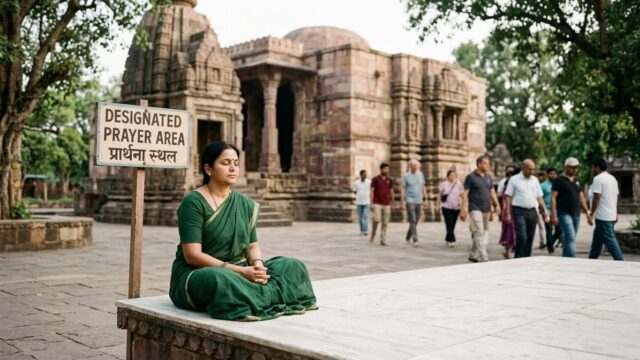
The Supreme Court of India has intervened in the long-standing Bhojshala dispute, ordering the establishment of a separate space for Friday prayers near the contested site. Effective immediately, Muslim worshippers are permitted to conduct their namaz in this designated area between 1:00 PM and 3:00 PM every Friday.
This directive serves as a crucial legal buffer for a site that has been a flashpoint for communal tension for decades. By carving out a specific window and location for religious observance, the court seeks to stabilize the atmosphere around the complex. The ruling arrived today, July 14, 2026, aiming to balance the competing claims of Hindu and Muslim groups who have both long asserted their rights to the site.
Protecting Heritage and Order
The judicial order goes beyond the timing of prayers. A significant portion of the court’s mandate focuses on the structural integrity of the Bhojshala complex. The justices explicitly directed that any structural alterations or modifications to the site require prior permission from the Archaeological Survey of India (ASI).
This is not merely a bureaucratic hurdle. It is a protective measure designed to prevent unauthorized construction or physical changes that could inflame local sentiments or damage the historical nature of the property. The ASI now holds the final say on any physical shifts at the site, effectively stripping local actors of the power to make unilateral changes on the ground.
Legal experts view this as an attempt to freeze the status quo while the broader dispute works its way through the judicial system. By centralizing authority over the structure with the ASI, the court has effectively minimized the risk of sudden, provocative physical interventions by either side.
The Weight of Restraint
Beyond the technical directives, the court issued a stern message to both Hindu and Muslim petitioners. The bench urged both communities to exercise restraint and maintain peace, emphasizing that the legal process requires a calm environment to function.
Tensions in the region have historically spiked whenever the site’s status is debated. The court’s insistence on decorum reflects a broader concern for public order. The message is clear: the judiciary expects the participants to respect the temporary arrangements while the legal battle continues.
The Bhojshala complex remains a sensitive subject in Indian civil society. Its history is layered, and the competing claims often mirror deeper societal fractures. By establishing a fixed two-hour window for Friday prayers, the court has introduced a predictable rhythm to a previously volatile situation. This predictability is intended to reduce friction between the groups, ensuring that religious obligations are met without disrupting the overall stability of the area.
Managing the Site’s Future
The involvement of the ASI is a pivotal element of this order. As the custodian of India's historical monuments, the ASI’s role is to preserve the past. By requiring its oversight for all structural changes, the Supreme Court has essentially turned the ASI into a mediator of physical space.
This move effectively prevents any "fait accompli" tactics, where one party might attempt to change the nature of the building through quick, unapproved renovations. Any future petition or attempt to alter the site will now have to navigate the rigorous standards of the ASI, which operates under national guidelines rather than local pressures.
For the residents living near the Bhojshala, the next few weeks will be a test of compliance. The court’s order is not just a legal document; it is a framework for daily life. The success of this arrangement rests on the ability of local authorities to enforce the 1:00 PM to 3:00 PM window and the willingness of the local community to adhere to the court’s call for harmony.
As the situation develops, all eyes will remain on how the local administration implements these new rules. The court’s intervention has provided a temporary, structured path forward, but the underlying questions surrounding the site’s ultimate status remain unresolved. Future hearings are expected to address the substantive merits of the claims, but for now, the focus remains on keeping the peace through these specific, court-ordered boundaries. The legal community will be watching closely to see if this model of controlled access can prevent further escalation in one of the country's most delicate communal disputes.