Astronomers Watch Giant Planet TOI-2535 b Vanish From View
A Jupiter-size planet 1,000 light-years away dropped out of NASA TESS data after seven years of tracking. A hidden neighbor is tilting its orbit, and researchers expect the planet to return to view in 30 to 50 years.
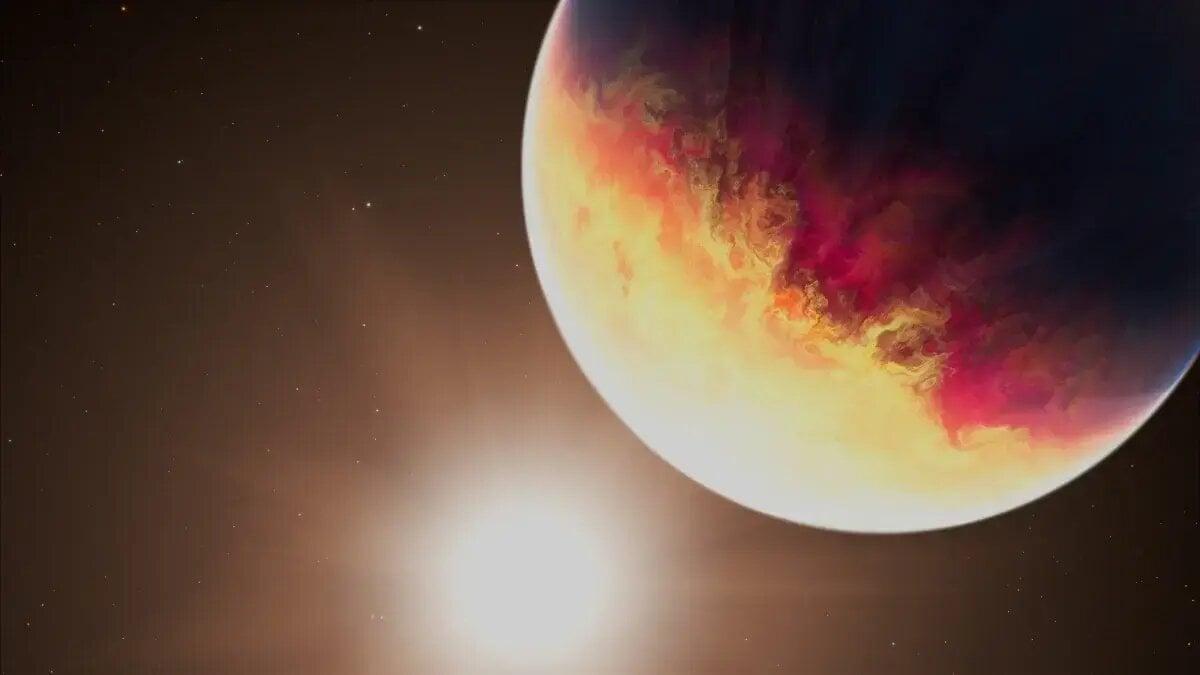
Astronomers using NASA's Transiting Exoplanet Survey Satellite (TESS) watched a Jupiter-size planet, TOI-2535 b, vanish from view earlier this year after tracking it for seven years, according to a study in The Astrophysical Journal Letters.
The planet had crossed in front of its star again and again. Each crossing, called a transit, dimmed the starlight slightly. Then the crossings stopped.
A planet that stopped showing up
Before it disappeared, TOI-2535 b had been behaving oddly. Its transits arrived as much as six hours early or late, and they grew shorter and fainter.
Astronomers knew an exoplanet could drift out of view this way. They expected it to take decades or even centuries.
"The planet's orbit is tilting so quickly that its transit disappeared while we were watching," said Samuel Yee, a UCLA postdoctoral fellow and the study's corresponding author, in a statement.
What happened to the orbit
TESS never saw the planet directly. It infers a planet by catching the small drop in starlight when one passes in front of its star.
The fading crossings showed the planet's path sliding from the middle of the star toward its edge. The planet still circles its star, but from Earth it now passes above or below it.
UCLA astrophysicist and co-author Erik Petigura compared it to eclipses. "If the moon's orbit around the Earth was perfectly aligned with the Earth's orbit around the sun, we would see an eclipse every month," he said.
The unseen second planet
The early and late arrivals pointed to something unseen tugging on the planet. The team combined those timing clues with measurements of how the star wobbles as its planets pull on it.
Everything pointed to a second planet, likely at least as massive as Saturn, circling nearby on its own tilted orbit. Nobody has seen it. Its path carries it above or below the star from TESS's vantage point, so it never blocks detectable starlight.
The two planets keep pulling on each other, so their orbits wobble slowly like spinning tops. The researchers expect TOI-2535 b to swing back into view in 30 to 50 years. Its hidden neighbor may show up sooner.
A clue to how hot Jupiters form
TOI-2535 b sits about 1,000 light-years from Earth. It is a "hot Jupiter," a gas giant that orbits so close to its star that it finishes a lap in about eight days. Mercury needs 88 days.
Scientists think most such planets reached their tight orbits violently, perhaps after a close encounter with another object knocked them onto a stretched-out path. This pair likely took a gentler route and spiraled in slowly together, according to the new paper.
 Take the quizWhat Kind of Holiday Spender Are You? Take the Black Friday QuizStart →
- 1Column: 4 Reasons to Eat Dark Chocolate, Dietitians Say

- 2Mavericks Surfers Race to California for Waves Near 50 Feet

- 3Meghan Markle Plans US Return to See Mother After Father’s Arrest

- 4Chrissie Swan, 52, Tears Up Over Secret Surprise While Recovering

- 5NYC Medical Examiner Has Not Determined Cause of Death of Beau Rose Jessup

 Lifestyle7 Signs Your Social Battery Is Running Low (and Why You Keep Cancelling Plans)
 Lifestyle · Food & HealthThanksgiving Food Safety: How Long Leftovers Last and the Safe Turkey Temperature
 Lifestyle7 Quiet Habits of Emotionally Intelligent People, According to Psychologists
 LifestylePeople Who Don’t Like Celebrating Their Birthday Often Share These 7 Traits