Scientists Issue Words of Warning on Fish and Bone Dating
Researchers at the University of Southern Denmark found that six of 27 medieval skeletons from Danish monasteries looked older than the buildings they lay in. They blame freshwater fish in the diet, which can throw radiocarbon dates off by centuries.
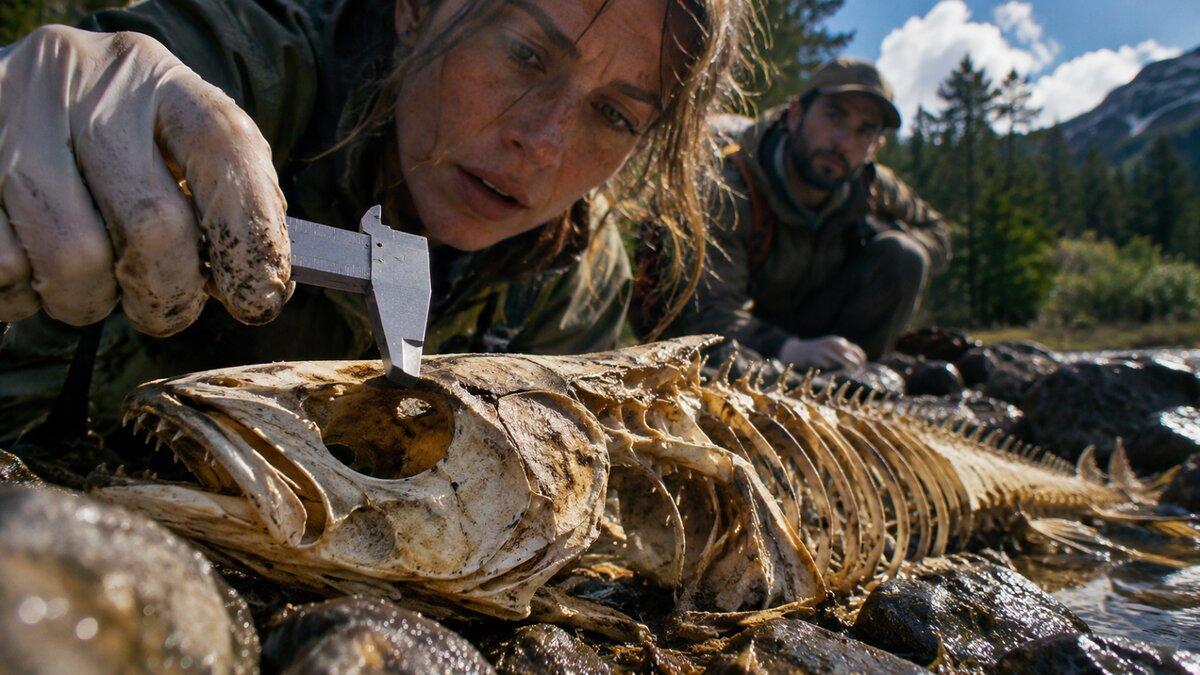
Scientists at the University of Southern Denmark and the Center for Isotope Research have issued "words of warning" to archaeologists after some medieval skeletons from Danish monasteries appeared to predate the buildings they were buried in. In a comment article in npj Heritage Science, they say a fish-heavy diet can make bones look centuries older than they are.
It matters because radiocarbon dating is a standard tool for aging bones and artifacts, reliable up to about 50,000 years. A hidden bias in the method can quietly misplace burials on the timeline.
Why fish skew the dates
Radiocarbon dating works by measuring carbon-14, an isotope that plants absorb from the air and animals take in by eating them. Once an animal dies, its carbon-14 only declines. Scientists compare what is left with known historical atmospheric levels to estimate age.
Rivers, lakes and oceans hold different carbon isotope ratios from the atmosphere, a gap known as the reservoir effect. Rivers, for instance, can contain around 15 percent less carbon-14 than the air. A person who ate a lot of fish can therefore look much older than they were.
"In extreme cases, a fish from the Rhine [River], for example, can appear up to 1,300 years older than a land-based organism that lived at exactly the same time," said Kaare Lund Rasmussen, an archeometrist at the University of Southern Denmark.
He added that there is no easy fix. "But that does not mean you can simply subtract 1,300 years from the date of a person who ate freshwater fish. Quite the opposite," he said. The freshwater effect "can range from zero to 1,000 years."
Six anomalous skeletons
The team analyzed bones from 27 individuals excavated from medieval Danish monasteries. Six samples had especially odd ages, appearing decades or centuries older than the buildings they were buried in or near.
One skeleton from Svendborg was radiocarbon dated to between 1100 and 1155 CE, yet the monastery was not erected until 1236. Another, from Viborg, was dated to 976 CE at the latest, well over a century before a monastery stood on those grounds.
The researchers also measured nitrogen-15, an isotope that runs high in aquatic ecosystems. Elevated levels showed up in all the samples, which they take as direct evidence that the reservoir effect was at work.
Fish on the medieval menu
Church rules help explain the diet. "In Christian medieval Europe, meat was restricted during the lent period," the researchers write. Freshwater fish was tolerated, since it was considered "cold" or "neutral" compared with the meat of warm-blooded animals and marine fish.
In some Christian circles and cultures, the researchers add, freshwater fish was even seen as a prestigious food. The team suggests the problem is not unique to Denmark and is probably occurring elsewhere in Europe and the rest of the world.
 Take the quizWhat Kind of Holiday Spender Are You? Take the Black Friday QuizStart →
- 1Column: 4 Reasons to Eat Dark Chocolate, Dietitians Say

- 2Aspyn Ovard Reveals Daughter Has Terminal Cancer on Mormon Wives

- 3Chrissie Swan, 52, Tears Up Over Secret Surprise While Recovering

- 4Box Office: Johnny Depp’s Ebenezer Rings Up $7.1M on Friday

- 5Banana Man of Linton, Indiana Breaks Silence: “I Like Making People Smile

 Lifestyle7 Quiet Habits of Emotionally Intelligent People, According to Psychologists
 LifestylePeople Who Don’t Like Celebrating Their Birthday Often Share These 7 Traits
 Lifestyle · Food & HealthVitamin D in Winter: Do You Need a Supplement, and How Much?
 Lifestyle · Food & HealthWhat Is Seasonal Affective Disorder? Signs, Causes and What Helps