Scientists Discover 98-Million-Year-Old Mantis With Leaf-Like Abdomen
A praying mantis trapped in Myanmar amber 98 million years ago is the earliest clear fossil evidence of mantises imitating plant leaves. Researchers named it Folimantis hyalinala in the journal New Phytologist, noting that its abdomen resembles an extinct plant.
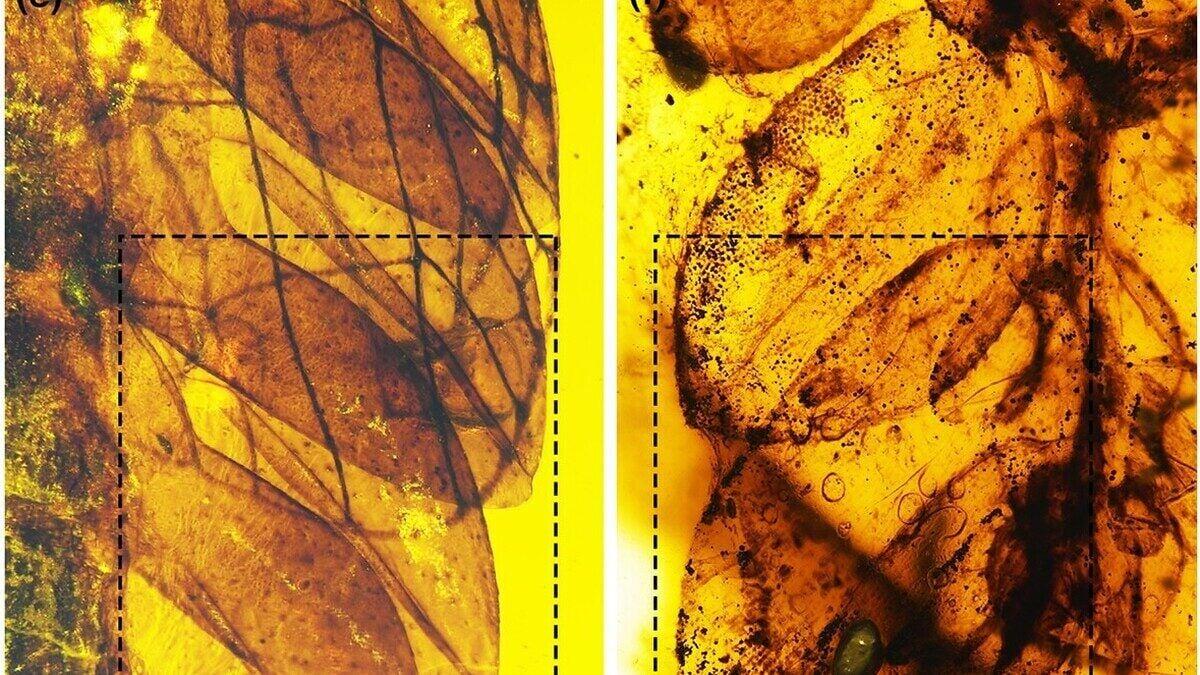
Scientists discover 98-million-year-old mantis preserved in amber from what is now Myanmar, and its abdomen looks like a leaf. The insect is the earliest clear evidence in the fossil record of praying mantises mimicking plants.
The team named it Folimantis hyalinala in a paper published in the journal New Phytologist. The genus name means "leaf mantis". The species name refers to the glass-like transparency of its wings.
A disguise on the abdomen only
The insect lived in a tropical rainforest in the mid-Cretaceous, when sticky tree resin entombed it. Its abdomen closely resembles Selaginella grimaldii, an extinct plant also known from amber specimens found in the same region.
Many modern plant-mimicking mantises carry leaf-like features on several body parts. This one has them on the abdomen alone. The researchers say that could hint that plant mimicry began at the rear, with changes to the wings and thorax coming later.
"The mimicry style of F. hyalinala with Selaginella has never been reported before," wrote paleoentomologist Hongru Yang and colleagues. They added that no modern mantis species mimic Selaginella.
Why the disguise paid off
Flowering plants had not yet taken over when F. hyalinala lived, so its body evolved to resemble leaves. Mantises that looked more like their host plant had a better chance of surprising prey and avoiding their own predators. The plants may have gained too, since mantises protected them from plant-eating insects.
Today the best-known example is the orchid mantis, Hymenopus coronatus, a Southeast Asian species that resembles a flower. It has pink and cream hues and sways like a bloom in the wind.
Yang and colleagues noted that mimicry between insects and plants has evolved over at least 200 million years. Reliable fossil examples are scarce, they wrote.
Deep roots for mantises
Praying mantises share an ancestor with cockroaches that lived around 274 million years ago. Recent taxonomic research suggests the first distinct mantises emerged about 185 million years ago, in the Jurassic, as the supercontinent Gondwana was breaking up.
Some cockroaches, grasshoppers, stick insects and other insect groups were also evolving plant-like features around the same time.
Concerns over the amber trade
The find carries an ethical caveat. Mining and trade of Kachin amber is linked to ongoing sociopolitical turmoil in Myanmar. There are concerns that the trade helps fund what the United Nations condemns as a "genocidal crime against humanity".