SpaceX’s Starship Soars Into Orbit After Booster Explodes
SpaceX's Starship reached orbit in its 15th test flight, but the first-stage booster fell into the Gulf of Mexico and exploded, ending hopes of a double catch. The spacecraft is due to try its own return to the launch tower.
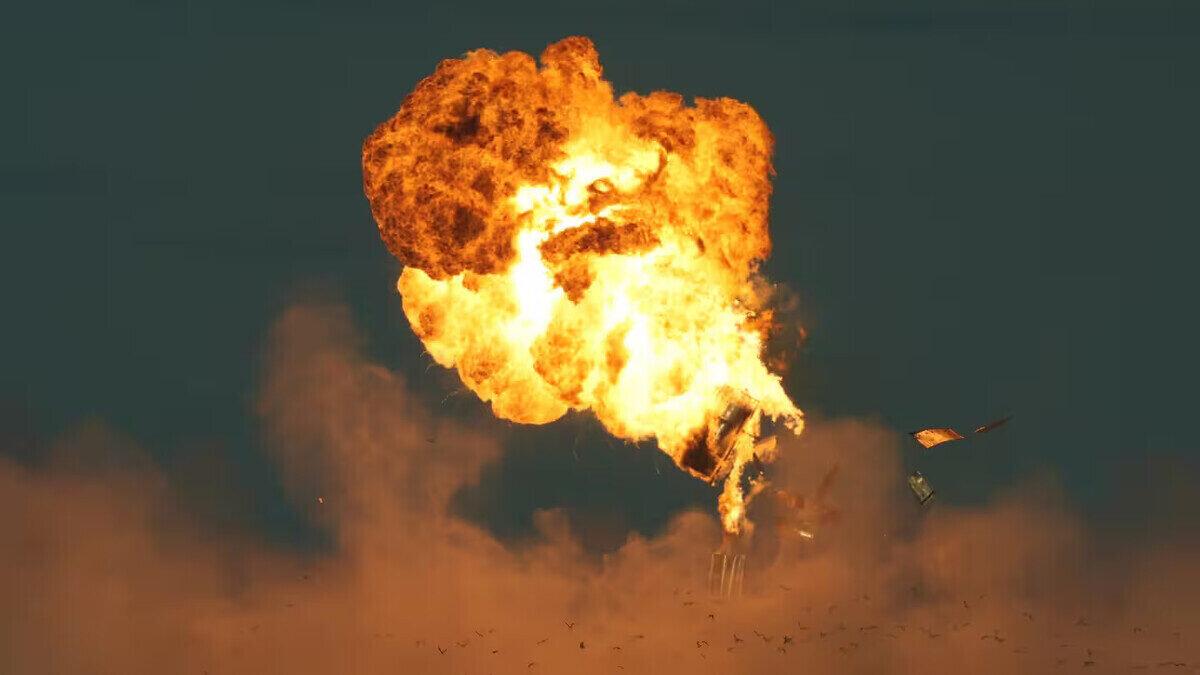
SpaceX's Starship soars to orbit on its 15th test flight, but the rocket's first-stage booster fell into the Gulf of Mexico and exploded, wrecking the company's plan to catch both halves of the vehicle at its Texas launch pad.
The spacecraft kept going. It is due to steer back toward the pad the next day, barring further trouble, and the flight could last as long as 22 hours.
A booster diverted offshore
The booster was supposed to return to the tower after liftoff, where mechanical arms would pluck it from the air. Instead it was sent to a point offshore. SpaceX has not explained what went wrong.
SpaceX launch commentator Kate Tice told viewers: "Well, that certainly isn't the news that we had hoped to hear for today." She said the diversion fit the company's rigorous safety checks to protect the pad.
The miss was a surprise. SpaceX had already caught three boosters at Starbase, its site near the U.S.-Mexico border.
This booster was the first upgraded version, 236 feet (72 meters) tall. It is the production model intended for moon and Mars missions.
What the spacecraft did
Shortly after reaching orbit, Starship released 26 of the company's most advanced Starlink satellites. The plan calls for 15 laps of the planet at an altitude of around 170 miles (275 kilometers).
Then comes the part SpaceX has never tried. Starship will attempt to return to the pad from orbit and be caught by the tower's arms. The spacecraft spans 171 feet (52 meters), and stacked with the booster the vehicle stands 407 feet (124 meters) tall.
The spacecraft in all 14 earlier Starships ended up in the ocean, whether by design or in flaming wreckage. The last test, in September, was the first to reach orbit, but SpaceX did not try to recover any stage.
Why reuse matters to SpaceX
The original goal was to recover every piece of the rocket for reuse, something no one has yet achieved. Elon Musk sees that as the route to the fast, steady launch rates needed to build moon bases and send people to Mars.
SpaceX plans to start flying Starships from Florida within a few months and from Louisiana in a few years. Kiko Dontchev, the company's vice president of launch, said last week at a NASA tech summit at Kennedy Space Center that reusability and bigger infrastructure are "how you go from zero launches to 10 to 100 to 1,000 to 10,000 to 100,000."
Its smaller Falcon rockets will keep carrying astronauts to the International Space Station for NASA and Starlink satellites from California. Musk wants Starships to replace them eventually.
NASA is paying SpaceX billions of dollars to land Artemis astronauts on the moon with Starships. Jeff Bezos' Blue Origin is the other major player.
Dontchev said before the launch: "Starship, we're going to catch both the first stage and second stage." Only one of those catches is still possible.