Nvidia Can’t Simply Make More GeForce Cards, Analyst Says
Nvidia is committing billions to AI chip production, but analyst Ian Cutress says shifting capacity back to GeForce graphics cards would take months of orders, memory supply and planning. Here is why gamers should not expect quick relief on prices.
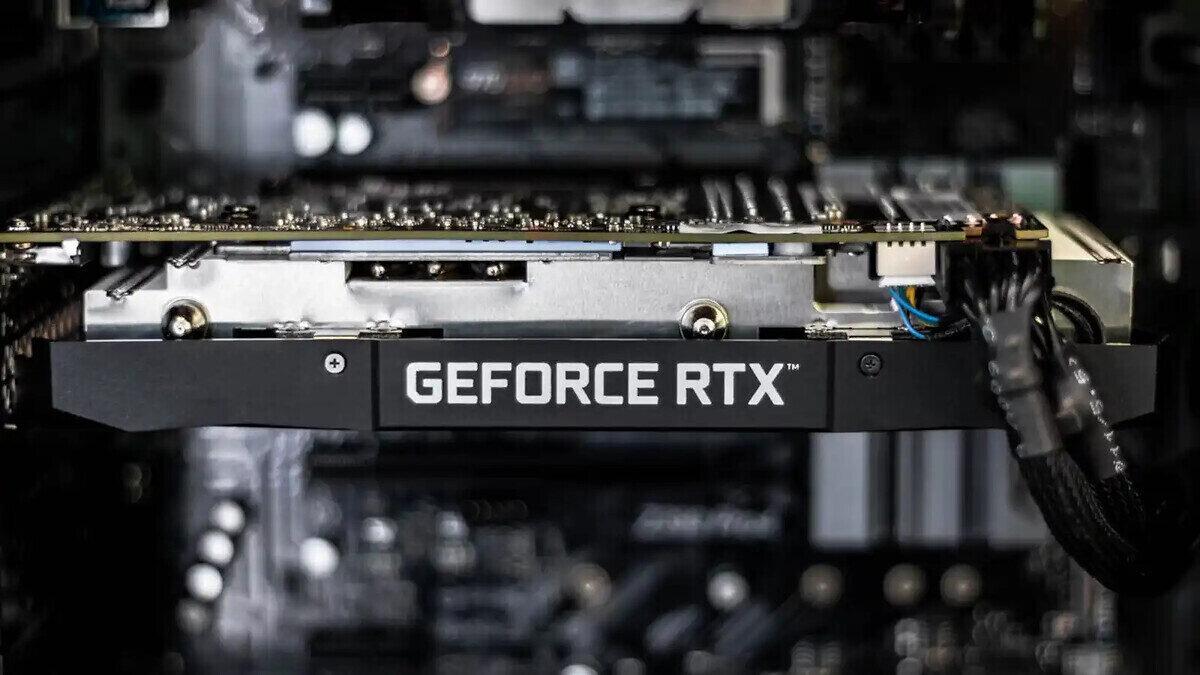
Nvidia can't simply make more GeForce graphics cards by shifting factory capacity away from AI chips, according to Ian Cutress, chief analyst at More Than Moore, who described the process in comments published on November 13, 2026. Even if the company wanted to prioritize gamers, the cards would not appear quickly.
For gamers facing high GeForce prices, that means no fast fix. Nvidia is putting billions into AI hardware, and the gaming and AI product lines do not share interchangeable production.
Why capacity is not interchangeable
Nvidia designs its chips, but TSMC makes most of the silicon. Memory comes from companies such as SK Hynix, Samsung and Micron.
AI accelerators typically use high-bandwidth memory (HBM) and advanced packaging. GeForce cards use GDDR, a different memory type built for consumer graphics cards, and different packaging. Some manufacturing resources overlap, but the production lines are not interchangeable.
Cutress compares chipmaking to assembling a "matched set" of components. Every piece must be ready before a product ships. Nvidia could have plenty of AI silicon waiting on HBM without freeing any useful capacity for GeForce.
A six-month wait
"Typically vendors have to make wafer orders from people like TSMC and wait six months from start of manufacturing to end," Cutress said. A wafer is the slice of silicon that chips are cut from.
That is only the silicon. Nvidia would also need to line up memory, packaging and the other parts of a finished card. Extra GPUs would not appear overnight even if Nvidia chose to prioritize GeForce tomorrow.
Memory makers are focused elsewhere, Cutress said. "When I speak to memory vendors, there are only two words on their mind. HBM and DDR (or LPDDR)," he said. "We never hear them talk about GDDR."
GDDR is not necessarily disappearing or in short supply. Cutress is unsure the next generation, GDDR8, will arrive this decade.
Where Nvidia's money is going
Nvidia's spending points the same way. In its August financial filing, the company disclosed $279 billion in supply and manufacturing-capacity commitments, mostly supporting its data center business.
In October, Nvidia announced another AI manufacturing expansion, including a $1.1 billion advance supporting semiconductor testing facilities.
Making more GeForce cards would require additional orders, coordinated component supplies and months of planning. That is harder to justify while AI hardware brings in far greater returns.
The decisions made under Jensen Huang, who is no longer in charge, remain in place. His successor could favor GeForce, but more cards on store shelves would require persuading the whole supply chain to follow.