SpaceX Starship Test Attempt Loses Booster Before Ship Catch Bid
SpaceX's 15th Starship flight lost its Super Heavy booster to a Gulf of Mexico splashdown, ending a planned double catch. The spacecraft reached orbit, and the company still plans to try the first-ever ship catch at its Texas launch site after more than 22 hours of flight.
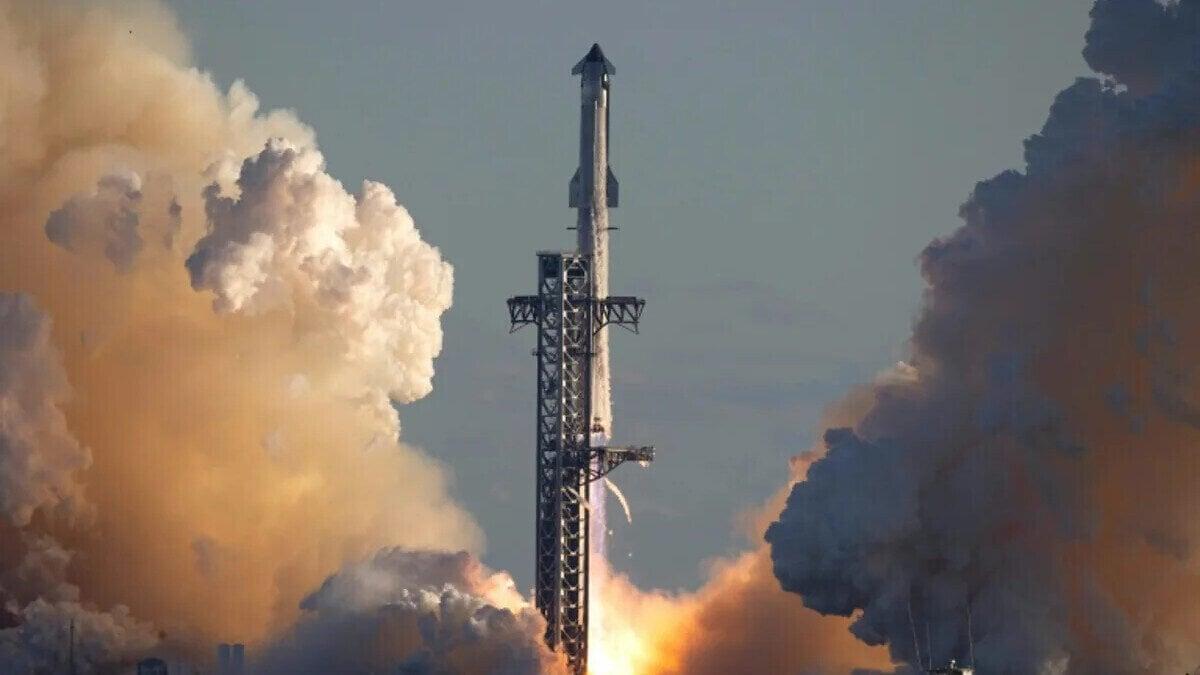
SpaceX's 15th Starship test flight from Starbase in southern Texas lost its Super Heavy booster to a Gulf of Mexico splashdown, ending a planned double catch. The company said it still hopes to try the first-ever "catch" of the Starship spacecraft itself in this SpaceX Starship test attempt.
An unspecified problem forced SpaceX to abort recovery of the booster. The 124-meter (407-foot) rocket, the biggest and most powerful in the world, lifted off and separated its two stages in mid-air. Then the booster ran into trouble.
Booster diverted to the sea
SpaceX diverted the booster to an "offshore splashdown" instead of returning it to the launch site. A fireball erupted as it fell into the Gulf near the pad, and a section stuck out vertically afterward.
"Not sure right now why we weren't able to bring it back," said SpaceX's Dan Huot. SpaceX has caught the Super Heavy booster three times before.
Clayton Swope, an aerospace expert at the Center for Strategic and International Studies, called the mission a "mixed bag so far." He added: "At least the Starship made it to orbit, like on the last test flight."
Ship still in orbit
The spacecraft entered Earth's orbit and was expected to circle the globe 14 times. While in space, it launched 26 satellites to join SpaceX's Starlink internet constellation.
SpaceX plans to bring the ship back after more than 22 hours of flight. It aims to recover the vessel at around 3:20 pm (2120 GMT) at the launch site.
The catch is extraordinarily complex. The ship falls much faster and from a much higher altitude than the booster, and it must survive the extreme heat of reentering the atmosphere. If it works, it would nestle between two mechanical "chopstick arms," as the boosters did.
"We'll only go for it if the ship passes all of these system checks and decision gates along the way, and there are lots of them," said SpaceX's Kate Tice. SpaceX has also planned for scenarios in which it shortens the flight and plunges the ship into the Pacific Ocean.
Why the flight matters
Recovering both stages would mark a milestone in the space industry's long pursuit of fully reusable rockets. Such systems could sharply cut mission costs and make frequent launches possible.
NASA is counting on Starship as a lunar lander for its Artemis mission. NASA administrator Jared Isaacman congratulated SpaceX on "another spectacular launch," without mentioning the booster setback.
Some Starship versions are designed to launch internet satellites and data centers into orbit. Others will carry people to the Moon and Mars. The project has faced years of delays as SpaceX works on problems such as transferring fuel to a spaceship in orbit, a requirement for any trip to the Moon or Mars.
SpaceX made its stock market debut in June, raising about $85.7 billion. During a factory tour at Starbase, officials told journalists the company can now build a spaceship every two weeks and a booster every four weeks.