AeEggCounter Targets Mosquito Eggs With Smartphone AI
Researchers at Florida International University developed AeEggCounter, a smartphone tool that detects and counts mosquito eggs in images. In tests on 76 previously unseen field samples, its counts correlated strongly with those of trained specialists, though human confirmation remains necessary, the researchers said.
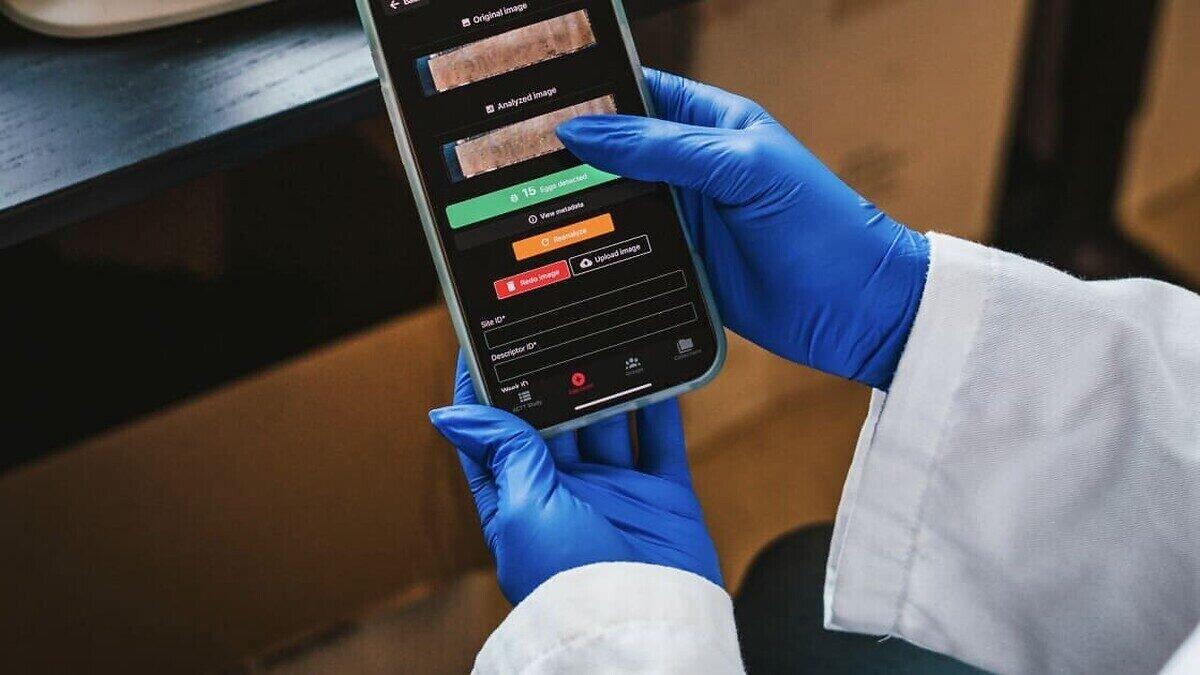
Florida International University researchers developed AeEggCounter, a smartphone AI tool that detects and counts mosquito eggs in images, aiming to make mosquito surveillance faster. The work puts “under surveillance takes aim” into practice with a free app for Android and iOS.
It is designed to help mosquito control teams. Specialists traditionally inspect egg-bearing paper strips under a microscope, a labor-intensive process that can produce errors.
Field tests compared app with specialists
The tool analyzes images of ovitrap samples. These are small, water-filled containers that attract female Aedes mosquitoes seeking places to lay eggs.
Researchers trained the system by manually identifying and labeling 4,398 eggs across 168 smartphone images. The model can recognize eggs in laboratory and field samples, including images where debris surrounds them.
In an initial test, the model correctly identified 88.3 percent of the eggs it flagged and detected 91.7 percent of the eggs present in the images. Researchers then tested it on 76 field samples the model had not seen before.
Its performance declined on those samples, but its overall counts showed a strong correlation with counts by trained specialists. The researchers said that result points to potential for surveillance, while leaving people responsible for confirming results.
“It doesn’t replace the human,” said Andre Costa-da-Silva, an assistant professor of biology and researcher at FIU’s Biomolecular Sciences Institute. “We still need humans to confirm the results, especially in sensitive areas where it’s important to avoid mistakes.”
Free app supports field work and teaching
The app is available through ACTT-Study for Android and iOS. Costa-da-Silva led the project, which also involved researchers from the University of South Carolina, Boston University, Baylor College of Medicine and Texas Children's Hospital.
Matthew DeGennaro, director of FIU’s Biomolecular Sciences Institute and a co-investigator, is using the app in CDC-funded field studies in Little Havana and East Hialeah.
Students have also used the tool alongside manual counting. “When we got back to class, we counted them both manually and with the app,” said Melissa Gonzalez, a second-year biology student.
The findings were published in the Journal of the American Mosquito Control Association.
 Take the quizWhat Kind of Holiday Spender Are You? Take the Black Friday QuizStart →
- 1Micron Stock Falls 28% as $35.16 Billion Buyback Nears

- 2I’m A Celebrity 2026 Line-Up: Rooney Leads 11 Stars Into Jungle

- 3Taylor Swift and the Falcons Game Today: Chiefs in Atlanta

- 4Actor Says David Walliams Sexually Humiliated Him on Stage

- 5Women With Autoimmune Diseases Wait About 4 Years for Diagnosis, Study Finds

 Lifestyle7 Signs Your Social Battery Is Running Low (and Why You Keep Cancelling Plans)
 Lifestyle · Food & HealthThanksgiving Food Safety: How Long Leftovers Last and the Safe Turkey Temperature
 Lifestyle7 Quiet Habits of Emotionally Intelligent People, According to Psychologists
 LifestylePeople Who Don’t Like Celebrating Their Birthday Often Share These 7 Traits