Leonid Meteor Shower Peaks This Week With Up to 15 an Hour
The Leonid meteor shower is expected to peak overnight from Monday into Tuesday. Viewers may see up to 15 meteors an hour under clear skies, but NASA’s Bill Cooke says the faint streaks call for a dark viewing spot away from artificial lights.
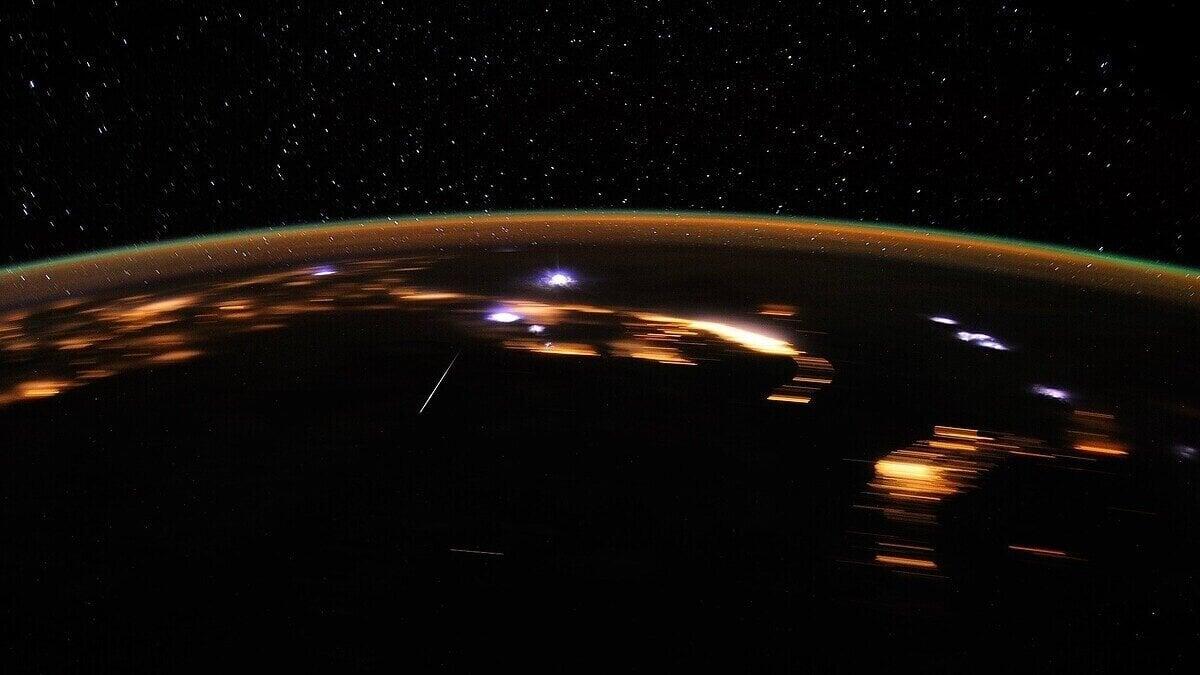
The Leonid meteor shower is expected to peak overnight from Monday into Tuesday, giving skywatchers a chance to see up to 15 meteors an hour under clear conditions. To see Leonid meteors this week, NASA’s Bill Cooke recommends finding a dark spot away from artificial lights.
Earth crosses a trail of debris from comet 55P/Tempel-Tuttle each November. Tiny pieces burn up in the atmosphere, creating streaks of light across the sky.
Cooke says the best viewing time is around 2 or 3 a.m. in any time zone. Leo, the constellation where the meteors appear to originate, will be higher then, and the moon will have set.
Dark skies offer the best view
“You’ll need a really dark sky,” Cooke said. “Leonids are faint, so you’re not going to see any Leonids from the suburb.” He recommends choosing a spot away from artificial lights and avoiding your phone while your eyes adjust to the dark.
No special equipment is needed. “Lie on your back and take in as much sky as you can. No telescopes, no binoculars, just your eyes,” Cooke said.
The shower can be seen in both hemispheres, although Leo appears lower south of the equator, which may limit the number of visible meteors there. The Leonids are expected to remain visible through November 30.
No meteor storm expected this year
NASA defines a meteor storm as a display of at least 1,000 meteors an hour. The Leonids can produce storms roughly every 33 years, when the parent comet nears the sun and releases more debris.
That timing is not guaranteed. The gravitational pull of Jupiter and other planets can alter the path of the debris, Cooke said. Scientists expect the next Leonid meteor storm in 2033, but none is expected this year.
The Leonids also helped prompt the scientific study of meteors after observers reported seeing tens of thousands per hour in 1833. “It was the Leonids that gave birth to meteor science back in the early 19th century, so without the Leonids, we wouldn’t know nearly as much about meteors as we do now,” Cooke said.
Johns Hopkins University associate professor Meredith MacGregor said the annual shower still offers a chance to see comet material enter Earth’s atmosphere. “You’re going out and you’re seeing material coming into our atmosphere that originated in the tail of a comet that came from the outer parts of our solar system,” she said, “and you actually get to see that with your own eyes.”
 Take the quizWhat Kind of Holiday Spender Are You? Take the Black Friday QuizStart →
- 1I’m A Celebrity 2026 Line-Up: Rooney Leads 11 Stars Into Jungle

- 2Mavericks Surfers Race to California for Waves Near 50 Feet

- 3NYC Medical Examiner Has Not Determined Cause of Death of Beau Rose Jessup

- 4Mountaineer Finds Ice Age Cave Bear Graveyard in the Dolomites
- 5Rugby League World Cup Final 2026: Kick-Off Times and How to Watch Kangaroos v New Zealand

 Lifestyle7 Signs Your Social Battery Is Running Low (and Why You Keep Cancelling Plans)
 Lifestyle · Food & HealthThanksgiving Food Safety: How Long Leftovers Last and the Safe Turkey Temperature
 Lifestyle7 Quiet Habits of Emotionally Intelligent People, According to Psychologists
 LifestylePeople Who Don’t Like Celebrating Their Birthday Often Share These 7 Traits