Voyager 1 Nears One Light-Day From Earth, Farther Than Any Craft
NASA's Voyager 1 probe is about to reach one light-day from Earth, a distance of more than 16 billion miles. NASA is asking the public to flash its call sign into the night sky with flashlights the evening before the milestone.
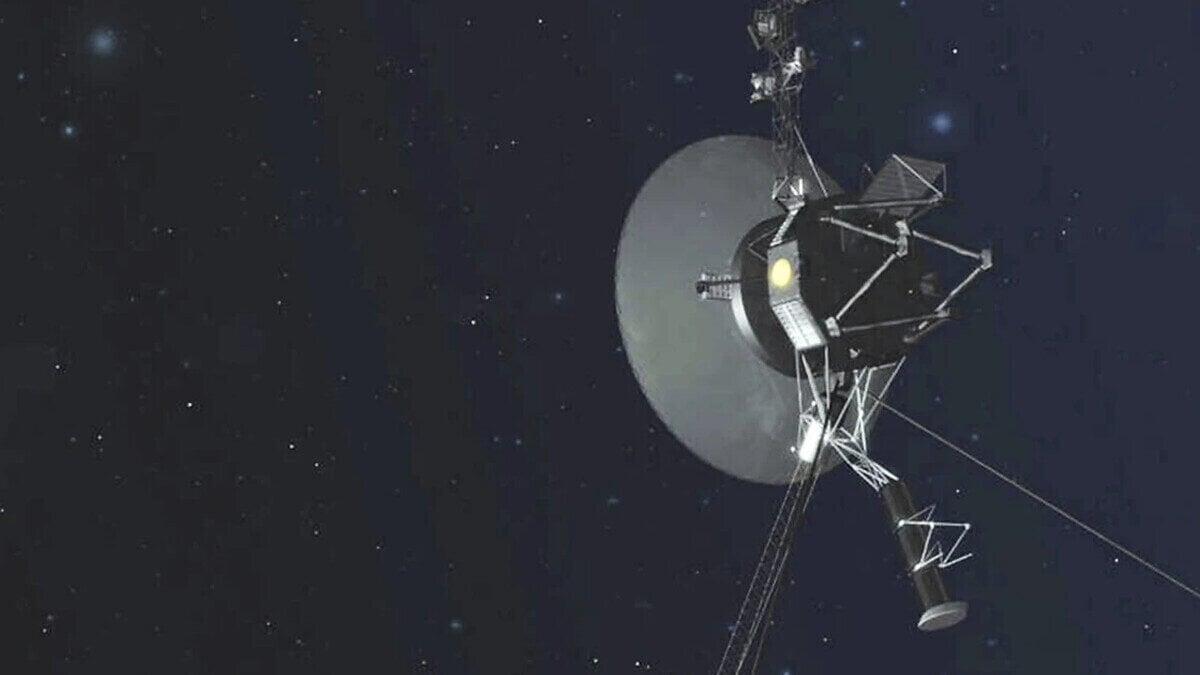
NASA's Voyager 1 spacecraft, already far from home, is due to reach a distance of one light-day from Earth at 5:16 a.m. ET, after 49 years, two months and 11 days of travel. No human-made object has gone farther.
A light-day is the distance light travels in 24 hours. That is more than 16 billion miles.
How to take part
NASA is marking the occasion with a symbolic event called "Shine Bright for Voyager's Light-Day." The agency is asking the public to send Voyager's call sign, V-G-R, into the sky in Morse code the night before the milestone.
Anything that can blink a sequence will do, including a flashlight or a phone light. The pattern for each letter is:
V: three quick flashes, then one long flash. G: two long flashes, then one quick flash. R: one quick flash, one long flash, then one quick flash.
A 49-year journey
Voyager 1 launched on Sept. 5, 1977. It flew past Jupiter and Saturn, discovering a faint ring system around Jupiter in 1979 and photographing Saturn's rings and moons in detail in 1980.
On Feb. 17, 1998, it overtook the US probe Pioneer 10 to become the most distant human-made object in existence. It reached the interstellar boundary in 2012.
Voyager 1 and its twin, Voyager 2, are the only spacecraft to have operated outside the heliosphere. That region acts like a protective shield around the solar system.
Fewer instruments, longer life
Voyager 1 keeps measuring magnetic fields, particles and plasma waves outside the sun's heliosphere. Earlier this year, NASA chose to switch off its Low-energy Charged Particles experiment, known as LECP, to save power. The instrument had helped scientists map the structure of space.
Scientists said the shutdown could keep the probe alive longer. Two science instruments are still running: one measures magnetic fields and the other listens for plasma waves.
The Golden Record
The spacecraft also carries the Golden Record, an interstellar "time capsule" meant to communicate Earth's story to extraterrestrials. The gold-plated disc holds 115 images, natural sounds such as surf, wind and animals, and spoken greetings in 35 languages.
It also includes instructions, in symbols, on how to play the record and where the probe came from.
 Take the quizWhat Kind of Holiday Spender Are You? Take the Black Friday QuizStart →
- 1I’m A Celebrity 2026 Line-Up: Rooney Leads 11 Stars Into Jungle

- 2Mavericks Surfers Race to California for Waves Near 50 Feet

- 3NYC Medical Examiner Has Not Determined Cause of Death of Beau Rose Jessup

- 4Mountaineer Finds Ice Age Cave Bear Graveyard in the Dolomites
- 5Rugby League World Cup Final 2026: Kick-Off Times and How to Watch Kangaroos v New Zealand

 Lifestyle7 Signs Your Social Battery Is Running Low (and Why You Keep Cancelling Plans)
 Lifestyle · Food & HealthThanksgiving Food Safety: How Long Leftovers Last and the Safe Turkey Temperature
 Lifestyle7 Quiet Habits of Emotionally Intelligent People, According to Psychologists
 LifestylePeople Who Don’t Like Celebrating Their Birthday Often Share These 7 Traits