Voyager 1 to Reach One Light-Day From Earth on Nov. 18
NASA’s Voyager 1 is expected to reach a distance of one light-day from Earth on Nov. 18, a milestone nearly five decades into its mission. The spacecraft has only two working instruments and faces dwindling power as it continues its journey through interstellar space.
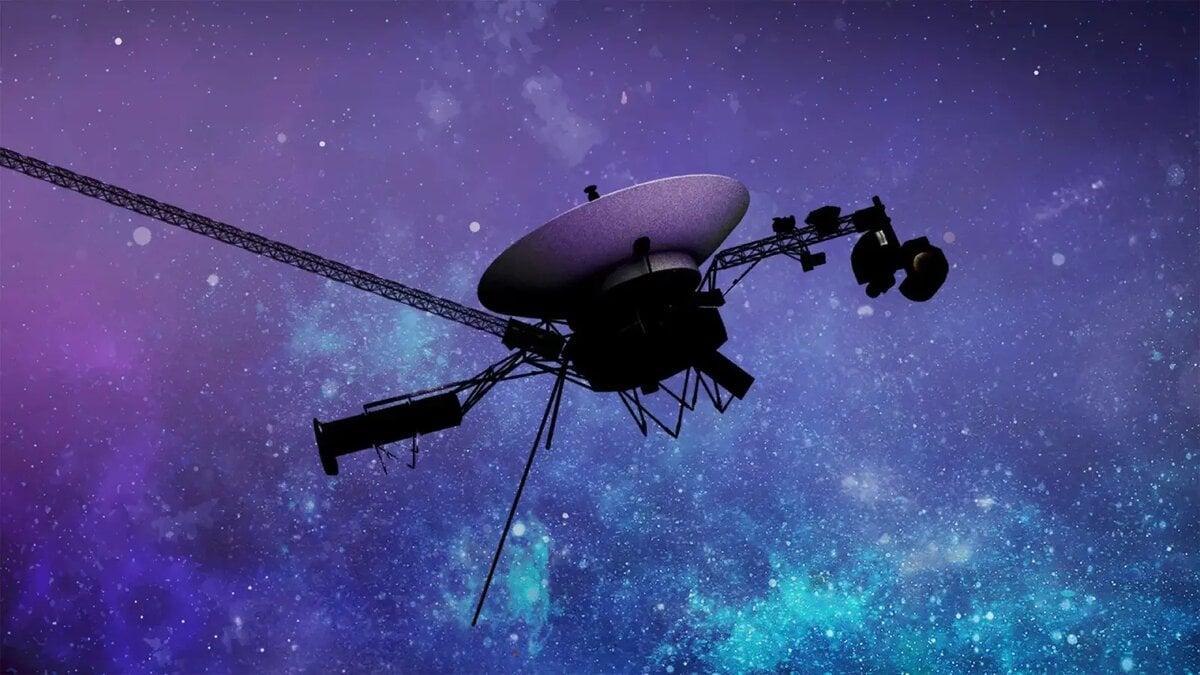
NASA’s Voyager 1 is expected to cross one light-day from Earth on Nov. 18 at 5:16 a.m. ET, a distance milestone nearly five decades into its journey. The probe will be farther from Earth than any other human-made object, making nasa’s voyager 1 cross a landmark in the spacecraft’s long mission.
A light-day is the distance light travels in 24 hours: about 25.9 billion kilometers, or 16.1 billion miles. Voyager 1 is traveling at 37,763 mph, a speed it has maintained since a gravity-assisted flyby of Saturn in 1980.
Power limits the mission
The spacecraft has only two instruments still operating after a sudden power drop led NASA’s team to switch off one of its three remaining instruments. NASA has also shut down systems over time to conserve power and keep the probe functioning.
In 2026, the team spent weeks switching off three devices and bringing three lower-power alternatives online. The effort, internally called “The Big Bang,” was also carried out on Voyager 2 and was completed in early September.
Operating the changes required careful coordination. A signal takes almost a full day to reach Voyager 1, and the spacecraft needs another full day to send a response back.
Voyager 1 draws power from three radioisotope thermoelectric generators, which turn heat from decaying plutonium-238 into electricity. They produced about 470 watts when the spacecraft launched and now generate about 215 watts, losing an average of about 4 watts per year.
NASA has shut down eight of Voyager 1’s 10 original instruments to manage that limited supply. The spacecraft is expected to turn off its final science instrument in the 2030s and lose contact with Earth in 2036 when it can no longer send a radio signal.
A new distance record
The one-light-day mark follows Voyager 1’s crossing of the heliopause, the boundary where the Sun’s heliosphere ends, and its entry into interstellar space. That milestone came 14 years before the upcoming distance crossing.
Voyager 1 became the human-made object to travel farthest into space after passing Pioneer 10, a record it has held for 28 years. Its twin, Voyager 2, is also nearing the end of its power supply after nearly half a century in space.
NASA’s team expects the one-light-day crossing to be Voyager 1’s final milestone while it still has enough power to communicate with Earth.