Caltech Robot Just Built Structure in Space Without Astronauts
A Caltech robot assembled part of a reflector antenna in orbit without astronauts controlling its construction. The 1.4-meter-wide ASTRA demonstration showed that a robotic system can build a structure in space, though scheduling constraints kept the team from completing the antenna.
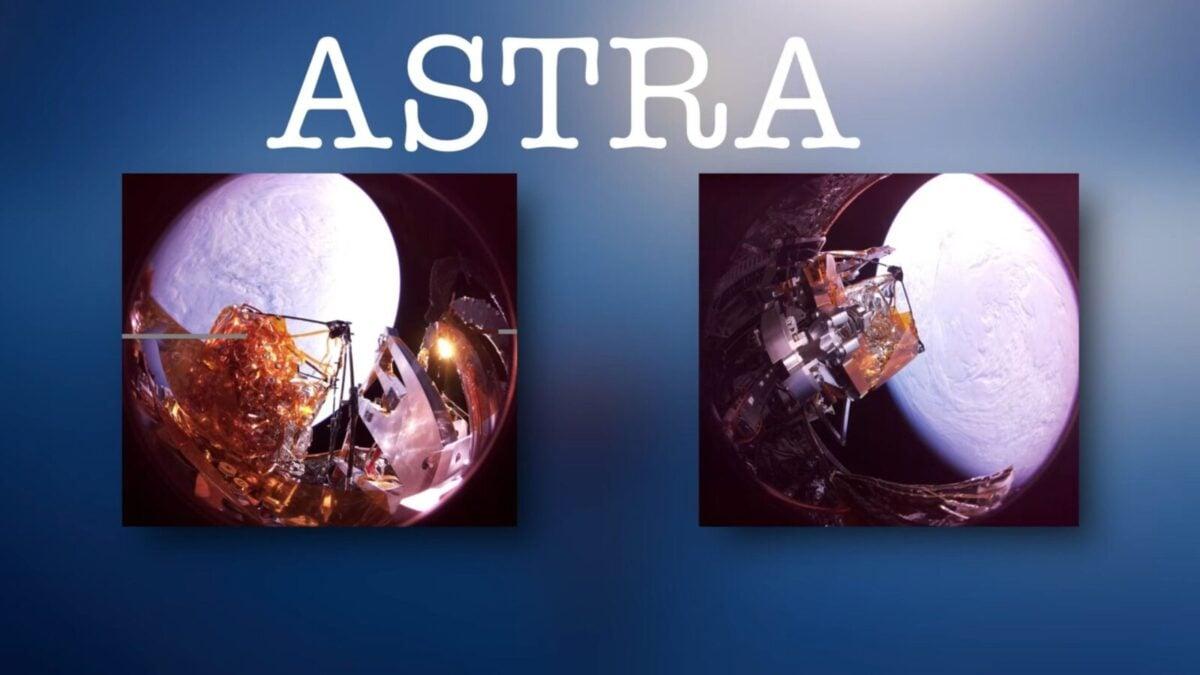
California Institute of Technology researchers used a robot to assemble part of a structure in space during the ASTRA demonstration, which built a 1.4-meter-wide reflector antenna in orbit. The robot just built structure without astronauts carrying out the assembly, marking the first autonomous construction of a structure in space.
Funded by the Defense Advanced Research Projects Agency (DARPA), the project tested whether a robot could join structural components in orbit. The work is part of DARPA’s Novel Orbital and Moon Manufacturing, Materials, and Mass-efficient Design program, known as NOM4D.
Robot assembled an antenna section
ASTRA, short for Autonomous In-Space Tensioned Reflector Assembly, used composite fiber tubes, aluminum joints and a reflective surface made from Kapton film. Its robotic arm retrieved components from storage and assembled them into sections of a supporting framework called a truss.
The team sent commands and checked the robot’s progress during communication windows totaling 15 minutes a day, Space.com reported. The robot built an initial section, but time limits and technical difficulties prevented the researchers from completing the entire antenna.
“This is the first time that a structure has been autonomously constructed in space,” Sergio Pellegrino, the Caltech professor who leads the project, said in a statement on November 5.
DARPA targets much larger structures
The demonstration was the third phase of the research effort. Caltech researchers first developed the concept and tested the hardware in a laboratory before sending the payload to Momentus Inc. for integration with its Vigoride 7 space tug.
Vigoride 7 launched on March 30 aboard SpaceX’s Transporter-16 rideshare mission. ASTRA carried two prebuilt truss sections, a robotic manipulator and additional parts for in-space assembly.
DARPA’s broader goal is to develop methods for constructing structures far larger than the antenna tested by ASTRA. “NOM4D’s objective is to enable efficient, scalable construction of very large structures in space,” program manager Andrew Detor said in a November 5 statement.
Detor said “very large” could mean structures “hundreds of meters or kilometers in scale.” He added: “Nothing approaching that scale can be achieved today.”
Pellegrino said robotic construction could serve astronomy, communications and projects involving large solar arrays for space-based power. “Developing a payload of this complexity on such a short timeline was an enormous undertaking for our small team,” he said.