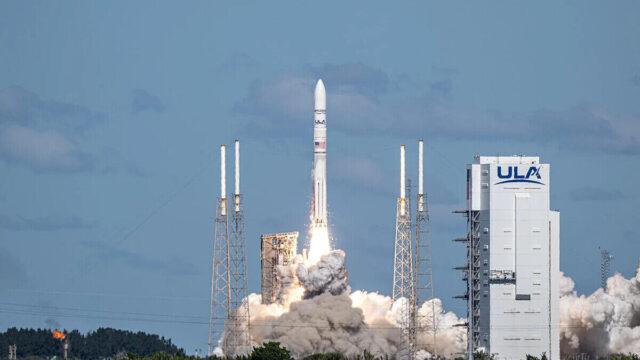
SpaceX’s Starship Returns to Launch Pad From Orbit in First
SpaceX caught its Starship upper stage at its Texas launch tower on Saturday after a 22-hour, 14-orbit mission on the 15th test flight. The Super Heavy booster diverted and exploded in the Gulf of Mexico, ending hopes of a double catch. The flight also deployed 26 Starlink V3 satellites.

SpaceX's Starship returns to launch pad from orbit for the first time. The company's 171ft (52-meter) upper stage descended into the mechanical arms of its Texas launch tower on Saturday, November 14, ending a 22-hour mission in which it orbited Earth 14 times.
It was the first time SpaceX has caught its upper stage. The catch is a milestone in the company's effort to make the vehicle reusable and suitable for human spaceflight.
Booster lost in the Gulf
The 15th test flight was planned as a double catch, with both parts of the rocket returned intact to the launch site instead of being recovered from the ocean. That did not happen.
On Friday, the Super Heavy booster diverted a few minutes after takeoff and exploded in the Gulf of Mexico. Super Heavy is the lower stage whose Raptor engines power the ascent. The upper stage is also called Starship.
The guidance, navigation and control system triggered the no-go. "It was doing what it was supposed to do. Basically, it detected that the booster was not in the place it was supposed to be to proceed with a catch," SpaceX spokesperson Dan Huot said early on Saturday.
SpaceX chief executive Elon Musk said the booster was also "slightly low on fuel".
What the flight achieved
Despite the booster loss, the flight counted as a win for the company. It was only the second time Starship has entered Earth's orbit. The spacecraft also deployed 26 Starlink V3 satellites, adding to the expansion of Musk's satellite internet network.
NASA administrator Jared Isaacman praised the result on X. "Making more believers by the day," he wrote, adding: "One step closer to [the moon]."
Why it matters for NASA's moon plan
NASA plans to return humans to the lunar surface in 2028. The agency has contracted SpaceX and Jeff Bezos's Blue Origin for the mission.
Musk said on a recent earnings call that SpaceX plans to ramp up Starship test flights to a weekly cadence, then twice weekly. He wants Starship to land and take off much like a standard airplane, a design he has said would cut the huge cost of space travel.
Musk has also pushed a plan to carry humans to Mars.
 Take the quizWhat Kind of Holiday Spender Are You? Take the Black Friday QuizStart →
- 1I’m A Celebrity 2026 Line-Up: Rooney Leads 11 Stars Into Jungle

- 2Mavericks Surfers Race to California for Waves Near 50 Feet

- 3NYC Medical Examiner Has Not Determined Cause of Death of Beau Rose Jessup

- 4Mountaineer Finds Ice Age Cave Bear Graveyard in the Dolomites

- 5Rugby League World Cup Final 2026: Kick-Off Times and How to Watch Kangaroos v New Zealand

 Lifestyle7 Signs Your Social Battery Is Running Low (and Why You Keep Cancelling Plans)
 Lifestyle · Food & HealthThanksgiving Food Safety: How Long Leftovers Last and the Safe Turkey Temperature
 Lifestyle7 Quiet Habits of Emotionally Intelligent People, According to Psychologists
 LifestylePeople Who Don’t Like Celebrating Their Birthday Often Share These 7 Traits