SpaceX Catches Starship Spacecraft Mid-Air in a First
SpaceX caught its Starship spacecraft with giant mechanical arms at its Texas launch pad on Saturday after a 14-lap orbital flight, a first for a vehicle returning from space. The booster exploded after Friday's launch, so the planned double catch fell short.
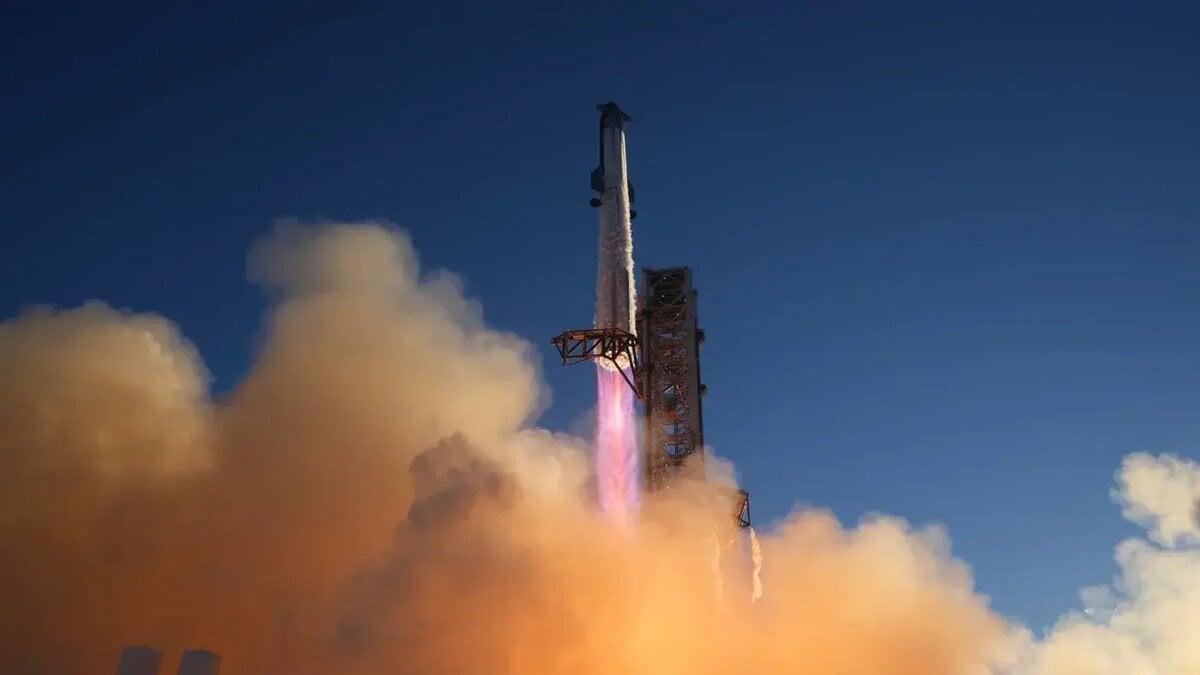
SpaceX completes first-ever spaceship capture: its Starship spacecraft returned from orbit on Saturday and was caught in midair by giant mechanical arms at the Texas launch pad where its flight began 22 hours earlier.
It was the first time a Starship flying back from space has been caught. The company missed its hoped-for double catch, though, because the first-stage booster exploded shortly after Friday's liftoff.
A booster lost, a spacecraft saved
Wreckage from the booster remained in the Gulf of Mexico, cordoned off by buoys, as the stainless steel spacecraft lowered itself upright at the pad. SpaceX commentator Dan Huot shouted, "Can you believe it?"
SpaceX's Kate Tice said the booster's engines stopped firing too soon on the way back down. Its guidance system sensed it was out of position and automatically sent it into the water and triggered self-destruction. Engineers are still investigating the cause.
The company had already made three previous booster catches, which SpaceX says validated the technique.
The flight
The 407-foot (124-meter) rocket lifted off late Friday afternoon from SpaceX's Starship base near the U.S.-Mexican border. The upper stage separated from its booster, reached orbit and released 26 advanced Starlink satellites.
Starship then circled Earth at 165 miles (265 kilometers) up, streaming live views via Starlink. It completed 14 laps, compared with one to two laps on the previous mission.
This was SpaceX's 15th flight of a full-scale Starship since 2023 and only its second trip to orbit. The company said everything on the spacecraft, including its heat shield, appeared to work well.
What it means for NASA
SpaceX officials said the catch demonstrates the full reusability of Starship, which is intended for moon and Mars travel. NASA welcomed the news. The agency is paying billions of dollars for Starship to land Artemis astronauts on the moon later this decade and help build a permanent lunar base.
SpaceX expects to begin launching Starships from Florida's Kennedy Space Center within the next few months. That site is the starting point for NASA's next Artemis mission, which will skip the moon and stay in Earth orbit for lunar lander practice.
Artemis III's four astronauts will try to dock their capsule with both Starship and Blue Origin's Blue Moon. The two companies will take turns delivering crews to the lunar surface. NASA is targeting as soon as 2028 for Artemis IV, the first moon landing since the Apollo era more than half a century ago.
 Take the quizWhat Kind of Holiday Spender Are You? Take the Black Friday QuizStart →
- 1Mavericks Surfers Race to California for Waves Near 50 Feet

- 2I’m A Celebrity 2026 Line-Up: Rooney Leads 11 Stars Into Jungle

- 3NYC Medical Examiner Has Not Determined Cause of Death of Beau Rose Jessup

- 4Mountaineer Finds Ice Age Cave Bear Graveyard in the Dolomites

- 5Rugby League World Cup Final 2026: Kick-Off Times and How to Watch Kangaroos v New Zealand

 Lifestyle7 Signs Your Social Battery Is Running Low (and Why You Keep Cancelling Plans)
 Lifestyle · Food & HealthThanksgiving Food Safety: How Long Leftovers Last and the Safe Turkey Temperature
 Lifestyle7 Quiet Habits of Emotionally Intelligent People, According to Psychologists
 LifestylePeople Who Don’t Like Celebrating Their Birthday Often Share These 7 Traits