SpaceX Successfully Catches Part of Starship After Orbit Trip
SpaceX caught the upper stage of its Starship rocket with giant mechanical arms at its Texas launch site on Saturday, November 14, 2026, a first. The booster failed to return as planned, so the hoped-for double catch did not happen.
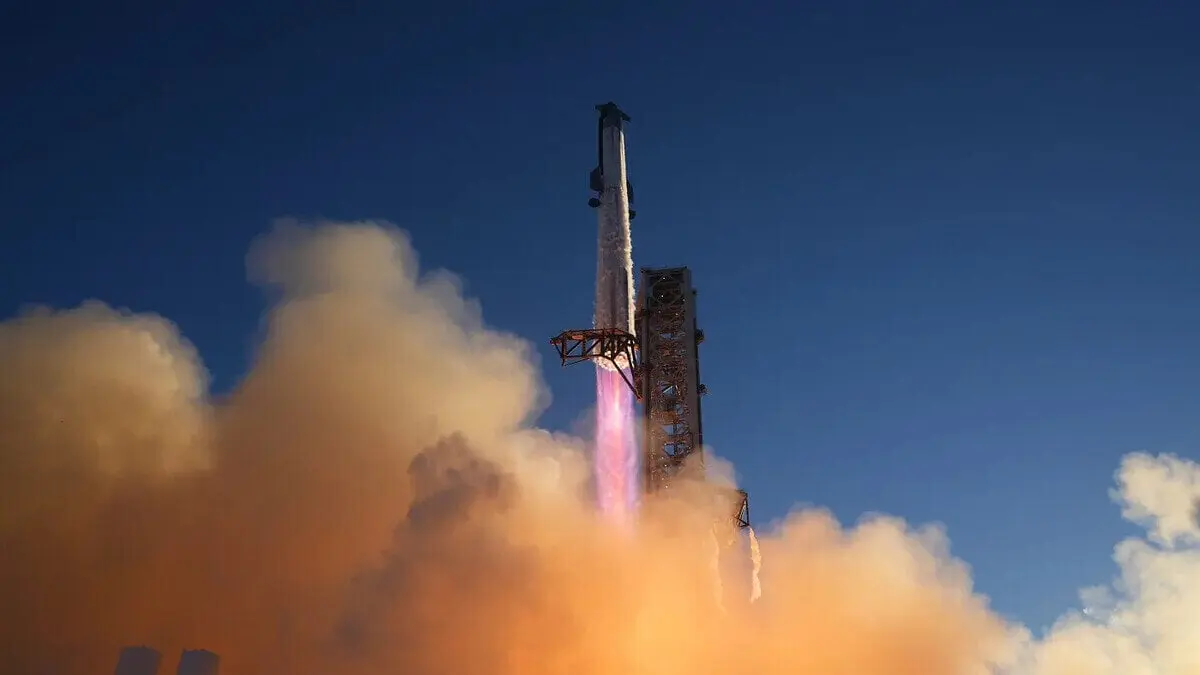
SpaceX successfully caught the upper stage of its Starship rocket with giant mechanical arms at its Texas launch site on Saturday, November 14, 2026, the first time a Starship has been recovered after flying back from space. The catch came around 15:20 local time (21:20 GMT), a few minutes behind schedule.
"Can you believe it?" shouted SpaceX commentator Dan Huot as large crowds cheered at the site.
A half-success for the double catch
SpaceX had hoped to catch both halves of the rocket using the arms, nicknamed chopsticks, on its launch tower. Only one worked. The first-stage booster did not make it back to the tower after Friday's liftoff from Starbase, Texas.
SpaceX's Kate Tice said the booster's engines stopped firing too soon on the way down. Its guidance system sensed it was not in the right position and automatically sent it toward the water, where it self-destructed. Engineers are still investigating the cause.
Wreckage remained in the Gulf of Mexico on Saturday, cordoned off by buoys. The booster burst into flames just above the sea.
What the ship did in orbit
The world's largest and most powerful rocket, a 407-foot (124-meter) vehicle, lifted off late Friday afternoon. The upper-stage spacecraft separated from its booster, reached orbit and released 26 advanced Starlink satellites.
It then circled Earth at 165 miles (265 kilometers) up, streaming live views of itself and the planet via Starlink. It completed 14 laps. The ship came back to the pad where its journey began 22 hours earlier, lowering itself upright into the arms.
It was SpaceX's 15th flight of a full-scale Starship since 2023, and only its second trip to orbit. SpaceX reported that everything on the spacecraft, including its heat shield, appeared to work well.
Why the catch matters
SpaceX officials said the catch demonstrates the full reusability of Starship, which is intended for travel to the moon and Mars. The company had already made three previous booster catches, which it says validated the technique, even though this one failed.
NASA welcomed the news. The agency is paying billions of dollars for Starship to land Artemis astronauts on the moon later this decade and help build a permanent lunar base. SpaceX chief executive Elon Musk wants to launch a fleet of Starships to build a city on Mars.
Next steps from Florida
SpaceX expects to begin launching Starships from Florida's Kennedy Space Center within the next few months. That is the starting point for NASA's next Artemis mission, which will skip the moon and stay in orbit around Earth for lunar lander practice.
Artemis III's four astronauts will try to dock their capsule with Starship and with Blue Origin's Blue Moon lander. The two companies will take turns delivering crews to the lunar surface. NASA is targeting as soon as 2028 for Artemis IV, humanity's first moon landing since the Apollo era more than half a century ago.
 Take the quizWhat Kind of Holiday Spender Are You? Take the Black Friday QuizStart →
- 1Column: 4 Reasons to Eat Dark Chocolate, Dietitians Say

- 2Mavericks Surfers Race to California for Waves Near 50 Feet

- 3Chrissie Swan, 52, Tears Up Over Secret Surprise While Recovering

- 4Meghan Markle Plans US Return to See Mother After Father’s Arrest

- 5Aspyn Ovard Reveals Daughter Has Terminal Cancer on Mormon Wives

 Lifestyle · Food & HealthThanksgiving Food Safety: How Long Leftovers Last and the Safe Turkey Temperature
 Lifestyle7 Quiet Habits of Emotionally Intelligent People, According to Psychologists
 LifestylePeople Who Don’t Like Celebrating Their Birthday Often Share These 7 Traits
 Lifestyle · Food & HealthVitamin D in Winter: Do You Need a Supplement, and How Much?