SpaceX’s Starship Captured by Launch Pad Arms in a First
SpaceX's Starship upper stage was caught by the launch tower's arms at Starbase, Texas, on return from orbit. Flight 15 was scheduled for November 13 and also carried 26 Starlink V3 satellites. SpaceX had never tried to catch the ship before.
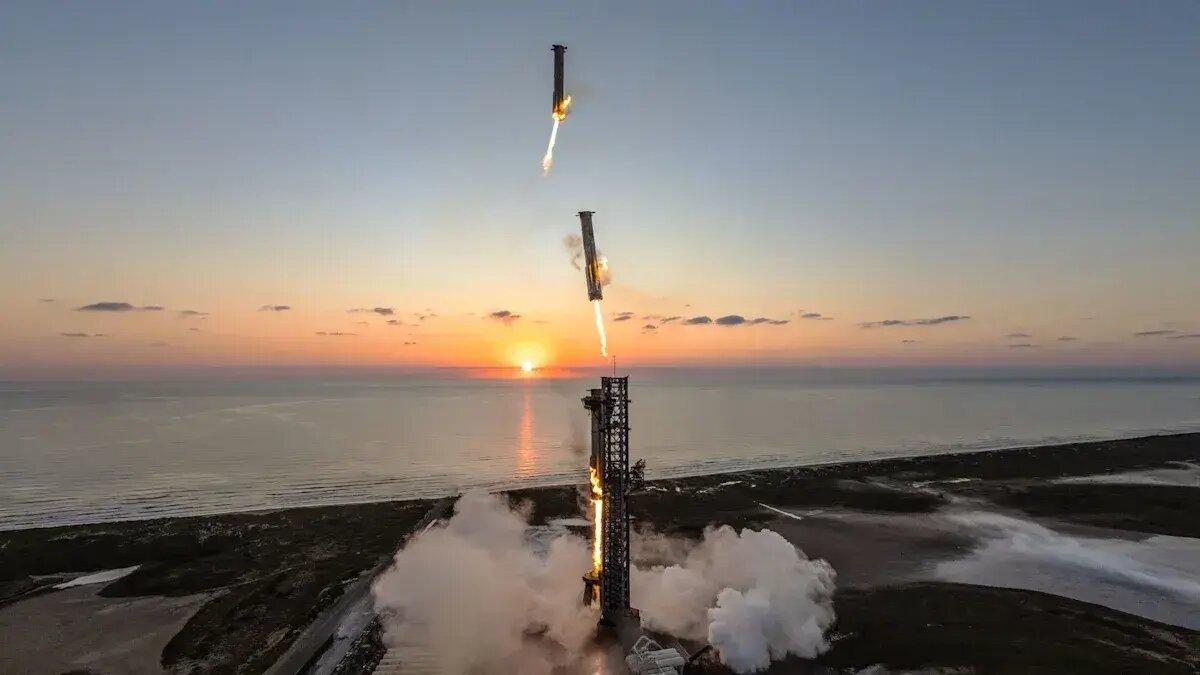
SpaceX's Starship upper stage was captured by the launch pad arms at Starbase in South Texas as it returned from orbit, a first for the company. The catch came at the end of Starship's 15th test flight, which was scheduled to lift off on November 13.
Until now SpaceX had only caught the huge booster, never the ship itself. Catching both stages is central to the company's plan to reuse Starship quickly.
What Flight 15 was meant to do
The launch window opened at 5:45 p.m. EST (2245 GMT; 4:45 p.m. local Texas time) and ran for 75 minutes. SpaceX planned to bring both stages back to Starbase for a catch by the tower's "chopstick" arms.
The vehicle has two parts: a booster called Super Heavy and an upper stage called Starship, or Ship. SpaceX designed both to be fully and rapidly reusable, something no other orbital rocket has achieved.
Super Heavy was due to return to Starbase about 6.5 minutes after launch. SpaceX had already caught the booster on three earlier test flights.
The ship is harder. It flies farther and faster than the booster, so bringing it back to the tower is a tougher task.
Starlink satellites and a long flight
The ship was to continue to low Earth orbit and deploy 26 of SpaceX's next-generation Starlink V3 satellites. Deployment was set to run for 42 minutes, starting about 35 minutes after liftoff. It was only the second batch of V3 satellites, after the 26 that flew on Flight 14 on September 28.
The mission plan then called for the ship to stay in orbit for nearly a full day. The catch was scheduled for Saturday afternoon, November 14, about 22.5 hours after liftoff.
SpaceX called Flight 15 a milestone. "If successful, this will mark the first full recovery of an orbital launch system and a breakthrough moment in making Starship a reliable, rapidly reusable rocket," the company wrote in its mission description.
The plan allowed for a fallback. If the ship ran into any problem, SpaceX said it would cancel the catch and steer the vehicle to a splashdown in the Pacific Ocean, either near Hawaii or off the coast of Chile.
SpaceX has said that returning both vehicles directly to the launch mount allows much faster inspection, refurbishment and reflight.
 Take the quizWhat Kind of Holiday Spender Are You? Take the Black Friday QuizStart →
- 1Column: 4 Reasons to Eat Dark Chocolate, Dietitians Say

- 2Aspyn Ovard Reveals Daughter Has Terminal Cancer on Mormon Wives

- 3Chrissie Swan, 52, Tears Up Over Secret Surprise While Recovering

- 4Canadiens Expected to Re-Sign Josh Anderson at Lower Salary, Insider Says

- 5Meghan Markle Plans US Return to See Mother After Father’s Arrest

 Lifestyle7 Quiet Habits of Emotionally Intelligent People, According to Psychologists
 LifestylePeople Who Don’t Like Celebrating Their Birthday Often Share These 7 Traits
 Lifestyle · Food & HealthVitamin D in Winter: Do You Need a Supplement, and How Much?
 Lifestyle · Food & HealthWhat Is Seasonal Affective Disorder? Signs, Causes and What Helps