ASEAN Chief Says Haze Talks Went Further, Sea Code Still Has Hurdles
ASEAN Secretary-General Kao Kim Hourn said leaders at the Manila summit discussed transboundary haze more extensively than he had heard before, including companies linked to forest fires. He also said negotiations with China on a South China Sea code remain unresolved, with the proposed code’s geographic scope a key issue.
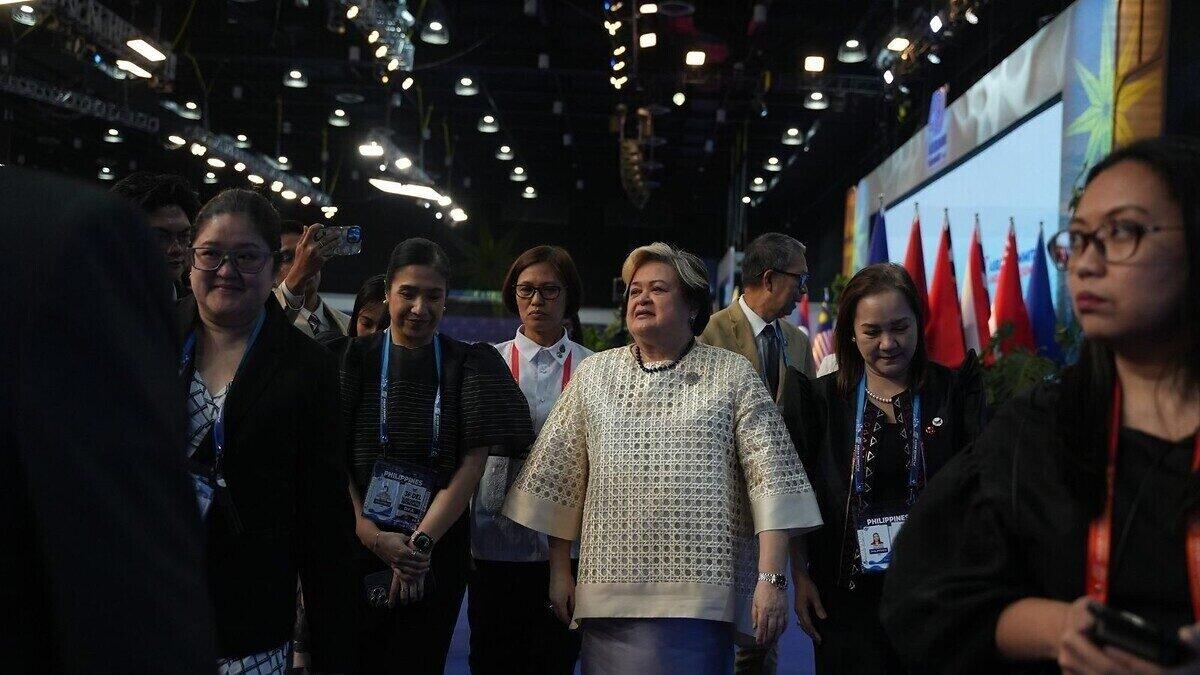
ASEAN Secretary-General Kao Kim Hourn said leaders at the group’s summit in Manila discussed transboundary haze more extensively than he had heard before, while negotiations with China on a South China Sea code of conduct remain unresolved. The talks included how to address companies linked to forest fires, a regional pollution issue that crosses national borders.
Speaking on Monday, November 16, Kao said leaders considered both immediate responses and longer-term solutions. “It's the first time that I heard this issue being discussed quite extensively by the leaders,” he said.
Kao said the discussions addressed the root causes of haze, including individuals and companies whose activities contribute to pollution. “For example, how we deal with not only people, but companies that are involved and need to be addressed.”
He said mainland Southeast Asia would soon enter its dry season, when forest fires and smoke pollution could also become a problem. “It's important for the entire region that we need to address this issue,” Kao said.
The ASEAN chief urged member states to speed up ratification of an agreement establishing the ASEAN Coordinating Centre for Transboundary Haze Pollution Control. Vietnam, Singapore and Malaysia have completed their domestic ratification processes, he said, while other members have yet to do so.
Once operational, the center would help countries exchange expertise, experience and best practices for controlling forest fires and haze, Kao said. He added that no single ASEAN member could tackle the problem alone because it affects public health, the environment and the economy. “Fires do not understand borders,” he said.
On the South China Sea, Kao said significant differences remain between ASEAN and China over a proposed code of conduct. “One issue would be the geographic scope,” he said.
The code is intended to set rules for conduct in the disputed sea. Kao said the parties had made considerable progress but still needed further negotiations to settle outstanding issues. “I think what's important is the quality of the outcome,” he said. “Let us add a bit more patience.”
Kao expressed optimism that the remaining work could be completed next year, during Singapore’s ASEAN chairmanship. “We've made a lot of progress, but we have not reached the final destination yet,” he said.
“If the current chair can finish it, we will finish it. If not, then the incoming chair will take over the leadership,” Kao said. The issue was raised at the ASEAN-China Summit on Monday, but leaders did not discuss the negotiation details, he added.
 Take the quizWhat Kind of Holiday Spender Are You? Take the Black Friday QuizStart →
- 1U.S. Emergency Alert Test Nov. 17 Is Not a Power Outage

- 2Women With Autoimmune Diseases Wait About 4 Years for Diagnosis, Study Finds

- 3DUP Chairman Lord Morrow Loses Wife and Daughter Within Hours in NI

- 4Micron Stock Falls 28% as $35.16 Billion Buyback Nears
- 5I’m A Celebrity 2026 Line-Up: Rooney Leads 11 Stars Into Jungle

 Lifestyle7 Signs Your Social Battery Is Running Low (and Why You Keep Cancelling Plans)
 Lifestyle · Food & HealthThanksgiving Food Safety: How Long Leftovers Last and the Safe Turkey Temperature
 Lifestyle7 Quiet Habits of Emotionally Intelligent People, According to Psychologists
 LifestylePeople Who Don’t Like Celebrating Their Birthday Often Share These 7 Traits